

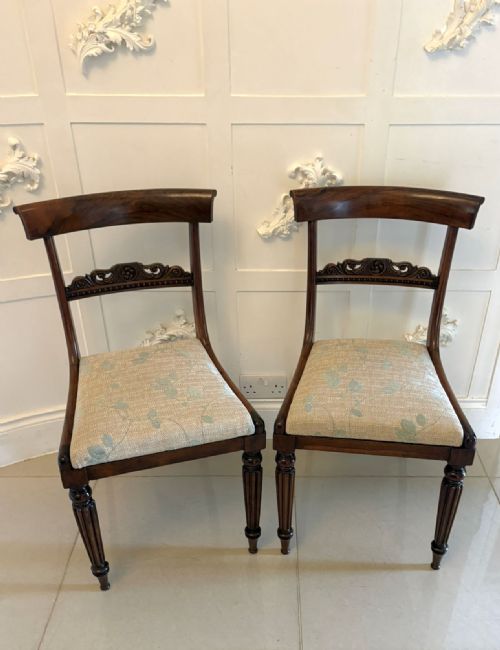


Brown Rosewood Side Chairs
These brown rosewood side chairs bring warmth and distinct grain to a room, offering sturdy seats shaped by Regency, Victorian and Edwardian hands.
Brown Rosewood Side Chairs
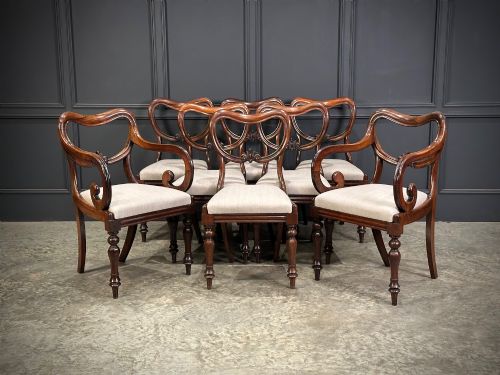
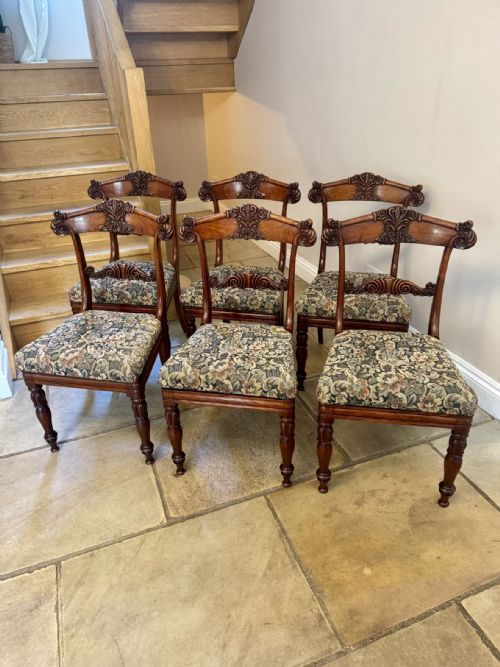
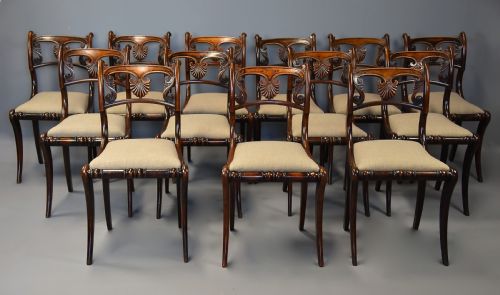
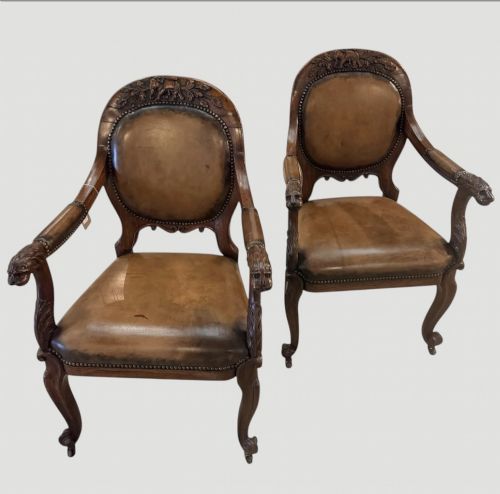
When you search for brown rosewood side chairs, you are looking at timber seating primarily originating from the nineteenth century, including Georgian, Regency, Victorian, William IV and Edwardian periods. The selection on this page leans heavily toward Regency and Victorian examples, alongside Anglo-Indian and simulated finishes.
These chairs serve as dining seats, library chairs and bedroom chairs, often found in sets of four, six or eight, as well as pairs and individual pieces. Forms range from balloon backs and rope twists to Greek revival and bobbin designs, reflecting diverse stylistic interpretations across makers.
Makers utilised solid timber as well as simulated finishes to achieve the dark, rich appearance characteristic of rosewood. Seating inserts vary between cane, fabric upholstery and buttoned leather, matching the functional requirements of nineteenth-century interiors.
How they were made
Carpenters shaped solid rosewood or applied simulated finishes to alternative timbers, capturing the deep brown tones and varied grain patterns desired by period clients. Frames incorporate turned, carved and inlaid elements, demonstrating precise cabinet-making techniques.
Upholstery methods involve drop-in pads, removable backs and buttoned leather inserts fixed to the timber frames. Certain examples integrate cane panels into the seat structures, requiring careful weaving around the wooden rails.
Brass details occasionally appear on these chairs, providing structural or decorative accents that complement the dark wood. Joinery relies on traditional pegging and mortise and tenon connections to ensure long-term stability.
Brown Rosewood Side Chairs Retail Price Guide 2026
Typical asking prices for brown rosewood side chairs among the pieces listed under this phrase on Sellingantiques today, from the lower quarter to the upper quarter. They describe what is for sale here now, not the wider market.
Listings include simulated rosewood, solid rosewood, and cane inserts across pieces dated from the Georgian era through to Edwardian times.
What varies in quality
The distinction between standard examples and the finest pieces rests on the depth of timber carving, the crispness of turned members and the integrity of the rosewood grain. Sets that retain their original simulated finishes or uniform colour across all pieces command greater attention.
Makers such as Gillows represent the upper tier of production, where timber selection and structural joinery meet rigorous standards. Consistency across larger sets of dining chairs elevates their standing compared to assembled groups or pieces with mismatched frames.
Gillows
The Brown Rosewood Side Chairs Glossary
- Simulated rosewood
- A painted or grained surface finish applied to a secondary timber to imitate the appearance of genuine rosewood. This technique was common in Regency workshops.
- Balloon back
- A rounded, oval-shaped chair back resembling the profile of a hot air balloon. This form is particularly prevalent in mid-nineteenth-century Victorian seating.
- Rope twist
- A carved decorative motif resembling a twisted rope, applied to the horizontal crossbars or uprights of Regency chairs. It reflects classical design influences of the period.
- Bobbin chair
- A seating form constructed with turned wooden components resembling spools or bobbins threaded together. These pieces date largely to the nineteenth century.
- Greek revival
- An architectural and decorative style drawing inspiration from ancient Greek forms, manifested in chair frames through scrolls and curule shapes. It appears frequently in Regency dining sets.
Brown Rosewood Side Chairs: Frequently Asked Questions
How do I spot simulated rosewood?
Simulated rosewood involves a painted grain applied to a lighter base timber to replicate the dark, figured appearance of the true wood.
Inspect the surface under bright light to observe brushwork or grain patterns that sit on top of the base material rather than running deep through the board.
Are these chairs suitable for daily use?
Nineteenth-century rosewood chairs provide robust seating when joints remain tight and stable. Many serve successfully around modern dining tables.
Check the frame stability and upholstery condition before daily use to ensure the antique construction supports regular weight.
How do I tell Regency from Victorian chairs?
Regency chairs often display restrained classical lines, rope twists or simulated rosewood finishes dating from the early nineteenth century. Victorian examples frequently feature balloon backs, heavier carving and darker solid rosewood.
Examining the silhouette and turnings helps distinguish between the crisp architectural focus of the Regency period and the more exuberant Victorian forms.
What is an Anglo-Indian chair?
Anglo-Indian rosewood chairs combine British furniture forms with traditional Indian carving techniques, produced during the nineteenth century for export or colonial use. They feature dense, intricate floral or geometric relief work across the timber.
These pieces offer a distinct aesthetic compared to standard domestic English production while utilising the same durable rosewood material.