


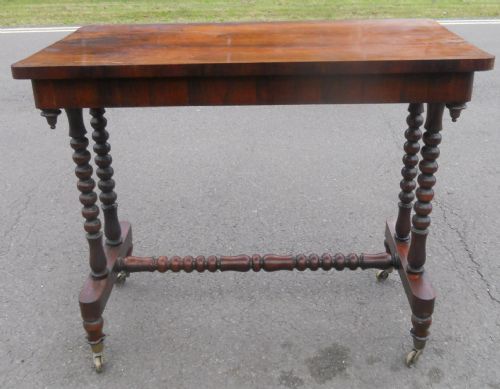


Brown Rosewood Hall Table
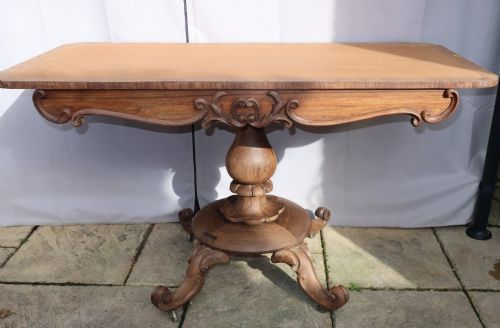
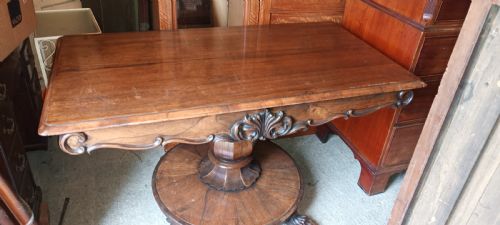
A brown rosewood hall table brings rich timber figure and practical surface area into an entranceway, offering immediate presence.
Brown Rosewood Hall Table
When you search for a brown rosewood hall table, you encounter a selection of nineteenth-century forms spanning the Regency, Victorian, and William IV periods. These pieces include centre tables, sofa tables, and writing desks adapted for narrow spaces through their proportions and design.
The materials recorded in the evidence encompass solid and veneered rosewood, alongside companion timbers like goncalo alves, mahogany, boxwood, and satinwood, often detailed with brass hardware and leather inserts.
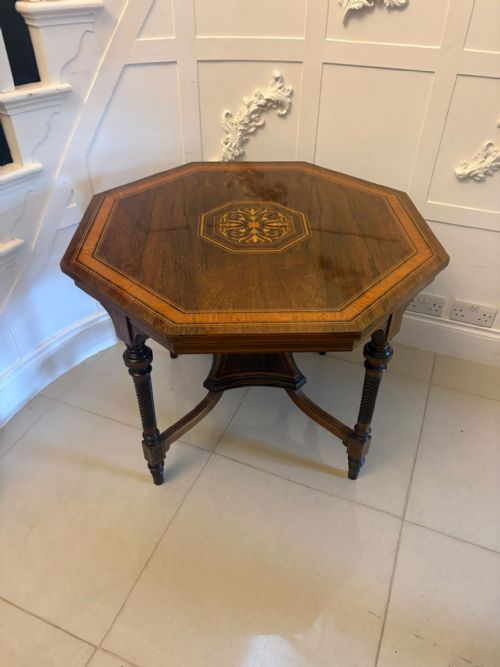
Stylistic influences range from George III and George IV designs through to Anglo-Indian interpretations and marquetry inlaid work, providing considerable variety in how these tables present in a hallway.
How they were made
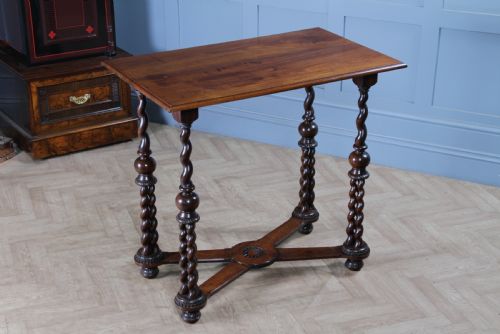
Cabinet makers utilised dense rosewood timbers, frequently applied as finely cut veneers over supportive carcase woods, or deployed in solid form for turned elements such as triple barley twist supports.
Decorative detailing relies on contrasting stringing and inlay using boxwood and satinwood, alongside marquetry work and brass mounts that highlight the grain of the primary timber.
The listings show pieces spanning the Regency, Victorian, and William IV periods, alongside eighteenth-century items.
What varies in quality
The distinction between standard examples and superior pieces rests upon the crispness of the turning, the complexity of inlay work, and the depth of figure in the rosewood surface. Tables bearing documented workshop attributions or specific stylistic refinements display greater ambition in their execution.
Construction integrity is visible in the stability of the timber joints and the preservation of original secondary woods, where uncompromised structure supports the longevity of the piece.
Gillows·William Trotter·Ince & Mayhew
The Brown Rosewood Hall Table Glossary
- Rosewood
- A dense, heavily figured timber valued for its dark brown colour and oily grain, frequently utilised in high-status nineteenth-century furniture. It takes a high polish and shows distinctive contrasting dark streaks.
- Sofa Table
- A rectangular table fitted with drop leaves at either end and typically featuring small drawers in the frieze. Originally designed to stand in front of a sofa, it functions effectively in hallways and reception spaces.
- Marquetry
- The art of applying decorative pieces of veneer to a structure to form intricate patterns and pictures. In these pieces, lighter woods like boxwood and satinwood provide contrast against the darker background.
- Goncalo Alves
- An exotic dense timber with striking contrasting dark brown and lighter figuring, sometimes associated with high-grade nineteenth-century cabinet making alongside rosewood.
- Centre Table
- A freestanding table designed to be viewed from all sides rather than pushed against a wall. They often feature pedestal bases or four-way supports suitable for central placement in a room or large hall.
Brown Rosewood Hall Table: Frequently Asked Questions
What is a brown rosewood hall table?
A brown rosewood hall table is typically a nineteenth-century form such as a centre table, sofa table, or writing desk adapted for use in an entranceway. These pieces utilise rich rosewood veneers and solid timbers to provide a stable surface and decorative presence.
They reflect periods from Regency to Victorian, often incorporating brass mounts, turned supports like triple barley twists, and contrasting inlay work in boxwood or satinwood.
How do I identify a Regency table?
Regency tables date from the early nineteenth century and often display classical architectural influences, balanced proportions, and clean lines. They frequently feature pedestal bases or elegant sabre legs.
Makers from this era utilised dense rosewood and mahogany, sometimes incorporating brass stringing or fine inlay without excessive ornamentation.
Where should I place a centre table?
Centre tables are designed to be freestanding and viewed from all sides, making them well-suited to spacious hallways or reception rooms. Their finished backs and balanced pedestal or multi-legged supports allow placement in the middle of a floor.
In narrower hallways, scaled-down sofa tables with drop leaves or slim writing desks offer a practical alternative while maintaining the same timber aesthetic.
What distinguishes Victorian rosewood furniture?
Victorian rosewood pieces, spanning the mid to late nineteenth century, often exhibit heavier proportions, bolder turning, and more elaborate decorative techniques like marquetry inlay. They embrace diverse revival styles and regional interpretations.
Materials during this period frequently include contrasting secondary timbers and intricate brass hardware, reflecting the industrial capabilities and stylistic preferences of the Victorian era.
How do I care for rosewood furniture?
Rosewood requires stable environmental conditions away from direct sunlight and dramatic humidity shifts to prevent timber movement and veneer lifting. Regular gentle dusting preserves the polished finish without the need for heavy chemical polishes.
Maintaining consistent indoor temperatures helps protect the structural integrity of joints and the natural oils within the dense hardwood.