


Brown Rosewood Console Table
A brown rosewood console table brings rich timber grain and classic proportion into a room, serving as a striking focal point.
Brown Rosewood Console Table
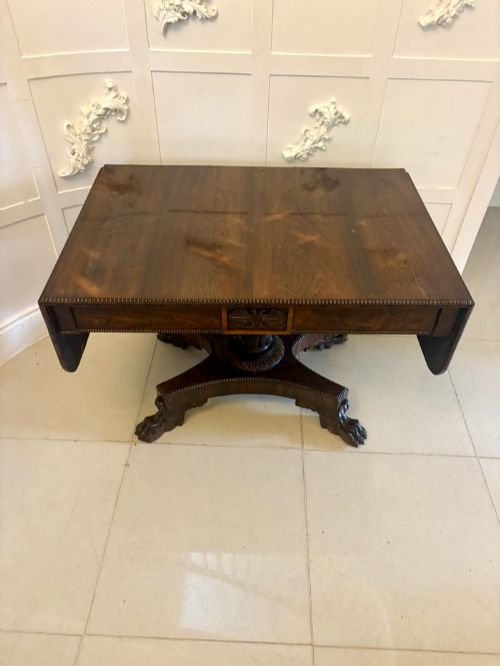
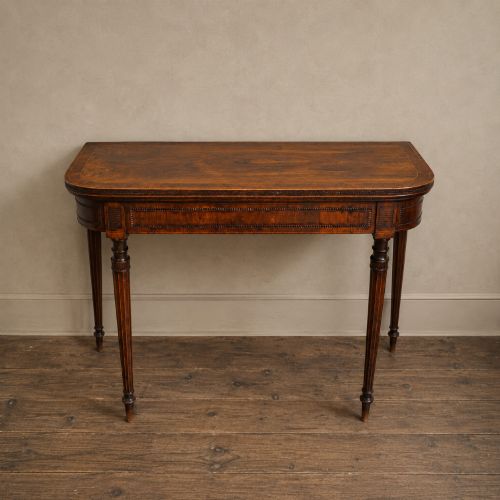
Makers often adapted rosewood for multifunctional furniture, yielding card tables, games tables, and library tables designed to sit against walls or float in the centre of a room. These pieces reflect the cabinet-making standards of the nineteenth century, utilising dense timber alongside mahogany and exotic woods.
What varies in quality
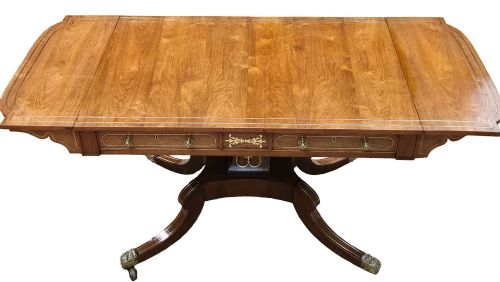
The distinction between standard items and superior pieces lies in the selection of the timber and the precision of the brass inlay. Richly figured rosewood and intricate floral marquetry indicate higher craftsmanship, whereas plain grain indicates standard production.
Attribution to known workshops, such as Gillows or George Bullock, elevates a piece due to superior structural joinery and refined carving. The crispness of edge mouldings and the retention of original patination define the upper tier of the range.
Listings feature items spanning the Georgian, Regency, and Victorian periods, constructed from rosewood, mahogany, goncalo Alves, and burr yew.
Gillows·George Bullock·William Trotter
The Brown Rosewood Console Table Glossary
- Crossbanding
- A narrow strip of veneer applied perpendicularly to the surrounding grain along the edge of a tabletop. This technique creates a distinct border that frames the primary timber.
- Goncalo Alves
- A dense exotic hardwood sometimes utilised in place of rosewood, featuring striking dark brown and amber figuring. It appears in high-status nineteenth-century tables.
- Marquetry
- The art of forming decorative patterns using thin slices of wood veneer of various colours and textures. Floral motifs are common on Victorian examples.
- Sofa table
- A rectangular occasional table originally designed to stand in front of a sofa, featuring drop leaves on either side and two small drawers in the frieze.
- Sabre leg
- A curved, outwardly flaring table leg of circular or rectangular section, tapering toward the foot. This form is characteristic of the Regency period.
Brown Rosewood Console Table: Frequently Asked Questions
What is a brown rosewood console table used for?
These tables function as surface furniture in hallways, living rooms, and dining spaces, often placed against walls or behind seating. Historically, many variants served specific domestic activities including card games, writing, and tea service.
Today, their decorative timber and refined proportions allow them to hold lamps, books, and display items while adding architectural character to an interior.
How do I distinguish Regency tables from Victorian ones?
Regency pieces, dating from the early nineteenth century, typically exhibit restrained classical lines, brass inlay, and sabre legs. They favour architectural simplicity and contrasting timber borders.
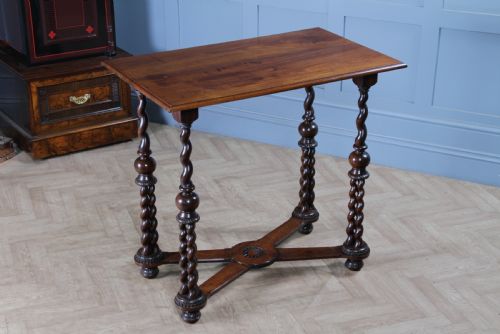
Victorian examples, produced from the mid-nineteenth century onward, often feature heavier turnings, elaborate marquetry, and serpentine edges. The carving becomes more exuberant as the century progresses.
Are these tables sturdy enough for daily use?
Constructed from dense tropical hardwoods and robust secondary timbers, these tables are structurally sound for everyday placement. Fold-over card tables and sofa tables require gentle handling when operating their pivoting tops or drop leaves.
Positioning them away from direct heat sources and strong sunlight protects the rosewood veneer and polished finish over time.
What does crossbanding mean on a tabletop?
Crossbanding involves applying a border of veneer where the wood grain runs at a right angle to the central panel. This technique creates a defined visual frame around the primary rosewood surface.
Cabinet-makers utilised contrasting woods like burr yew or mahogany for crossbanding to highlight the geometric form of the table.