




Rosewood Trestle Desk
A rosewood trestle desk offers a distinct writing surface supported by end framing, bringing rich timber grain and period elegance to any room.
Rosewood Trestle Desk
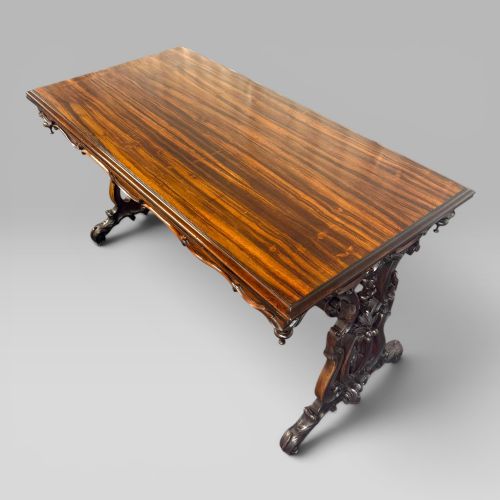
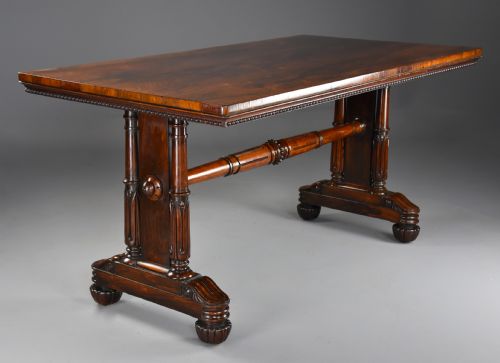
When searching for a rosewood trestle desk, a buyer typically encounters nineteenth-century library tables, writing tables, and sofa tables that function in the same manner. These pieces span the Regency, William IV, Georgian, and Victorian periods, often featuring freestanding forms designed to sit in the centre of a room.
The specific version most common in these listings is the freestanding library or writing table utilising end supports or trestle styling. They appear alongside related side tables and centre tables fashioned from heavily figured rosewood timber.
Originating predominantly in nineteenth-century English workshops, these items serve modern buyers as practical writing desks or library tables. Their distinct end supports provide stability while showcasing the warm tones of rosewood.
How they were made
Cabinet makers constructed these tables using solid and veneered rosewood, frequently selecting timber with prominent figuring. Secondary woods formed the underlying carcase, while elaborate examples incorporated zebrawood or mahogany elements.
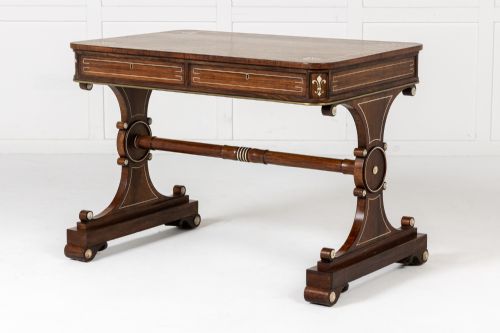
Decoration relied heavily on brass inlay, brass mounts, and detailed marquetry inlay set directly into the rosewood surface. These decorative techniques highlighted the natural dark grain of the timber through precise hand craftsmanship.
Listings feature nineteenth-century pieces spanning the Regency, William IV, and Victorian periods, constructed primarily from rosewood with brass and marquetry inlay.
What varies in quality
The distinction between standard examples and top-tier pieces rests on the choice of timber and the complexity of the cabinetry. Well-figured rosewood grain and sophisticated execution elevate certain library and writing tables above simpler utilitarian items.
Quality also appears in the application of brass inlay and marquetry, where precision in cutting and fitting demonstrates superior workshop output. Pieces reflecting specific cabinet-making traditions show greater refinement in their structural joints and end supports.
Gillows
The Rosewood Trestle Desk Glossary
- Rosewood
- A dense, dark timber prized for its prominent grain patterns and rich reddish-brown colour. Cabinet makers utilised it extensively for high-end nineteenth-century library and writing tables.
- Trestle
- A structural support system utilising end pillars or uprights connected by a stretcher. This design allows for a stable freestanding desk without traditional corner legs.
- Marquetry
- The art of applying fitted pieces of wood veneer to a structure to form decorative patterns. Artisans used this technique on table tops to create intricate floral or geometric designs.
- Sofa table
- A rectangular table traditionally placed against the back of a sofa, featuring drop leaves on either side. These pieces often share the double-pedestal or trestle-style end supports found on writing desks.
- Library table
- A large freestanding table designed for central room placement, equipped with a spacious writing surface. Nineteenth-century versions frequently incorporated drawers within the frieze.
Rosewood Trestle Desk: Frequently Asked Questions
What is a rosewood trestle desk used for?
These pieces serve as functional writing desks, library tables, or laptop stations in modern interiors. Their generous top surfaces provide ample workspace while maintaining a decorative presence.
Historically, they functioned as writing tables and library tables placed in the centre of rooms. Their freestanding design allows them to sit away from walls in studies and living spaces.
How do I identify a Regency period rosewood table?
Regency pieces often display classical proportions, dark figured rosewood timber, and occasional brass inlay. Stylistic cues include architectural lines and specific end support configurations.
Makers working in this era drew inspiration from classical antiquity, reflecting clean geometry alongside rich wood tones. The absence of heavy Victorian ornamentation helps distinguish these earlier examples.
Can I use a antique library table as a computer desk?
Many buyers utilise these sturdy nineteenth-century tables as functional office desks for laptops and computers. Their proportions match modern ergonomic needs while offering distinct period character.
Working surfaces are generally spacious enough to accommodate modern technology without altering the historical structure. Freestanding placement allows cords and equipment to integrate neatly into the room.
What is the difference between a centre table and a writing table?
A centre table is designed to be viewed from all sides and placed in the middle of a room, often lacking drawers. It served decorative purposes for displaying objects or books.
A writing table typically incorporates one or more functional drawers beneath the top for storage of writing materials. Despite this difference in internal fittings, many nineteenth-century forms overlap in their usage and appearance.