

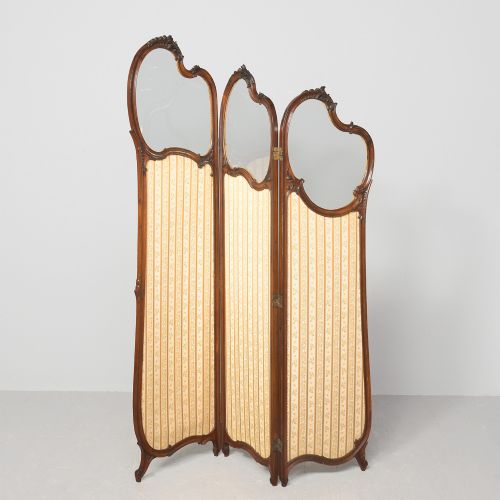
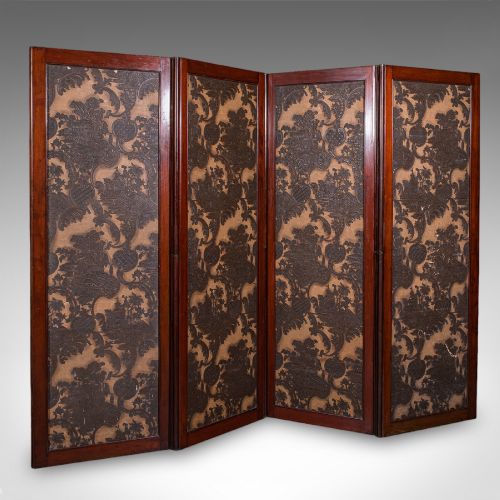
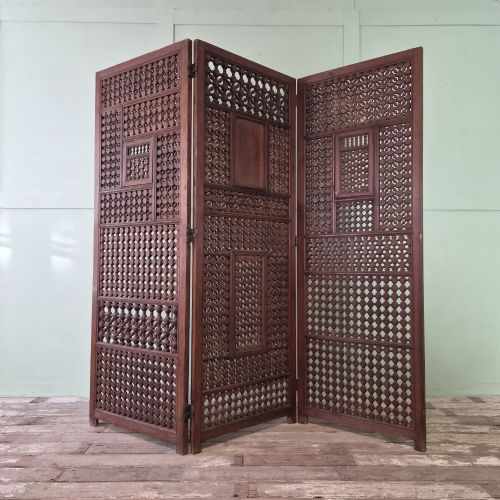
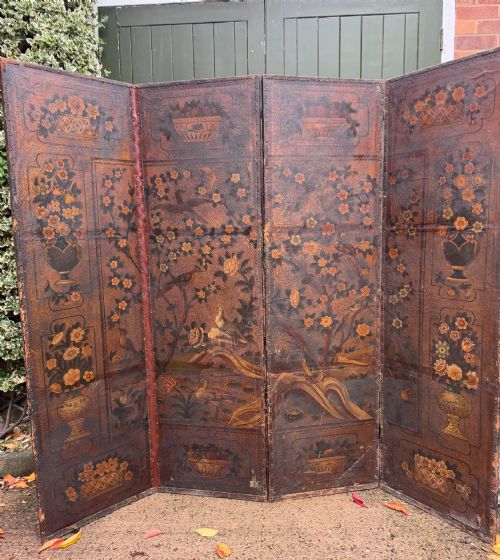
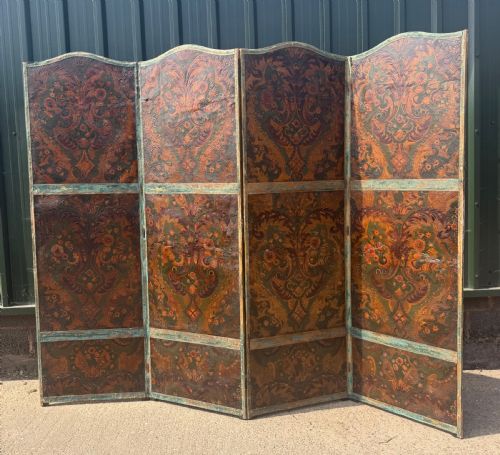
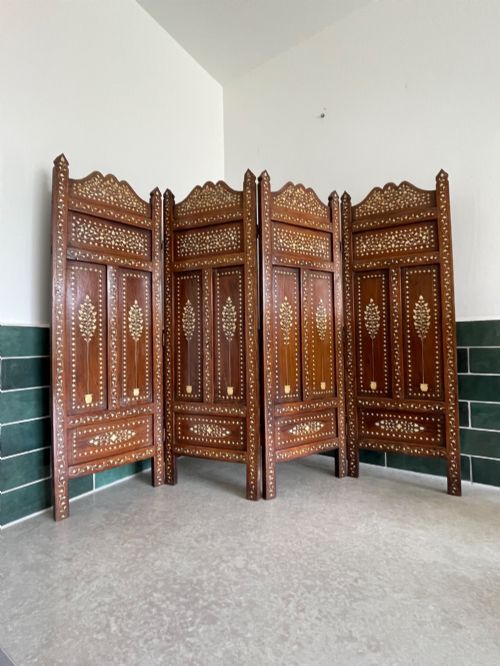
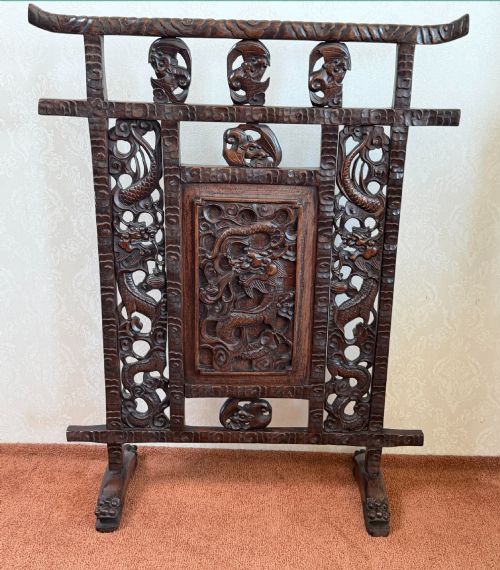
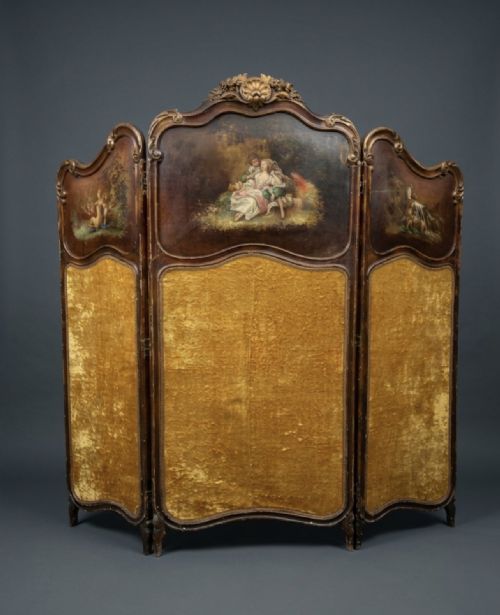


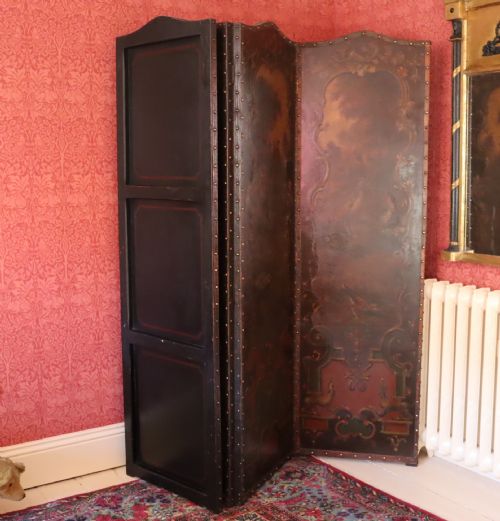

Brown Room Divider
A brown room divider brings architectural depth and practical division to an interior, drawing on centuries of craftsmanship in wood, leather, and painted canvas.
Brown Room Divider
A brown room divider encompasses hinged folding screens and multi-panel partitions designed to structure large spaces and create privacy within a room. These pieces range from substantial four-fold screens to smaller modesty and fire screens.
The selections available derive primarily from the nineteenth and eighteenth centuries, with notable examples spanning Victorian, Edwardian, and Art Nouveau tastes. Common formats include wooden frames housing painted panels, leather, canvas, or glazed sections.
Origins stretch across English, French, Dutch, and Asian workshops, introducing diverse aesthetic traditions such as Chinoiserie, Islamic Revival, and Anglo-Indian carving. Each folding screen offers a tactile way to alter the proportions and atmosphere of an interior.
Assessing quality and craftsmanship
Quality rests in the precision of the joinery and the integrity of the timber frame, distinguishing robust architectural dividers from lighter decorative accessories. Carved detailing and fretwork show the hand of the maker most clearly.
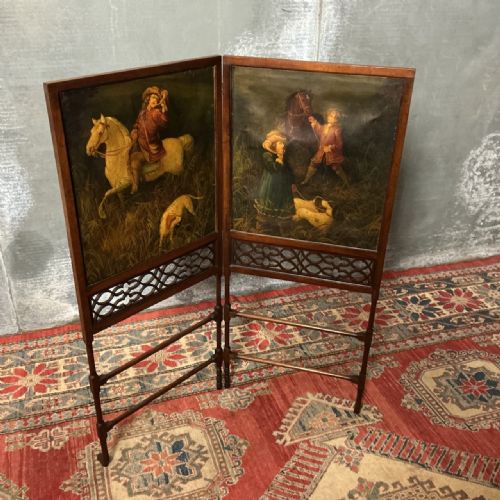
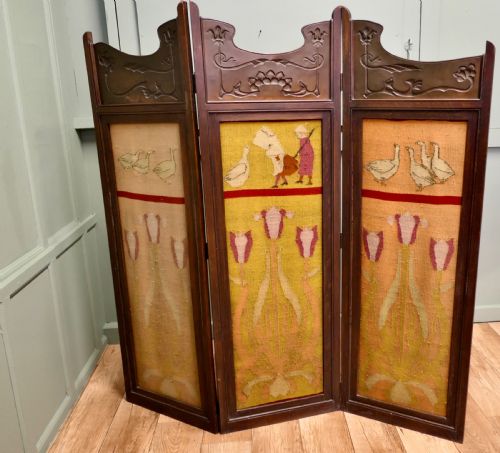
The execution of the panel infill - whether hand-painted leather, embossed paper, oil paintings, or needlepoint - dictates the visual impact. Finer examples maintain cohesive artistic execution across every folding section.
Brown Room Divider Retail Price Guide 2026
Typical asking prices for brown room divider among the pieces listed under this phrase on Sellingantiques today, from the lower quarter to the upper quarter. They describe what is for sale here now, not the wider market.
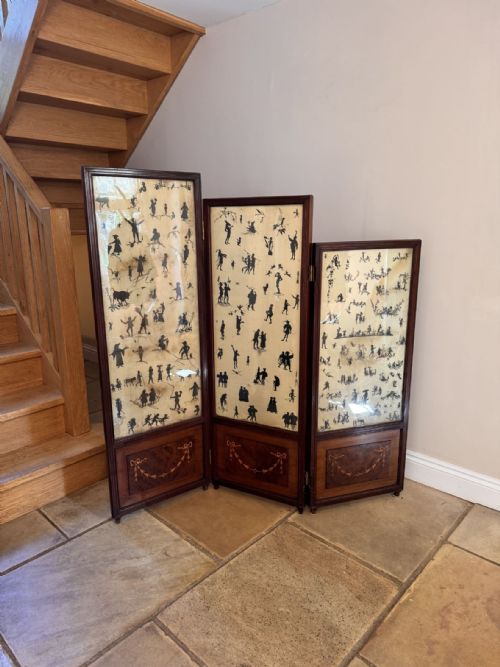
Some nineteenth-century panels are covered in lively Victorian scrap work, turning the screen into a collage of historical ephemera.
The Brown Room Divider Glossary
- Mashrabiya
- A traditional wooden lattice screen formed of turned bobbins fitted together into geometric patterns, frequently found in Islamic woodwork.
- Cordoban leather
- Heavy leather that has been tooled, painted, and gilt, originating from the Spanish city and later imitated across Europe.
- Chinoiserie
- European artistic interpretation of Chinese and East Asian decorative motifs, commonly seen on painted and lacquered screens.
- Modesty screen
- A small folding screen historically used to shield a person from draughts or direct view while dressing or dining.
- Decoupage
- The art of decorating a surface by applying paper cutouts and sealing them with layers of varnish or lacquer.
Brown Room Divider: Frequently Asked Questions
How do I use a room divider at home?
A folding screen divides open-plan spaces, creates private dressing areas, or conceals unappealing corners without requiring permanent construction work.
Position the panels at gentle angles so the screen stands stable and supports its own weight across the floor.
What periods do these screens come from?
The available pieces originate largely from the eighteenth, nineteenth, and early twentieth centuries, including Victorian, Edwardian, and Art Deco eras.
Design characteristics and materials help indicate the specific period of manufacture.
Are these screens heavy?
Weight varies depending on the timber and panel materials used, with solid mahogany, hardwood, and leather-bound screens being considerably heavier than canvas or paper examples.
Larger four-fold and eight-fold structures require careful handling when moving between rooms.
How do I care for antique painted panels?
Keep painted, leather, and paper panels away from direct sunlight and excessive moisture to protect the surface decorations and prevent the wood from warping.
Dust the frames gently with a dry cloth and avoid harsh cleaning products on the antique finishes.