
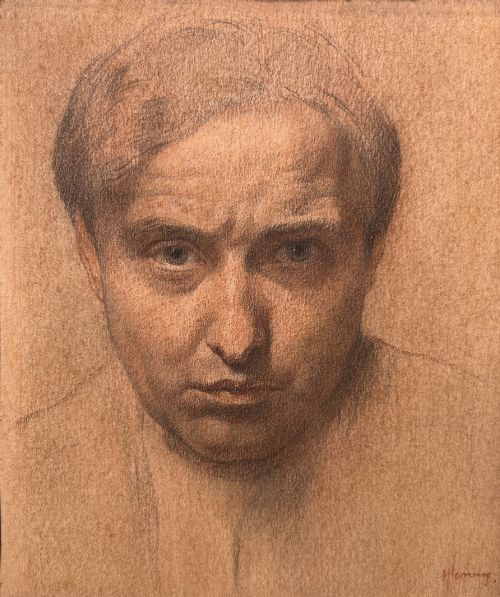
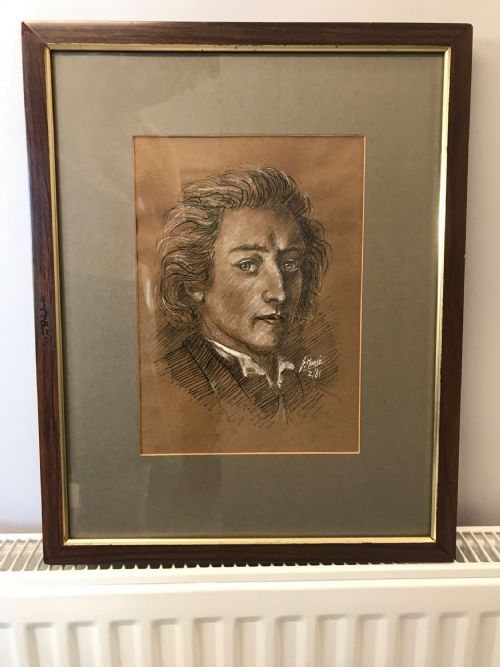
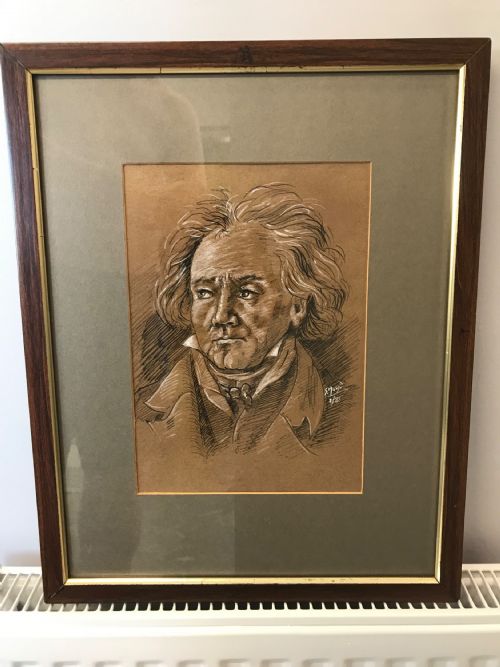
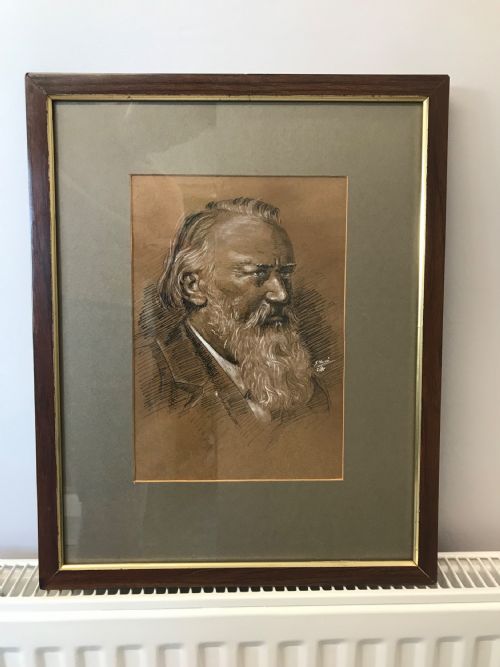
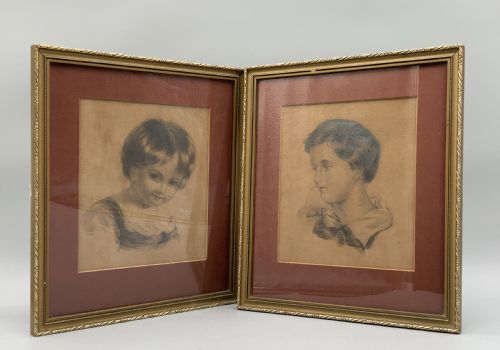


Brown Paper Portrait Sketch
Brown paper portrait sketch pieces capture intimate likenesses through charcoal, chalk, and graphite on tinted paper, offering buyers a direct window into historical character.
Brown Paper Portrait Sketch
A brown paper portrait sketch brings together historical figures, artists, and subjects rendered directly onto toned or buff paper surfaces. These works span centuries, extending from seventeenth-century studies through eighteenth-century northern European compositions to nineteenth-century academic realism and twentieth-century pieces.
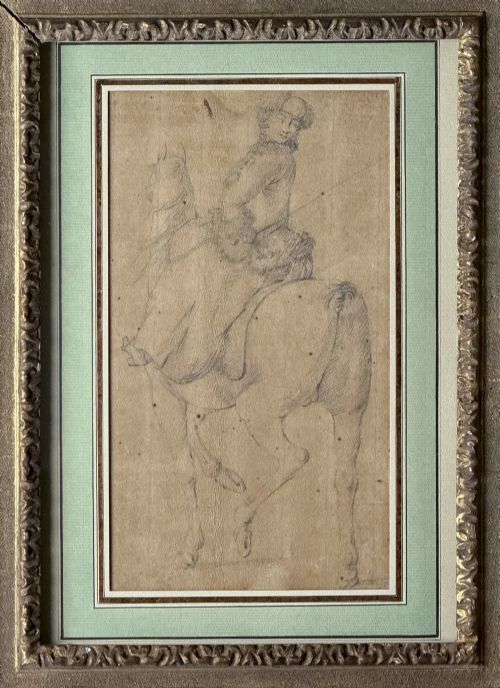
Surviving pieces range from informal caricature and equestrian studies to finished portrait drawings executed in the manner of established portraitists. Each work relies on the neutral tone of the paper to hold highlights and depth.
Materials and technique
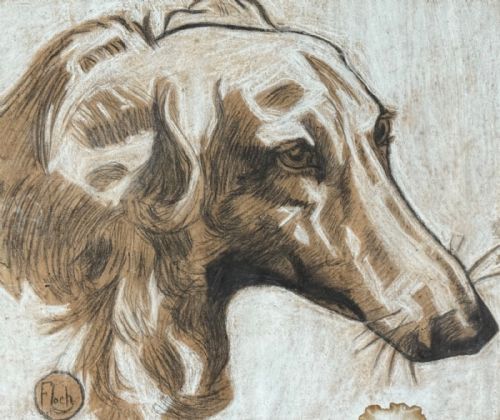
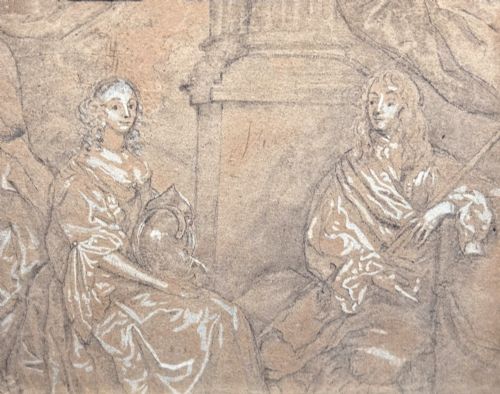
Artists working on brown or buff paper built their compositions using charcoal, graphite, chalk, and gouache. The natural tone of the paper serves as a mid-tone, allowing white chalk or gouache highlights to pop while dark ink washes and charcoal provide shadow.
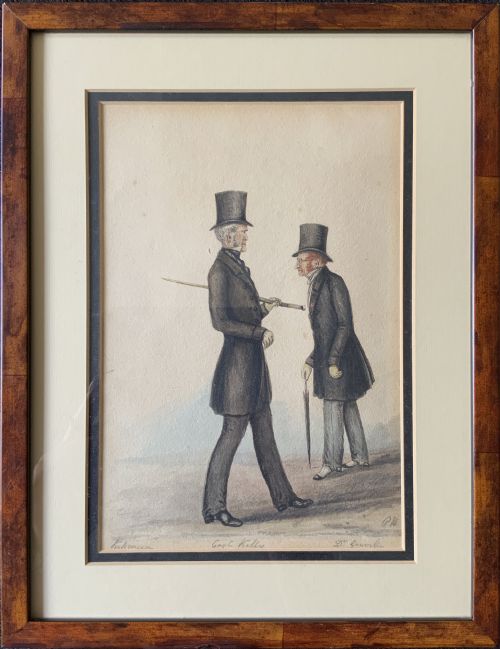
Pen and ink work alongside watercolour wash appears in various portrait drawings, combining precise line work with tonal depth. Framing often incorporates wood and glass to protect fragile media on paper from light and moisture.
Listings feature paper, ink, glass, charcoal, graphite, wood, chalk, and gouache across styles from baroque to academic realism.
What distinguishes quality
Quality rests upon the sureness of the draughtsmanship and the artist's command over tone and shadow on a tinted ground. Superior examples demonstrate anatomical precision and expressive character capture rather than mechanical copying.
The preservation of the paper support and the stability of fugitive media like chalk and pastel directly affect the integrity of the piece. Works retaining their original contrast and untouched surface condition stand above compromised or heavily retouched examples.
Herbert Johnson Harvey·Theobald Chartran·Henri Josephe Hesse·George Richmond·Sir Nathaniel Dance-Holland·Juliet Pannett
The Brown Paper Portrait Sketch Glossary
- Buff paper
- A pale brownish-yellow paper stock commonly used by artists to provide a warm, neutral mid-tone background for chalk and gouache highlights.
- Gouache
- An opaque water-based paint that provides solid, matte highlights on tinted paper surfaces.
- Graphite
- A form of carbon used for drawing lines and shading, providing metallic grey tones in early and nineteenth-century sketches.
- Wash
- A diluted layer of ink or watercolour applied with a brush to create smooth background tones and shadows behind pencil or chalk lines.
Brown Paper Portrait Sketch: Frequently Asked Questions
How should I frame a brown paper portrait sketch?
Framing requires acid-free mount board and UV-protective glass to prevent the paper from yellowing and to shield sensitive pigments from fading over time.
Keep the paper from touching the glass directly by using a spacer or matte to allow the delicate charcoal and chalk surfaces to breathe.
What periods do these portrait sketches cover?
The available selection spans from the seventeenth century through the eighteenth and nineteenth centuries, extending into twentieth-century works up to the nineteen-seventies.
Earlier pieces often reflect northern European academic traditions, while later examples incorporate Art Deco sensibilities and mid-century portraiture styles.
How do I identify chalk versus graphite?
Chalk leaves a velvety, matte mark that sits on top of the paper fibres and accepts blending easily with a stump or finger. Graphite possesses a slight sheen under direct light and creates finer, more reflective metallic lines.
Why use tinted paper for portraits?
Tinted paper provides a middle value that eliminates the starkness of pure white sheets, allowing artists to work simultaneously toward deep shadows and bright highlights.
This method speeds up sketching by letting the background colour function as the primary skin tone or mid-tone.