


Georgian Pencil Portrait
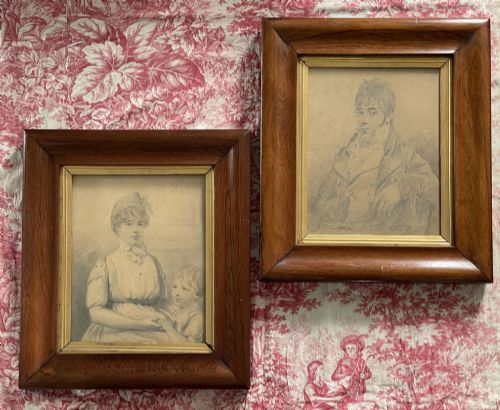
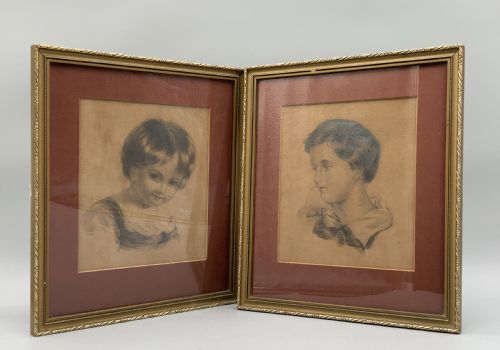
A georgian pencil portrait captures a sitter with immediate, unvarnished honesty, offering an intimate glimpse into past lives through delicate graphite lines on paper.
Georgian Pencil Portrait
When you search for a georgian pencil portrait, you enter a quiet corner of portraiture where artists recorded sitters using graphite, plumbago, and occasional touches of watercolour on paper. These works take the form of individual framed drawings, miniature portraits, and paired sketches capturing couples, families, and notable public figures.
The pieces appearing on this page span the eighteenth and nineteenth centuries, featuring distinct styles from the Georgian and Regency eras alongside later revivals. You will encounter both finished cabinet pieces and spontaneous sketches, framed in period materials such as wood and gilt.
Subjects range from naive depictions of gentlemen to highly accomplished works by noted practitioners. Whether executed as a single drawing or a set of eight, each georgian pencil portrait preserves a likeness with remarkable immediacy.
Materials and technique
Draftsmen relied primarily on graphite and plumbago applied to fine paper, building form through meticulous hatching and tonal shading. Many works incorporate subtle watercolour or gouache washes to tint cheeks, fabric, or accessories, adding depth to the monochrome design.
Finished pieces were secured behind protective glass and housed within wooden frames, frequently enhanced with gilt or gilt wood mouldings. This method of mounting protected the delicate works on paper from atmospheric damage while maintaining an elegant domestic display.
Listings feature works on paper utilising graphite, pencil, and watercolour, framed in wood and gilt.
Assessing quality and execution
The distinction between ordinary and exceptional examples rests upon the draughtsmanship and the artist's ability to capture bone structure and expression with minimal strokes. Plumbago drawings executed with microscopic precision sit at the upper end of the scale, showing absolute control over fine graphite lines.
Provenance and attribution also differentiate the works, as signed pieces or those tied to documented hands command greater academic interest. Furthermore, the condition of the paper and the integrity of the original framing elements influence the overall stature of a piece.
John Taylor·James Ferguson·Ozias Humphry·Sir Nathaniel Dance-Holland·Sir William Charles Ross
The Georgian Pencil Portrait Glossary
- Plumbago
- An early form of graphite used for detailed, highly finished pencil drawings. It derives its name from the Latin for lead ore.
- Miniature portrait
- A small-scale painting or drawing designed for intimate viewing. These works often measure only a few inches across.
- Works on paper
- A collective term for drawings, watercolours, and prints executed on paper supports. This category forms the core of graphic art collections.
- Gilt wood
- Wood that has been coated with a thin layer of gold leaf or gilt paint. It is commonly found on period picture frames.
Georgian Pencil Portrait: Frequently Asked Questions
What is a plumbago portrait?
A plumbago portrait is a highly detailed drawing executed in early graphite, known for its fine line work and monochrome palette. These pieces often achieve the visual richness of an engraving through sheer skill with the pencil.
Artists during the eighteenth century favoured this medium for capturing likenesses with striking clarity and precision.
How were these portraits displayed?
Owners typically hung these small drawings in private rooms, studies, or bedchambers rather than grand formal galleries. Their modest scale encouraged close, personal contemplation.
Frames made of wood and gilt protected the paper supports while complementing contemporary interior decoration.
Are these drawings signed by the artists?
Some examples bear the artist's signature or initials, while many others remain anonymous studio pieces or naive works. Attribution often relies on stylistic comparison, old inscriptions on the reverse, or recorded provenance.
Signed works by documented practitioners naturally attract greater attention from collectors and historians.
How do I care for antique drawings?
Works on paper require protection from direct sunlight and high humidity to prevent fading and foxing of the paper. Keeping them behind glass in stable environmental conditions preserves the graphite and watercolour pigments.
Avoid placing these delicate items in areas subject to rapid temperature fluctuations.