


Antique Ink Portrait
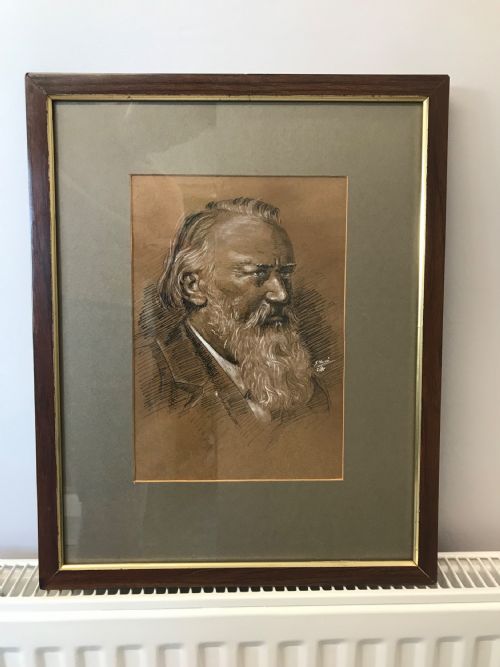
When you search for an antique ink portrait, you are looking at works on paper that capture individual likenesses through line and wash.
Antique Ink Portrait
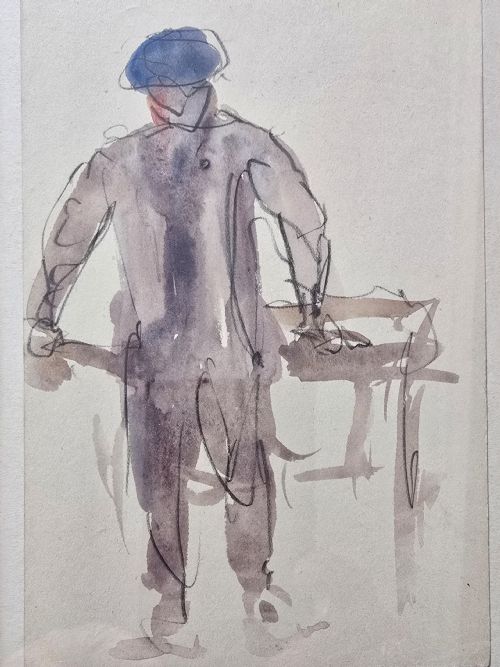
An antique ink portrait combines pen work with paper supports, often incorporating wash, watercolour, or gouache to define the sitter. These works range from small domestic silhouettes to detailed studies of historical figures and musicians.
The pieces on this page span the eighteenth, nineteenth, and early twentieth centuries, alongside later tribute works and sketches. You will encounter framed drawings, silhouettes, and preparatory studies executed by various European schools.
How they were made
Draftsmen utilised iron gall or carbon inks applied with quills or fine nibs to establish contours on paper substrates. Pigments such as sepia or bistre provided tone, sometimes heightened with white bodycolour or watercolour washes.
Many of these works are housed in period timber frames, frequently featuring giltwood mouldings or reverse-painted glass mounts that protect the delicate paper surfaces from atmospheric damage.
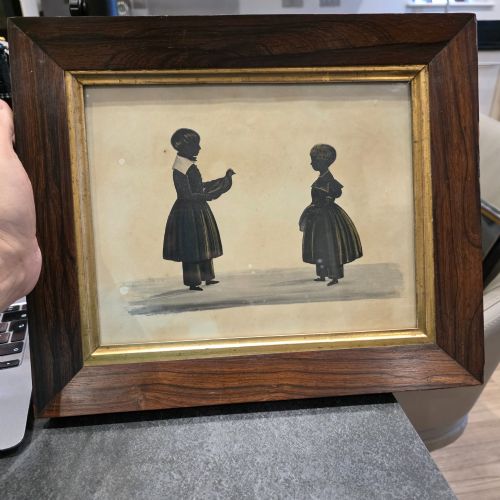
A three-month-old infant is solemnly recorded as a three-year-old in a naive Regency watercolour.
What varies in quality
The primary distinction lies in the sureness of the line and the psychological depth achieved by the artist. Masterful handling captures a convincing likeness and texture with minimal strokes, whereas weaker examples rely on heavy, hesitant lines.
Condition and framing also dictate distinction, as paper subjected to excessive light or moisture loses contrast and crispness. Original period mounts and undisturbed backing papers preserve the integrity of the piece.
John Miers·Alfred Darbyshire·Augustus Edwin John·Johan Noah Bemmel·John Duncan Fergusson·Dame Laura Knight·Theobald Chartran·Henri Josephe Hesse·Herbert Dicksee·Michael Dahl·Philippe Swyncop·Harry Epworth Allen
The Antique Ink Portrait Glossary
- Silhouette
- A solid profile portrait filled in with dark pigment or cut from paper. This form gained popularity in the eighteenth and nineteenth centuries.
- Wash
- A diluted layer of ink or watercolour applied evenly across paper. It provides tonal depth and shadow behind linear ink work.
- Gouache
- An opaque watercolour medium containing a binding agent. It allows artists to add highlights and solid colour over ink drawings.
- Graphite
- A form of carbon used as a drawing medium before and during ink work. It often underpins preliminary sketches.
- Giltwood
- Timber carved and coated with gold leaf or gilt finish. It forms the decorative border of period frames.
Antique Ink Portrait: Frequently Asked Questions
How should I hang an antique ink portrait?
Keep works on paper away from direct sunlight to prevent fading of the ink and yellowing of the paper support. Use stable interior walls where temperature and humidity fluctuations remain minimal.
Ensure the frame hangs securely from appropriate fixings. Professional framing with acid-free backing materials protects the artwork over time.
Are these portraits original works?
The selections include hand-drawn ink studies, original etchings, and unique silhouette portraits created directly by artists. Each piece represents an individual creation rather than a modern mechanical reproduction.
Signatures, inscriptions, and provenance labels often accompany the works, helping to connect them to specific artists and schools.
How do I tell nineteenth-century pieces apart from later works?
Nineteenth-century pieces typically show period paper watermarks, handwritten contemporary annotations, and traditional framing methods such as pegged wooden corners or early brass fixings. Stylistic cues like Victorian dress and academic realism also signal the period.
Later interpretations and twentieth-century studies utilise different paper densities and modern framing techniques, even when adopting historical subject matter.