
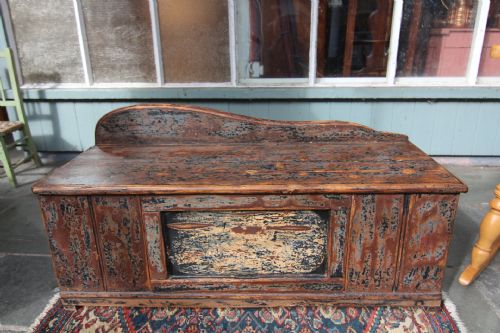
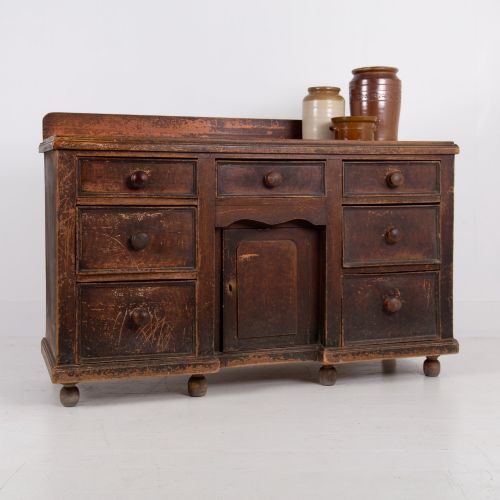
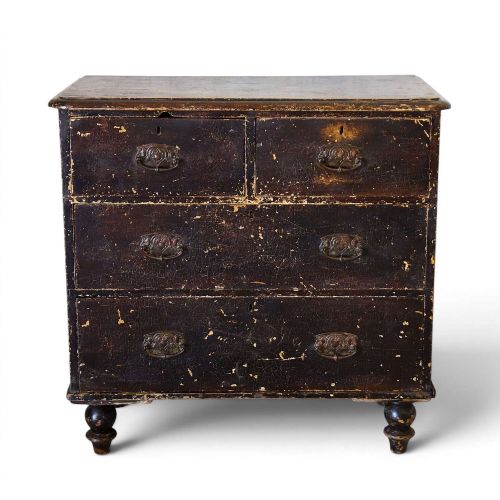
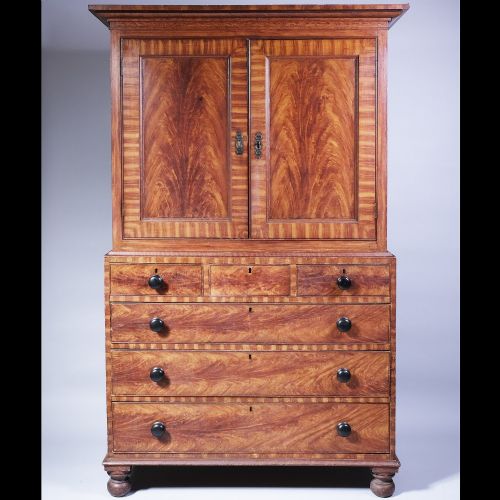


Brown Painted Pine Chest
A brown painted pine chest brings useful storage and honest country character to a room, finished in scumble, graining, or plain pigment.
Brown Painted Pine Chest
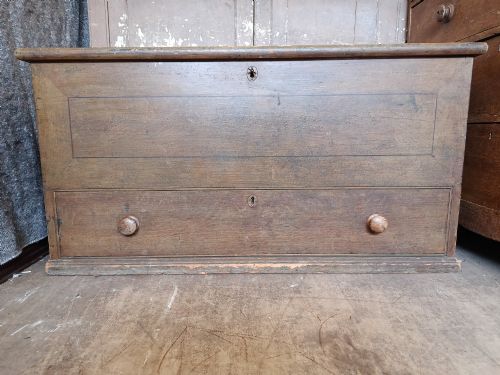
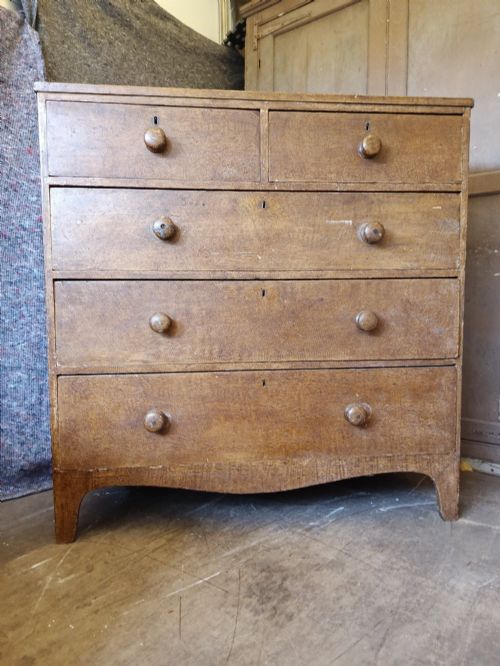
When you search for a brown painted pine chest, you encounter practical storage pieces built from softwood and finished with decorative surface treatments. The form spans several traditional types, including blanket boxes, mule chests, storage chests, and chests of drawers.
Most examples originate from the nineteenth century, reflecting periods such as the Victorian era, the Regency period, and the early twentieth century. Pieces arrive from English, Scottish, Welsh, Hungarian, and Swedish origins, displaying regional variations in construction and decoration.
Utility dictated the original design of these items, serving farmhouses, cottages, and domestic kitchens for everyday storage. Over time, the applied painted finishes have aged to create distinctive patinas valued in country house and rustic interiors.
How they were made
Carpenters constructed the carcases using solid pine timbers, joined with traditional methods suited to utilitarian furniture. Iron, brass, and wrought iron hardware such as strap hinges, brackets, and drop handles provided structural reinforcement and functional operation.
Surface decoration defined the visual identity of these objects, utilising paint, scumbled paint, and graining techniques. Craftsmen applied these finishes to simulate more expensive hardwoods or to create decorative patterns, folk art motifs, and polychrome schemes.
The inventory spans the eighteenth century, the nineteenth century, the Regency period, and the early twentieth century.
What varies in quality
The integrity of the original surface finish largely determines the standing of an individual piece. Surfaces that retain their early scumble, graining, or hand-painted decoration without excessive modern intervention command greater interest than those stripped or heavily repaid.
Construction robustness and proportion also differentiate the items. Pieces exhibiting thoughtful joinery, original ironmongery, and balanced proportions reflect higher standards of regional cabinetmaking than simpler utilitarian boxes.
The Brown Painted Pine Chest Glossary
- Scumble paint
- A translucent or opaque glaze manipulated with combs, brushes, or rags over a lighter base coat to imitate the figuring of expensive timbers like oak or walnut. This technique created rich, mottled brown tones on simple pine surfaces.
- Mule chest
- A traditional storage chest featuring one or two drawers set beneath the main compartment. It bridges the design gap between a basic blanket box and a full chest of drawers.
- Bracket feet
- Small architectural supports elevating the base of a chest off the floor, often moulded or shaped in styles characteristic of regional cabinetmaking.
- Grained painted
- A decorative finish where layers of paint are manipulated to replicate natural wood grain patterns. It allowed utilitarian pine furniture to present a more formal appearance.
- Coffer box
- A heavy-duty storage chest designed for security and transport, frequently reinforced with iron strapwork or corner brackets.
Brown Painted Pine Chest: Frequently Asked Questions
How do I clean a painted pine chest?
Dust the surface regularly with a soft, dry cloth to prevent the accumulation of dirt. Avoid harsh chemical cleaners, modern furniture polishes, or excessive water, which can damage historic paint layers.
Apply a microcrystalline wax sparingly if the surface feels dry, buffing gently to maintain the protective sheen without softening the original pigment beneath.
Are these chests suitable for daily bedroom use?
These pieces provide ample internal capacity for storing linens, clothing, or household items. Their sturdy construction handles regular opening and closing without structural strain.
Ensure the interior remains clean and dry before storing textiles, as older softwood can occasionally transfer odours if placed in damp environments.
How can I tell a scumbled finish from standard paint?
Scumbled surfaces display visible brush marks, combing, or mottling where a darker top glaze was manipulated over a lighter ground colour. This technique creates depth and movement rather than a flat, uniform block of colour.
Under close inspection, the variations reveal the hand of the decorator creating simulated wood figures or tortoiseshell effects across the pine panels.
Where were these pieces originally made?
Makers constructed these items across British workshops in England, Scotland, and Wales, as well as continental centres including Sweden and Hungary. Each region utilised local pine supplies and favoured specific decorative traditions.
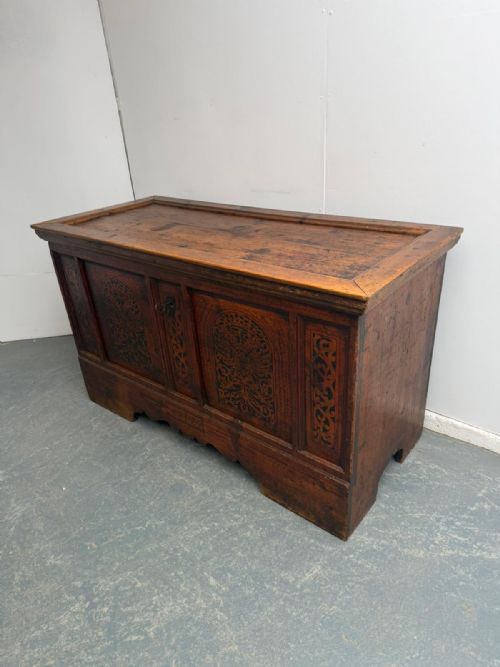
English and Welsh examples often lean towards utilitarian workshop styles, while Scandinavian and Hungarian pieces frequently incorporate folk art motifs and vibrant polychrome details.