
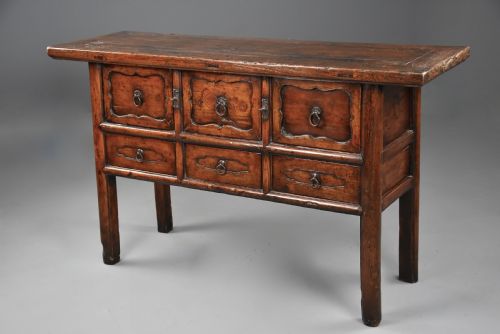


Brown Oriental Console Table
A brown oriental console table brings architectural timber and regional form into a hallway, with elm and hardwood altar tables leading the selection.
Brown Oriental Console Table
When you search for a brown oriental console table, you are looking at substantial timber furniture originating from Chinese provincial and Qing Dynasty traditions, alongside related Asian regional pieces. The version you are most likely to meet on this page is the Chinese elm altar table or side table, fashioned with plank tops and structural stretchers.
These forms span the eighteenth and nineteenth centuries, taking shape as narrow hall tables, demi-lune consoles, and writing desks. Alongside elm, you encounter denser hardwoods and occasional painted teak village pieces that bring strong linear presence to modern interiors.
How they were made
Cabinet makers constructed these brown oriental console table pieces primarily from elm and various dense Asian hardwoods, utilising traditional joinery without relying on metal fixings. Planks form the tabletops, sometimes supported by recessed legs and structured aprons.
Surface finishes include aged lacquer, carved detailing, and natural patination developed through decades of domestic use. Brass fittings occasionally appear on drawer models, while other surfaces rely purely on the grain of the timber.
Some provincial elm tables retain traces of ancient kitchen grease and tea stains trapped in the grain, proving they worked hard before retirement.
What varies in quality
The distinction between ordinary and superior examples of a brown oriental console table lies in the integrity of the timber and the depth of the patination. Well-preserved elm and hardwood exhibit rich tonal variation and stable joints that have survived centuries of service.
Carved ornament and structural proportions also separate standard provincial pieces from finer altar tables. Crisp execution in carved panels and balanced corner leg construction indicate superior workshop standards.
The Brown Oriental Console Table Glossary
- Altar table
- A long, narrow table traditionally used in domestic or temple settings, characterised by upturned flange ends and high floor clearance. These pieces form a significant portion of the available console selection.
- Demi-lune
- A half-moon shape used for console tables designed to sit flush against a wall. Pairs of these tables frequently combine to form a full circular dining surface.
- Elm
- A resilient timber utilised extensively in Chinese provincial cabinet making for its tough grain and warm brown tone. It accepts carved detail well while maintaining structural stability.
- Hardwood
- A dense category of timber seen across Qing Dynasty and export pieces, prized for weight, durability, and deep natural colouration. It provides a smooth surface for polished finishes.
Brown Oriental Console Table: Frequently Asked Questions
Where did these tables originate?
The pieces originate primarily from Chinese regional workshops and dynasties, spanning provincial contexts and formal altar traditions.
Maker attribution remains largely anonymous, focusing instead on regional joinery methods and generational timber handling.
How do I style a console table?
A narrow brown oriental console table fits well in entryways, hallways, or living rooms where floor space is restricted. Their linear proportions support lamps, ceramics, or books without dominating the room.
Pairing them with neutral walls allows the natural grain of the elm and hardwood to stand out visually.
What is an altar table?
Altar tables are long, narrow tables featuring distinct architectural proportions, often with recessed legs and subtle carved aprons. They served domestic and ceremonial functions in traditional households.
Today they function effectively as narrow sideboards or display surfaces in contemporary spaces.
How do I date these pieces?
Dating relies on timber shrinkage, construction methods, and surface patination built up over generations. Eighteenth and nineteenth-century examples display wear patterns consistent with long domestic use.
Stylistic markers such as Qing Dynasty carving styles help narrow down the period of production.