


Brown Oak Wing Chair
These brown oak wing chair options offer solid timber construction and traditional seating forms spanning several historical periods.
Brown Oak Wing Chair
A brown oak wing chair encompasses sturdy timber armchairs, lambing chairs, and wingback seating forms originating from the seventeenth century through to the early twentieth century. These regional and period pieces reflect vernacular traditions, Georgian styles, Victorian Gothic revivals, and Edwardian designs.
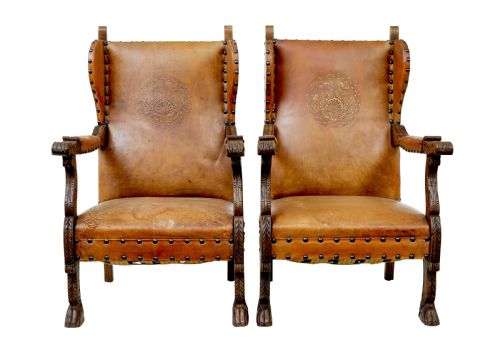
Buyers frequently encounter oak framing paired with materials such as leather, hessian, fabric, straw, and rush across the available selection. The inventory ranges from full-sized seating to child-sized armchairs and rocking chair variants.
Regional variations appear across British vernacular pieces, including Scottish and Welsh examples alongside Lakeland and Orkney forms. This selection demonstrates diverse domestic seating requirements through centuries of cabinet making.
How they were made
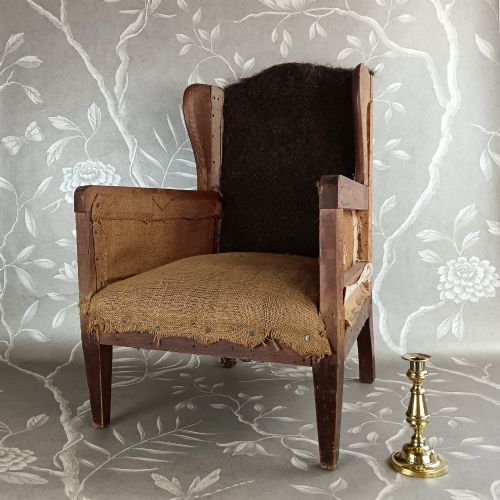
Construction relies upon solid timber frameworks, predominantly oak, shaped by traditional joinery methods suited to domestic armchairs and rocking chairs. Wood surfaces often show the natural grain and patination developed over centuries of use.
Upholstery techniques incorporate traditional materials including embossed leather, plain leather, hessian, fabric, straw, and rush. These elements are secured with methods appropriate to the period, sometimes featuring brass detailing or carved wooden ornamentation.
Historical periods represented span from the seventeenth century through Georgian, Victorian, and Edwardian eras.
What varies in quality
Quality differences stem from the integrity of the timber framing and the preservation of original structural elements across older centuries. Heavier carving and substantial proportions, as seen in larger Victorian library or Chesterfield examples, contrast with lighter vernacular framing.
The choice of covering material alters the character of the seating, ranging from embossed or plain leather to woven rush, straw, and fabric. Surviving early upholstery or well-maintained traditional surfaces distinguish higher grade specimens.
The Brown Oak Wing Chair Glossary
- Vernacular
- Objects built by local craftsmen using regional traditions and readily available materials rather than following metropolitan high-style designs. These pieces often display practical solutions to domestic needs.
- Lambing chair
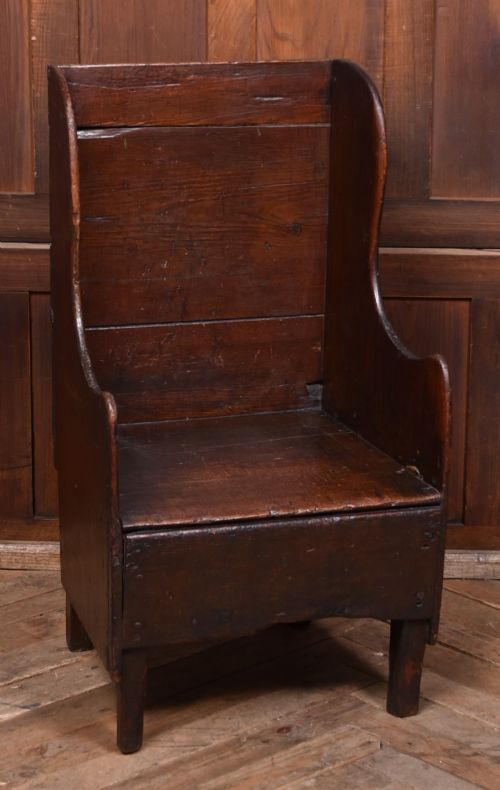
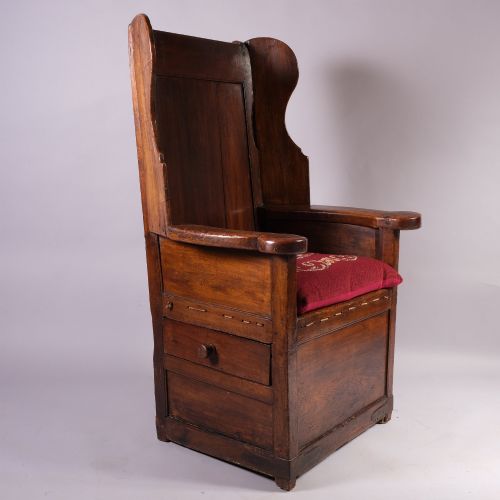
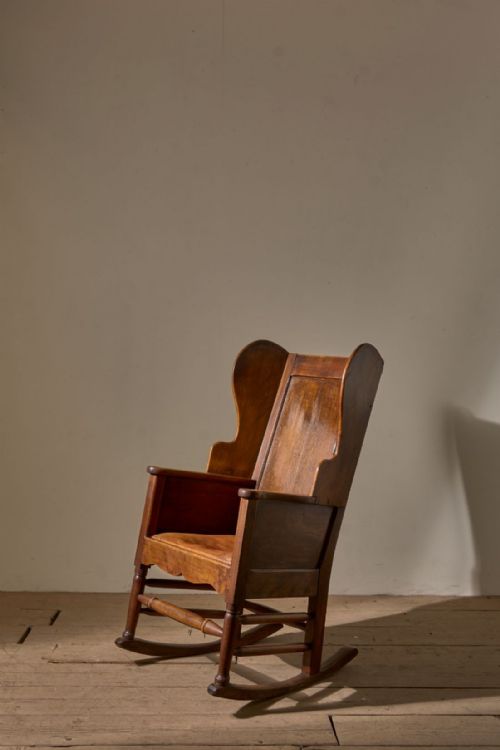
- A traditional high-backed seating form featuring solid wooden sides designed to shield the sitter from draughts. They frequently incorporate under-seat storage boxes or low rocking bases.
- Orkney chair
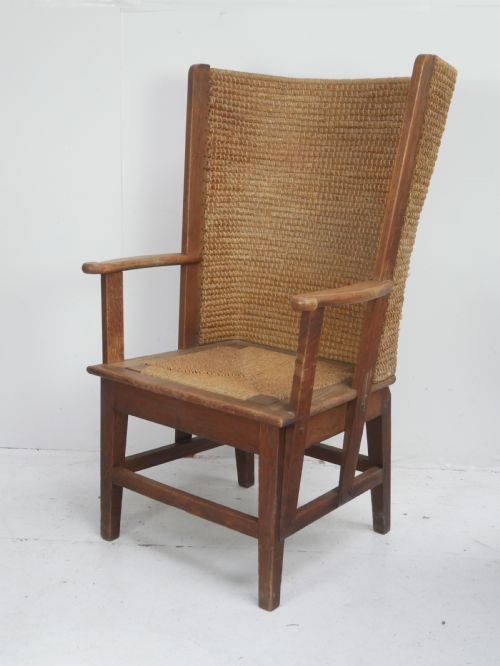
- A distinct traditional chair type featuring a distinctive woven straw or rush back panel tied with oat straw. They originate from the northern islands of Scotland.
- Wingback
- An armchair featuring protective side panels attached to the arms and back to deflect cold air. These panels evolved to trap heat from open fireplaces.
- Patination
- The natural surface change, softening, and sheen acquired by timber and leather through decades of handling and ageing. It serves as an indicator of genuine period use.
Brown Oak Wing Chair: Frequently Asked Questions
What is a lambing chair?
A lambing chair is a traditional wooden seat with solid sides designed to keep draughts away from the occupant. They often feature enclosed lower sections and sometimes incorporate rockers.
These forms developed in rural regions where protection from cold indoor environments was essential for daily comfort.
How old are these armchairs?
The pieces span multiple eras, including seventeenth, eighteenth, nineteenth, and early twentieth-century periods. Styles range from early vernacular designs to Victorian revivals and Edwardian examples.
Each era contributes distinct construction details and material combinations to the category.
What materials are used?
Construction relies heavily on oak timber frames paired with upholstery materials like leather, hessian, fabric, straw, and rush. Brass elements and carved wooden details also appear on specific examples.
These materials reflect the domestic resources available during the respective periods of manufacture.
Are there smaller chairs available?
Yes, the selection includes child-sized variants alongside full-sized armchairs and rocking chairs. These smaller pieces maintain the same vernacular styles and materials as their larger counterparts.
Such items served domestic households for younger family members in past centuries.
What is an Orkney chair?
An Orkney chair is a specific regional furniture form featuring a high back woven from straw or rush. This construction technique developed to utilise local botanical materials efficiently in Scottish island communities.
They provide a notable contrast to standard solid timber or upholstered armchairs.