

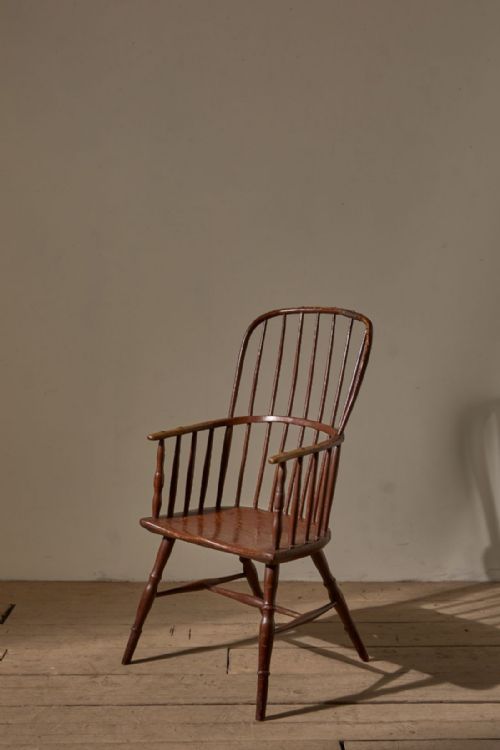
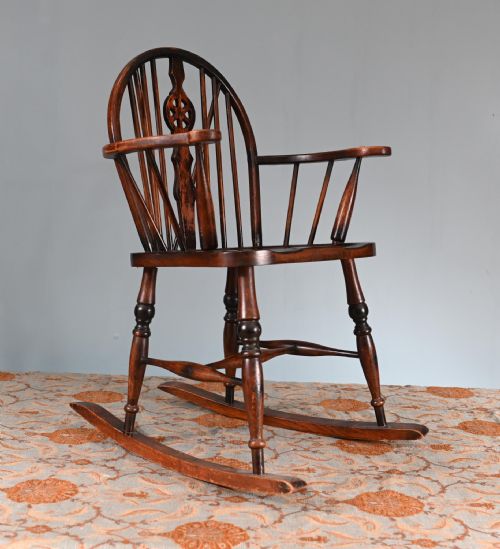

Brown Oak Windsor Armchair
A brown oak windsor armchair offers robust country seating, shaped from native timber to yield a sturdy seat for daily use.
Brown Oak Windsor Armchair
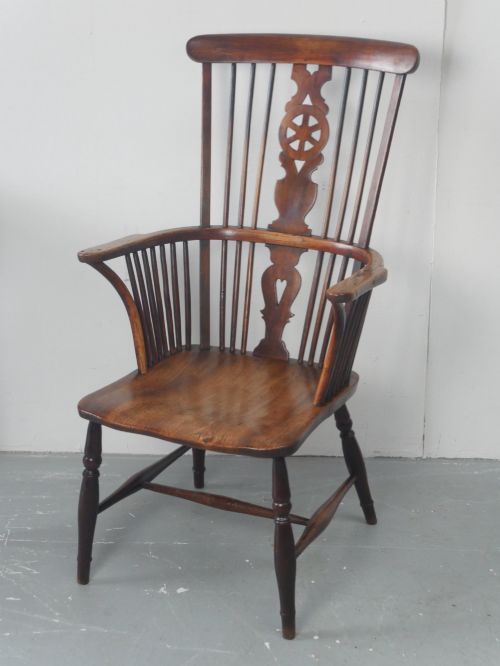
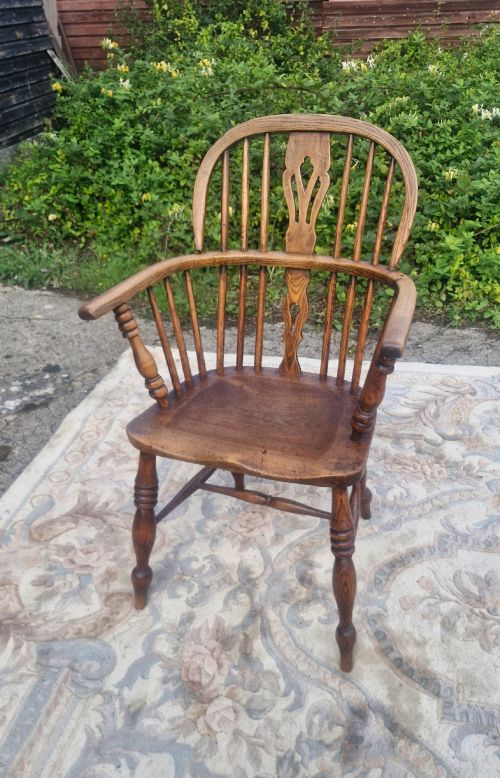
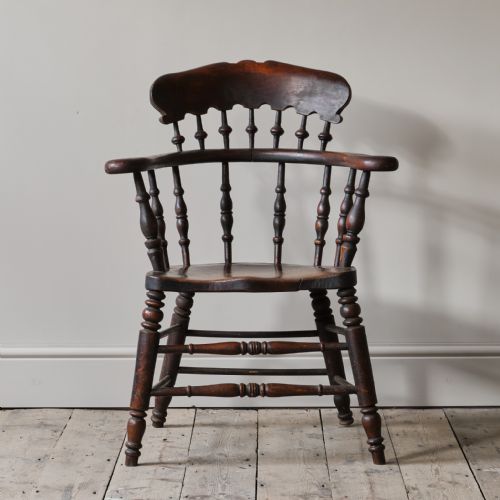
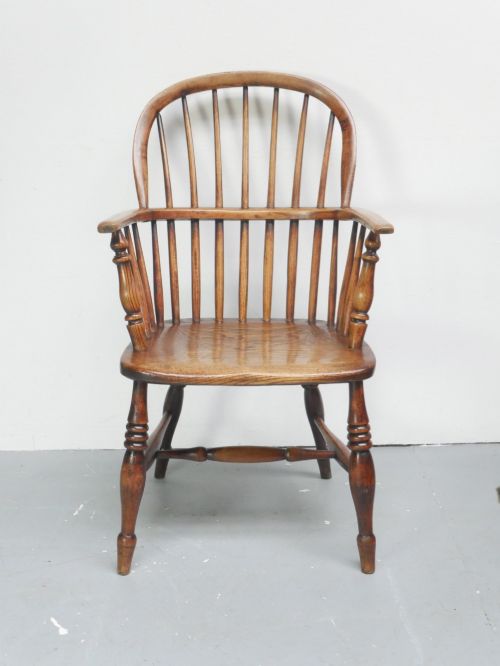
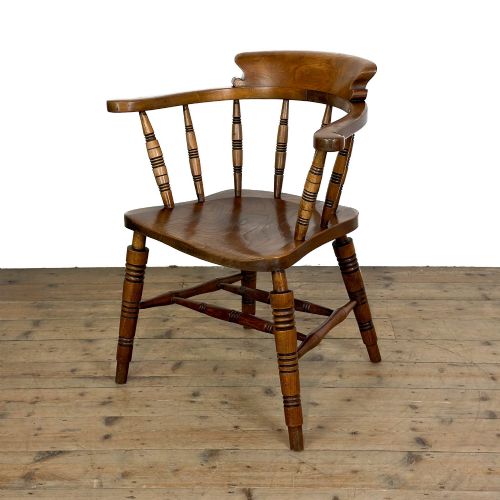
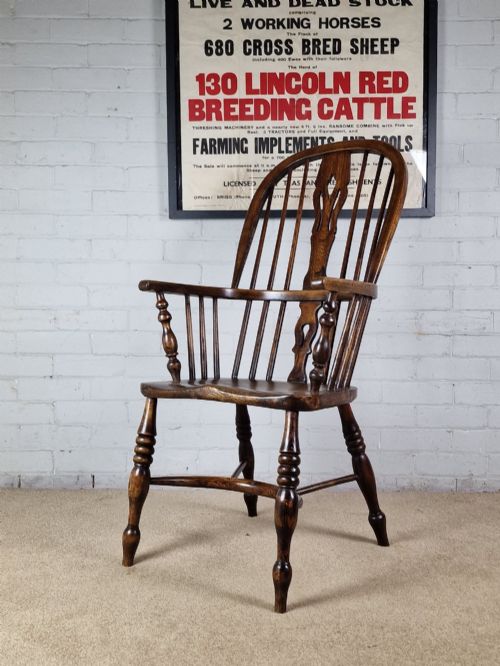
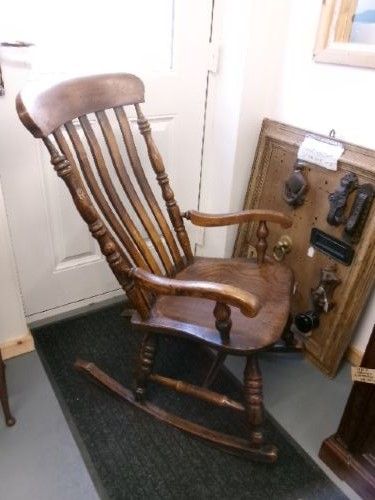
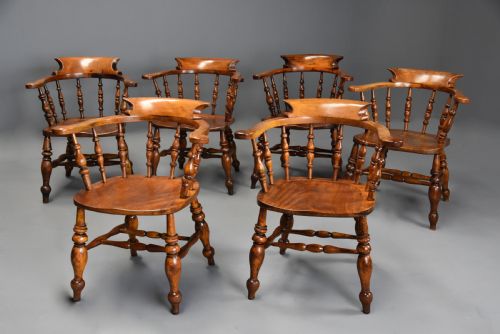
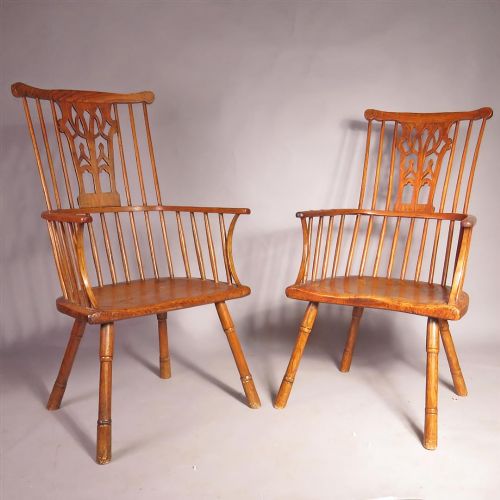
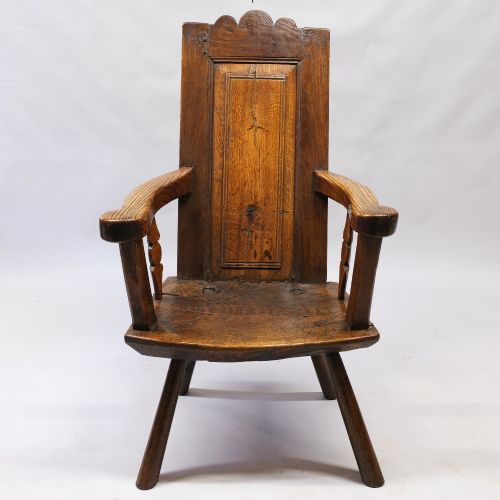
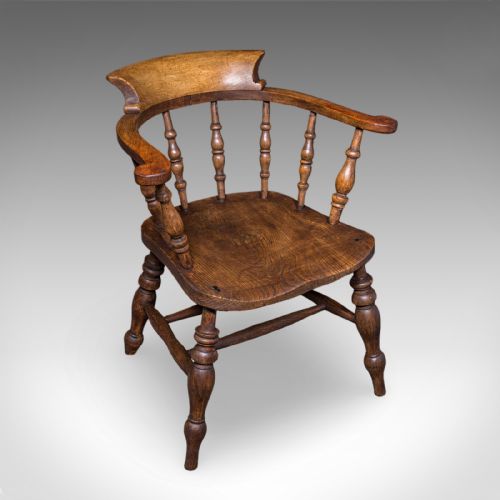
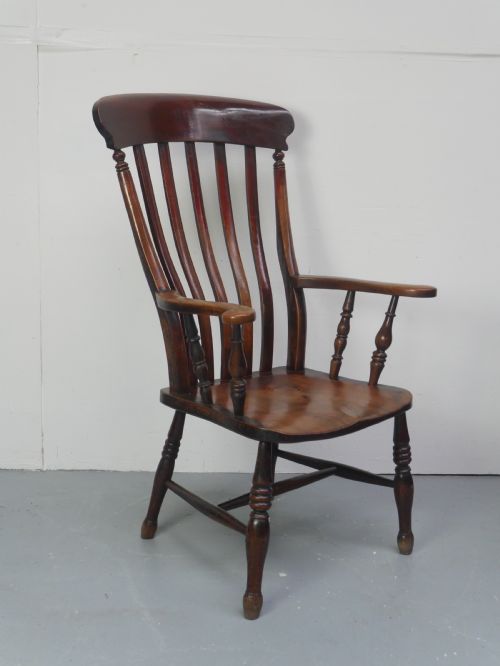
A brown oak windsor armchair belongs to a long lineage of traditional seating constructed with a solid wooden seat into which the legs and back spindles are wedged. These chairs appear in various regional guises across the British Isles, taking forms such as the low back, the comb back, the hoop back, and the smokers bow.
The pieces listed span multiple eras, including the eighteenth century, the Victorian period, and the early twentieth century. Buyers encounter vernacular expressions ranging from Welsh and Scottish workshops to English provincial hubs like the Thames Valley.
While many regional examples employ mixed woods such as elm, ash, and beech, the use of oak defines a particular weight and character. These armchairs served primarily as heavy-duty seating in farmhouses, kitchens, and country houses.
Materials and Construction
Makers built these armchairs by boring holes directly into thick wooden seats to receive turned legs and back sticks. Oak provided durable framing, while complementary timbers like elm supplied stable, cracking-resistant seat slabs.
Steam bending shaped the continuous arm bows and hoops found on comb back and hoop back variants. Joinery relied on wedges and shrinkage to lock the components together without complex metal fasteners.
Some nineteenth-century examples incorporate miniature proportions, serving as child high chairs designed to match the family dining furniture.
Evaluating Construction and Proportion
Quality rests in the harmony of the proportions and the integrity of the original timber. Chairs that retain their deep patination and unclipped legs stand above those altered or heavily sanded during past repairs.
The finesse of the spindle turnings and the cleverness of the arm bow steam bending separate basic utilitarian seating from finer regional pieces. Retaining the original saddle shape of the solid wood seat remains crucial.
Duncan McKellar of Fenwick
The Brown Oak Windsor Armchair Glossary
- Windsor chair
- A chair built with a thick wooden saddle seat that holds separate legs below and back stems above. This construction method creates a sturdy framework without relying on a central frame box.
- Comb back
- A Windsor chair style featuring a low back topped by a horizontal headboard supported by vertical spindles. This resembles the teeth of a comb.
- Hoop back
- A chair back formed from a single continuous piece of wood bent in an arch around the seat. It provides unified support for the occupant's back.
- Vernacular
- Objects made by local regional craftsmen following traditional local patterns rather than high-style metropolitan fashions. These pieces utilise readily available local timbers.
Brown Oak Windsor Armchair: Frequently Asked Questions
What is a brown oak windsor armchair?
A brown oak windsor armchair is a traditional wooden seat featuring a thick plank base, turned legs, and a spindle-backed superstructure. The timber displays rich brown tones characteristic of mature oak.
These chairs developed as practical furniture for domestic and rural settings, prized today for their structural honesty and organic forms.
How were these chairs used historically?
These armchairs served as heavy-duty seating in farmhouses, kitchens, and country houses. Their robust construction suited daily family life and fireside duties.
Owners placed them in parlours or kitchens where sturdy, supportive seating was required for long periods.
How do I live with a windsor armchair?
Placing a windsor armchair in a hallway, study, or living room introduces strong vernacular character to an interior. They pair well with both antique and modern tables.
Keep them away from direct heat sources to prevent the historic timber from drying out or splitting.
How do I tell different periods apart?
Eighteenth-century examples often display simpler, more primitive joinery and comb back designs with distinct regional quirks. Victorian and later pieces frequently incorporate steam-bent components and wheelback or lathe back motifs.
Examining the tool marks on the seat underside helps distinguish handmade vernacular items from later production methods.