
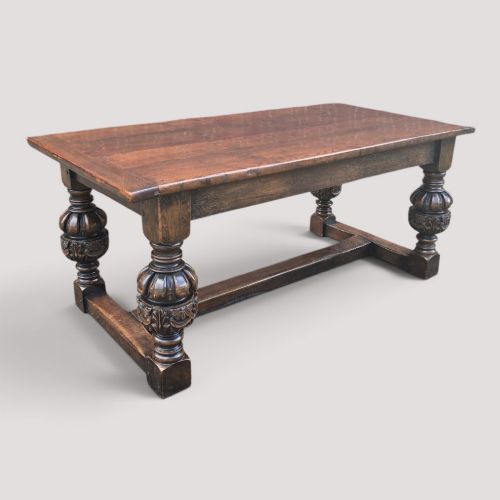
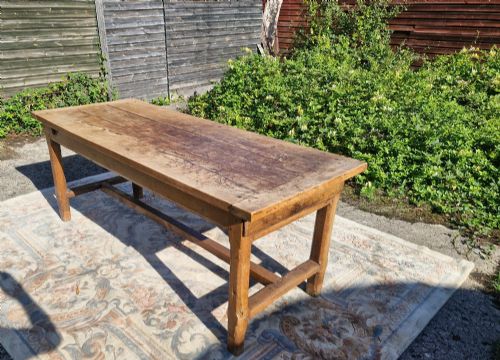
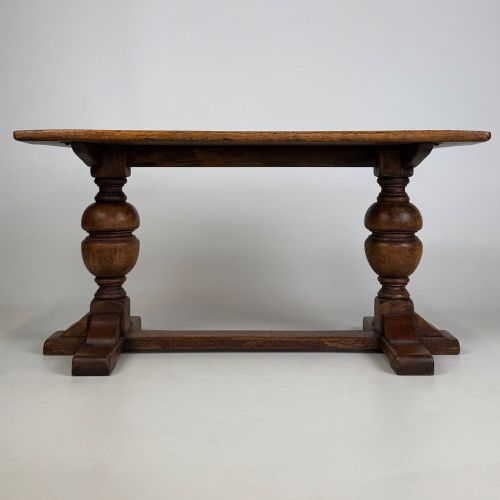
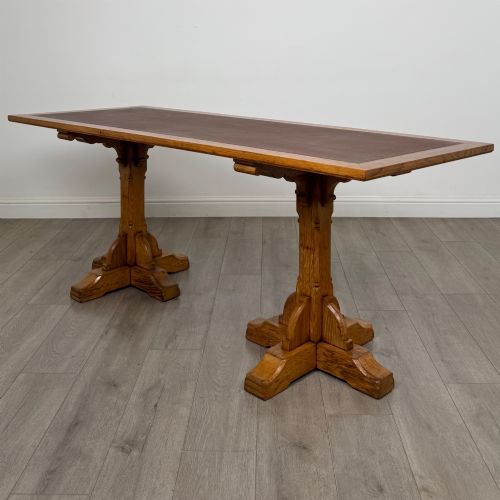
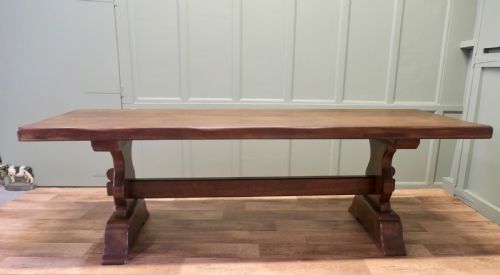
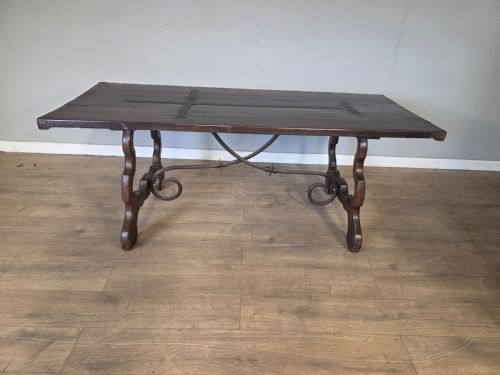
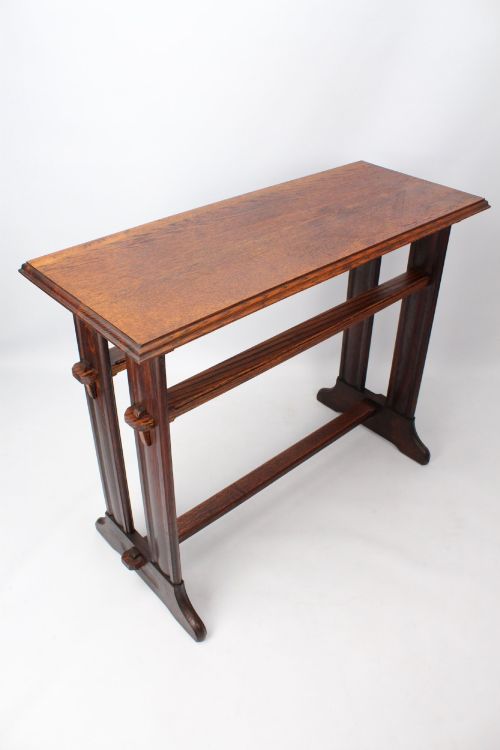
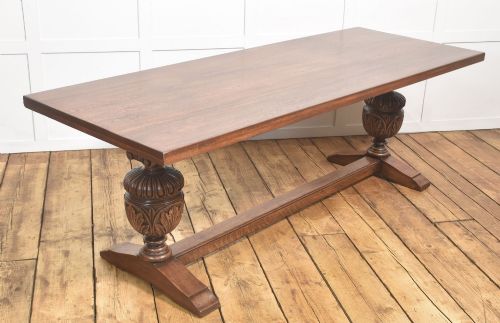
Brown Oak Trestle Table
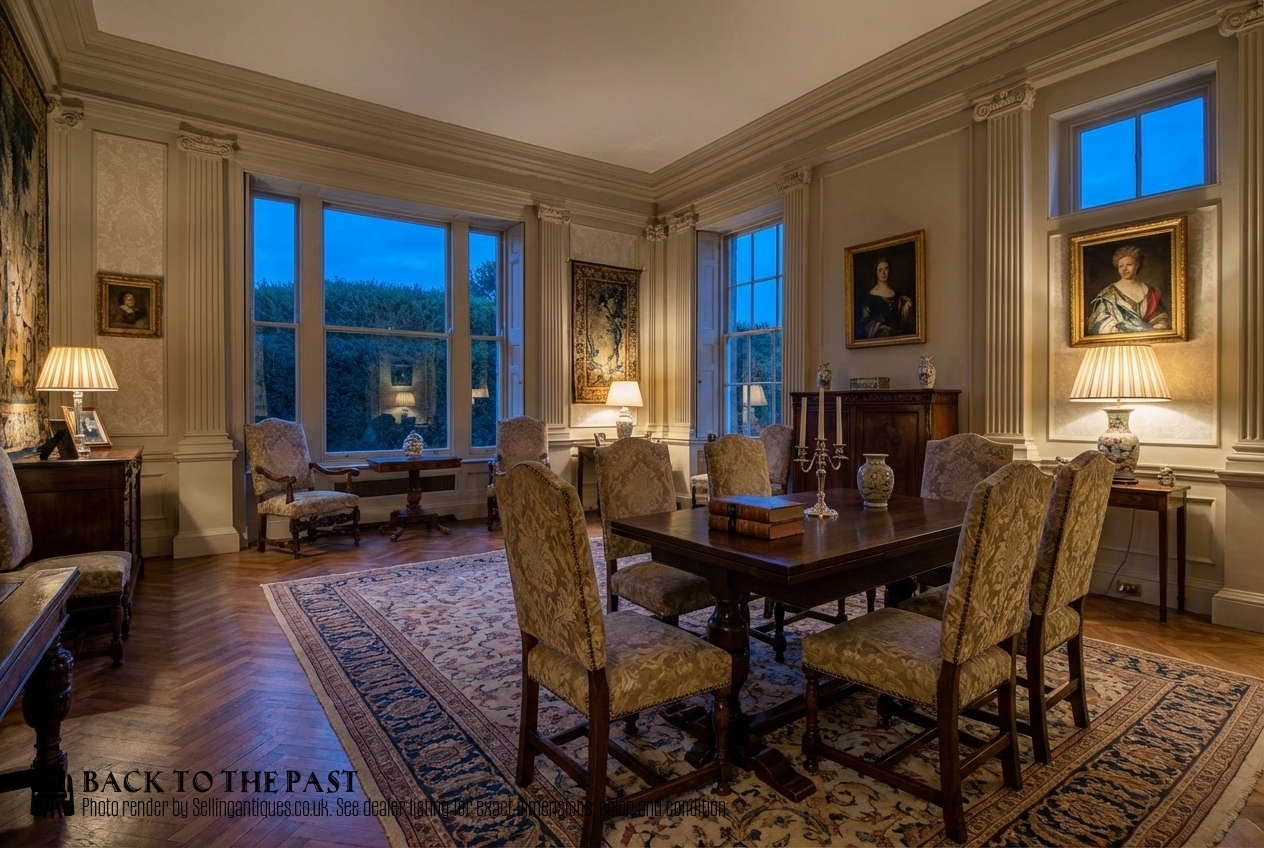
These brown oak trestle tables bring centuries of English woodworking straight into your dining room or workspace with undeniable character.

What these tables are
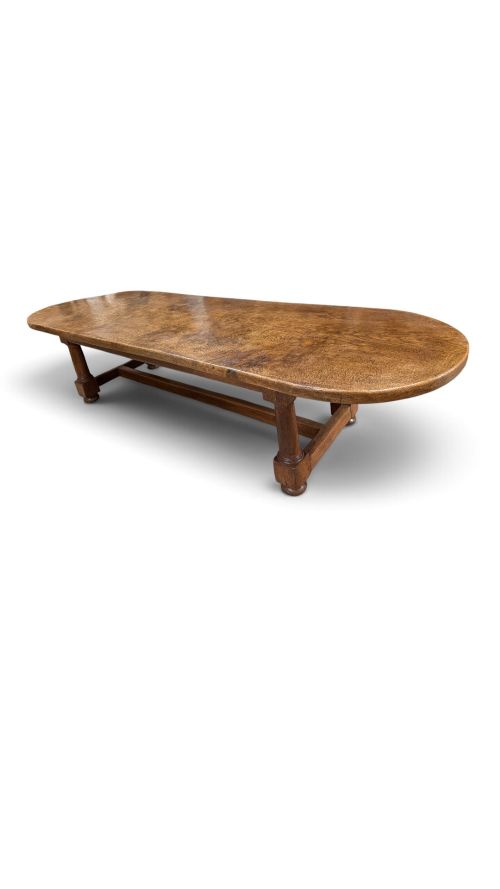
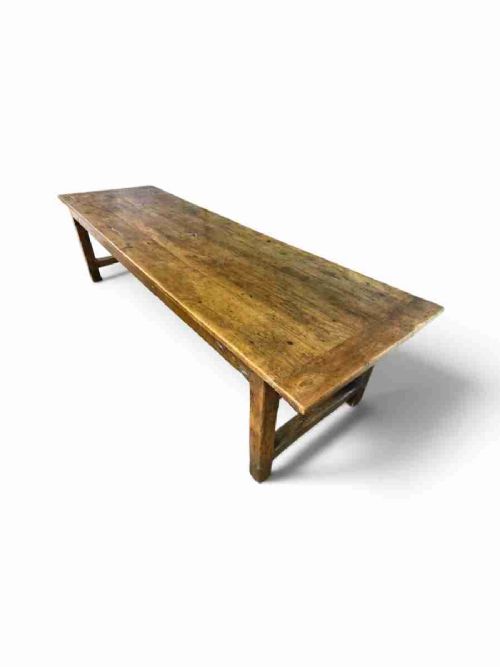
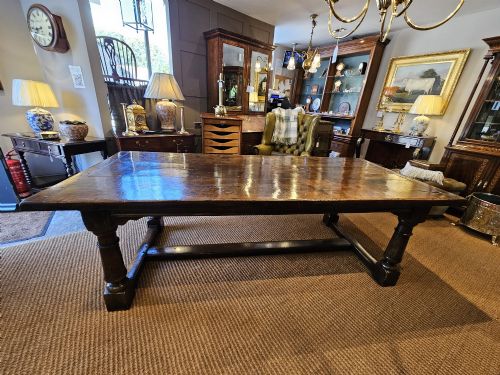
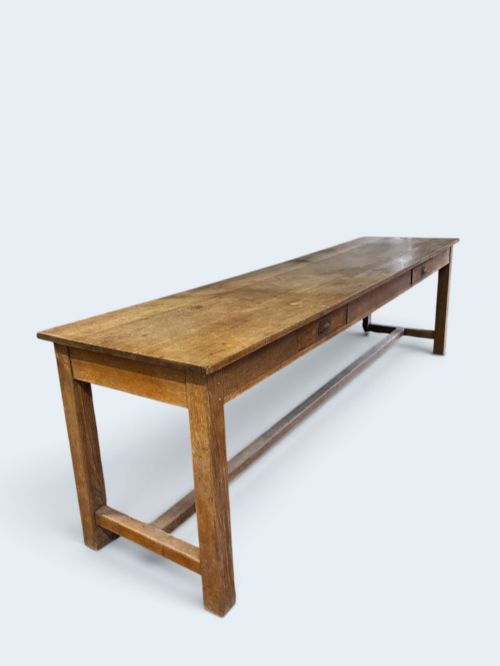
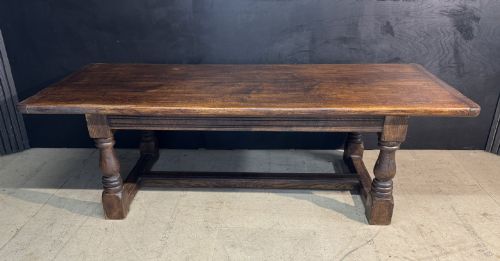
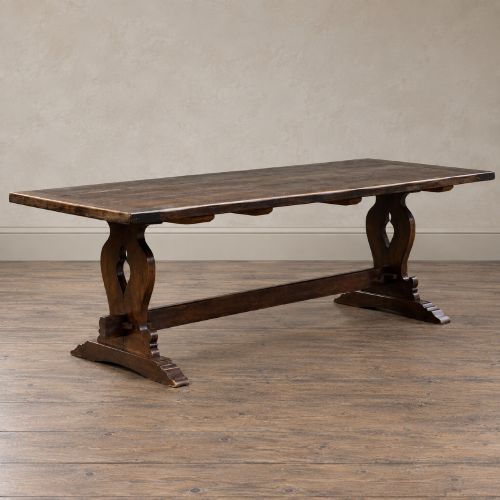
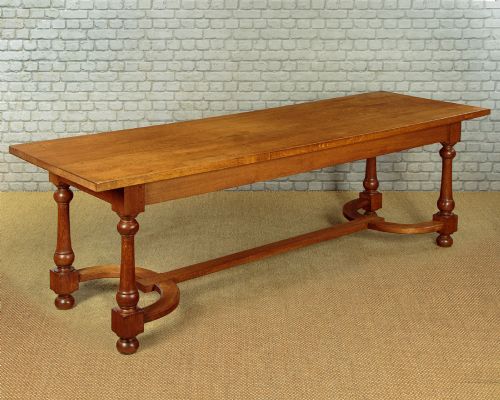
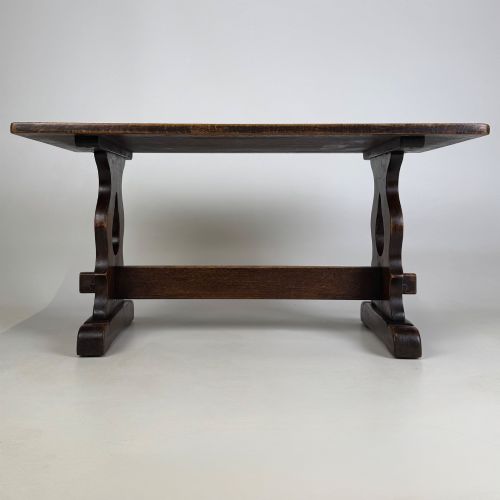
A brown oak trestle table typically takes the form of a substantial dining table, work table, or refectory table drawing on earlier centuries of design. You will encounter pieces spanning the seventeenth century through to the Edwardian era and the early twentieth century.
The selection encompasses stylistic revivals including Jacobean, Gothic, and Arts and Crafts movements alongside traditional English forms. Makers such as Heal's are represented alongside vernacular workshop pieces, offering both formal dining solutions and unusual artist's benches.
How they were made
Every piece in this selection is constructed from oak, utilising traditional joinery methods suited to heavy timber furniture. Workshops relied on robust framing and pegged joints to support long tops and trestle supports without metal fasteners.
Surfaces developed their distinctive appearance through decades or centuries of use, resulting in rich patination across the timber. Makers shaped the refectory boards and trestle bases by hand, leaving subtle tool marks that identify period manufacture.
Retail Price Guide 2026
Typical UK retail prices for brown oak trestle table, calculated from the Sellingantiques database of over a million retail prices indexed since 2003. This retail price guide relies exclusively on Sellingantiques data; no external sources or auction records are used, so the figures do not describe the wider market.
The listings span from the seventeenth century up to the Edwardian era, featuring oak constructed refectory tables, dining tables, and work tables.
What varies in quality
Quality rests upon the selection of timber and the depth of the patination accumulated across the oak surfaces over time. Earlier pieces or faithful nineteenth-century revivals show greater consideration for grain alignment and structural proportion.
The sophistication of the carved detailing and the integrity of the trestle construction separate standard vernacular items from exceptional workshop examples. A balanced form with undisturbed surface age commands attention far beyond mere scale.
Heal s
The Brown Oak Trestle Table Glossary
- Refectory table
- A long dining table originally built for monastic dining halls and later adapted for domestic use. These pieces often feature stretcher bases and substantial timber tops.
- Trestle table
- A table consisting of two or more support frames connected by a longitudinal beam or stretcher. This design allows for maximum legroom along the length of the top.
- Jacobean Revival
- A nineteenth or early twentieth-century design movement copying the dark, heavily carved furniture styles of the early seventeenth century. It frequently utilises turned legs and strapwork ornamentation.
- Patination
- The glossy, mellow surface sheen developed on old wood through handling, polishing, and oxidation over generations. It serves as a key indicator of genuine age.
- Arts and Crafts
- A design philosophy from the late nineteenth and early twentieth centuries championing honest construction and visible hand craftsmanship. It rejected mass-produced industrial ornamentation in favour of simple utility.
Frequently Asked Questions
How do I clean a brown oak table?
Maintain the timber simply by dusting with a dry cloth and occasionally applying a traditional beeswax to nourish the grain. Avoid modern silicon-based polishes that can build up and dull the historic patination.
Keep these tables away from direct heat sources and strong sunlight to prevent the oak from drying out or splitting. Gentle care preserves the colour and historic finish for daily use.
Can I use a refectory table for daily dining?
These tables were built precisely for heavy everyday use and handle family meals with ease. Their sturdy trestle construction provides excellent stability and generous seating clearance.
Using mats under hot dishes and wiping up spills promptly protects the timber surface. Over time, any minor marks simply add to the rich narrative of the piece.
How do I identify a revival piece?
Nineteenth and twentieth-century revival pieces often mimic seventeenth-century forms but use machine-sawn timber elements or lighter oak. Look closely at the underside and joinery for clues regarding manufacturing techniques.
Hardware, pegging styles, and timber colour also help distinguish a Victorian or Edwardian interpretation from an earlier original. Dealers note these stylistic periods in the listing details.
Are trestle tables good for small spaces?
Trestle tables offer a distinct advantage in tighter rooms because the recessed supports allow chairs to tuck right underneath. This maximises seating capacity along the entire length without obstructive corner legs.
Choosing a narrower refectory or work table format helps maintain a comfortable walking space around the perimeter. Measure your dining area carefully against the listed dimensions before deciding.