

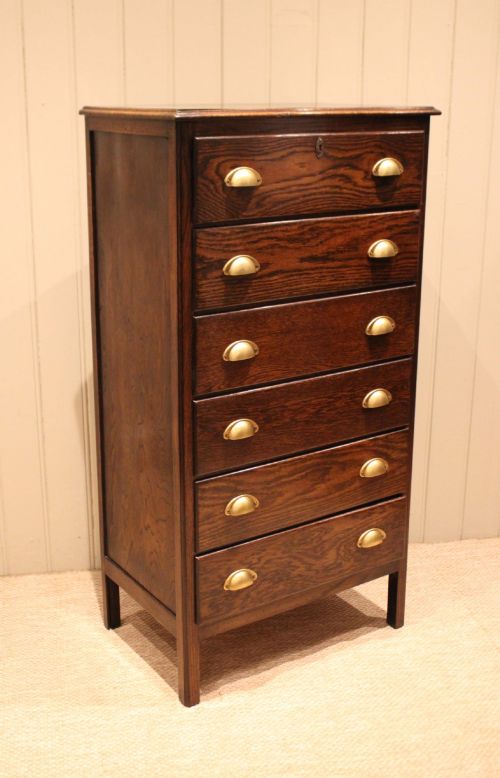
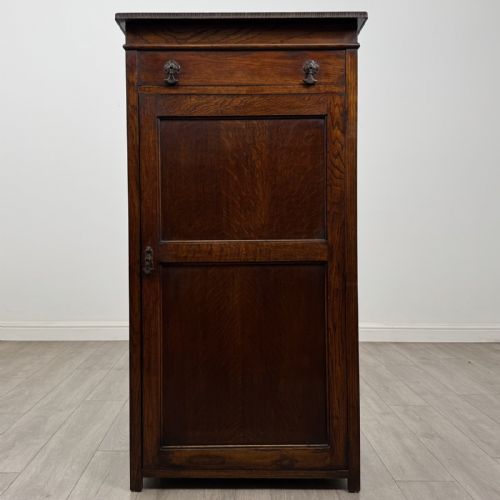

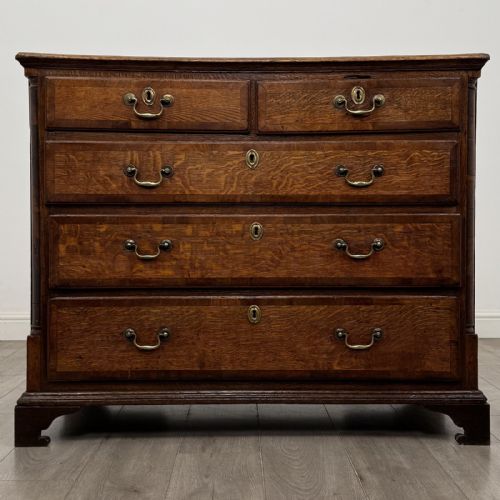
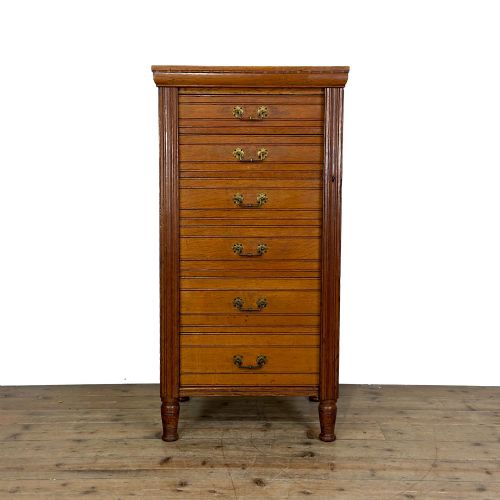
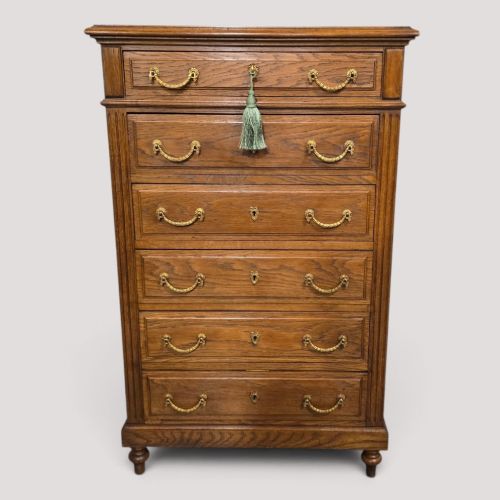

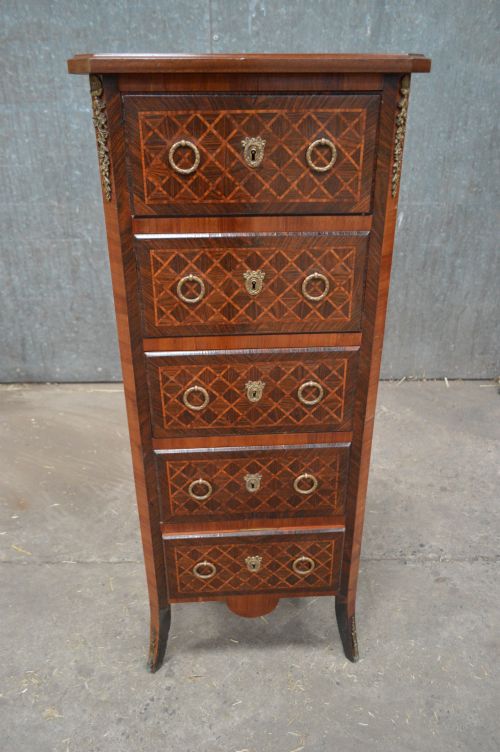
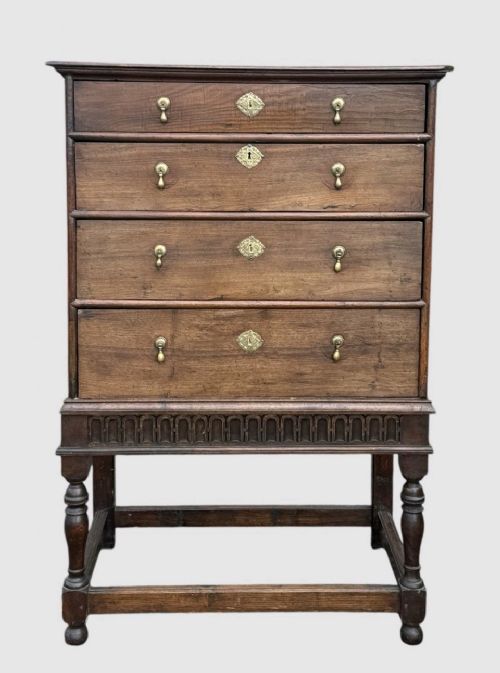


Brown Oak Tall Chest
A brown oak tall chest offers generous vertical storage wrapped in the rich, deep tones of mature timber.

Brown Oak Tall Chest
A brown oak tall chest provides vertical storage across multiple drawers while occupying a minimal floor footprint in a room. These pieces span centuries of cabinet making, ranging from restrained Georgian proportions to early twentieth century examples.
You will encounter various formats on this page, including standard chests of drawers, chests on stands, and specialised filing pieces. Timber selection defines the group, showing the characteristic darker natural coloration that occurs in mature oak trees.
Materials and construction
Makers utilised solid oak alongside secondary timbers like walnut and mahogany, shaping carcases to handle the heavy weight of stacked drawers. Joinery relied on traditional methods suited to dense hardwoods, ensuring structural stability over centuries of daily use.
Metal hardware such as brass handles and backplates completed the construction, often surviving intact from periods like the eighteenth century. Surface finishing involved polishing to protect the wood while highlighting the natural grain and deep brown colour.
Brown Oak Tall Chest Retail Price Guide 2026
Typical asking prices for brown oak tall chest among the pieces listed under this phrase on Sellingantiques today, from the lower quarter to the upper quarter. They describe what is for sale here now, not the wider market.
One Victorian gentleman found purpose in a specialised sporran chest designed specifically to keep his Highland socks in order.
Judging quality in brown oak tall chests
The standard of a brown oak tall chest rests on the selection of timber and the crispness of the cabinet work. Superior examples display balanced grain patterns across the drawer fronts and well proportioned carcases that maintain architectural harmony.
Attention to detail in the drawer construction and the retention of original brass hardware elevate certain pieces above standard utility items. The integration of stands or specialised storage interiors further distinguishes the finer examples in this category.
The Brown Oak Tall Chest Glossary
- Chest on stand
- A cabinet form where a main drawer section sits upon a separate low table base with legs. This configuration lifts the storage higher and often dates from the eighteenth century.
- Parquetry
- A geometric mosaic of wood pieces used for decorative veneer on furniture surfaces. It appears on French provincial and transitional pieces.
- Carcase
- The main structural body or shell of a piece of furniture before drawers and doors are fitted. It forms the solid skeleton of the chest.
- Oak
- A durable hardwood known for its strength and prominent grain markings. It serves as the primary material for the chests listed here.
Brown Oak Tall Chest: Frequently Asked Questions
How do I date an oak chest?
Dating relies on construction methods, handle styles, and timber preparation visible within the drawer linings and carcase. Earlier pieces often display hand sawn marks and pegged joints.
Later nineteenth and twentieth century examples show more standardised machine working and different locking mechanisms while retaining the characteristic brown oak timber.
Where should I place a tall chest?
A tall chest fits well in bedrooms, hallways, or studies where floor space is limited but vertical storage is required. The height allows for substantial drawer capacity without dominating the room.
Ensure the piece sits on level flooring and consider securing tall carcases to the wall for stability if necessary.
What is brown oak?
Brown oak is a natural coloration of the common oak tree caused by a fungus that enters the living tree and alters the tannin levels. This process turns the heartwood a rich, deep brown shade.
Cabinet makers prize this timber for its distinctive warmth and depth, which differs significantly from standard pale oak.
How do I clean brown oak furniture?
Maintenance involves dusting with a soft, dry cloth to remove surface particles without disturbing the polished finish. Avoid placing the wood in direct sunlight or near heat sources to prevent drying out.
Occasional application of appropriate wax feeds the timber and maintains the natural lustre of the brown oak surface.