

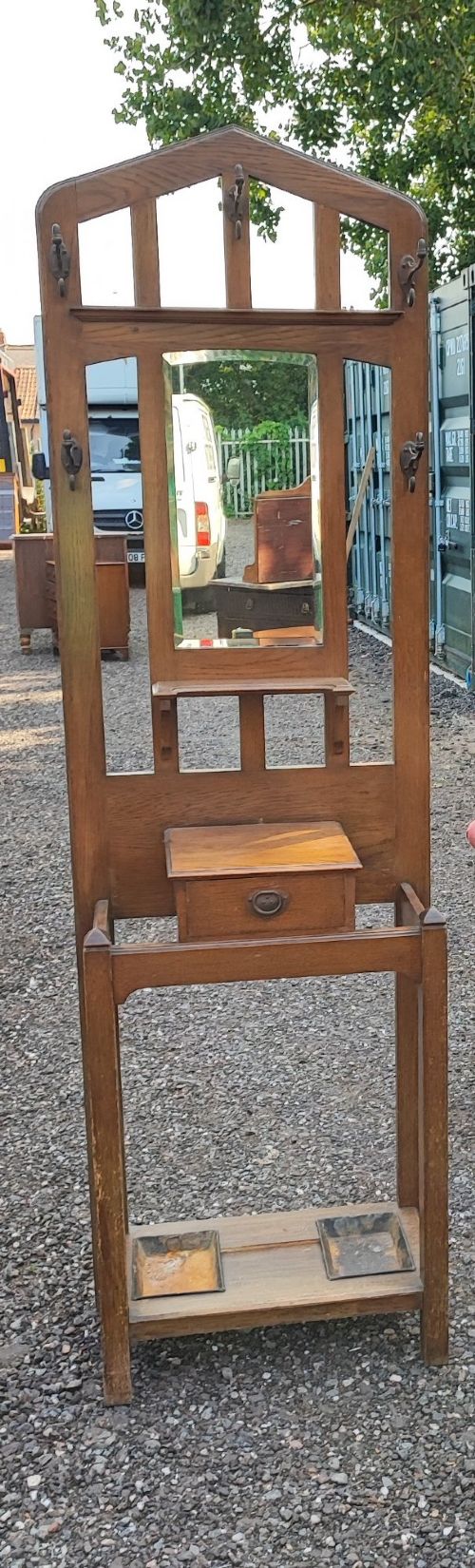
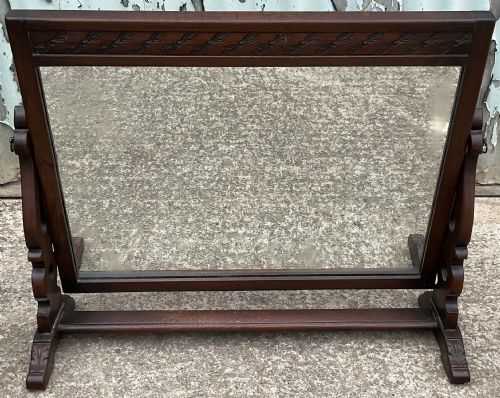


Brown Oak Standing Mirror
A brown oak standing mirror brings distinct character and practical utility to a hallway or bedroom through rich timber grain and functional design.
Brown Oak Standing Mirror
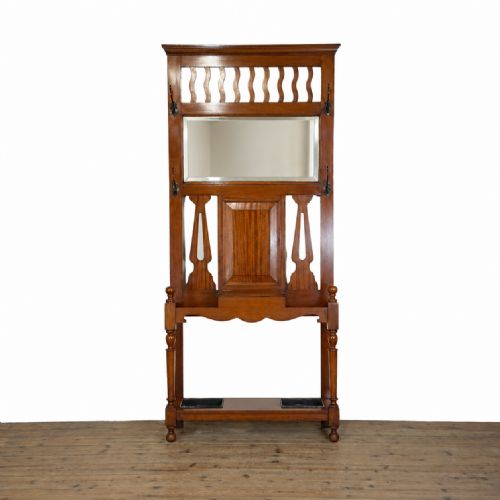
When buyers search for a brown oak standing mirror, they encounter a variety of forms including large hall stands, cheval mirrors, and dressing table mirrors. These pieces span several periods such as Victorian, Edwardian, and the early twentieth century.
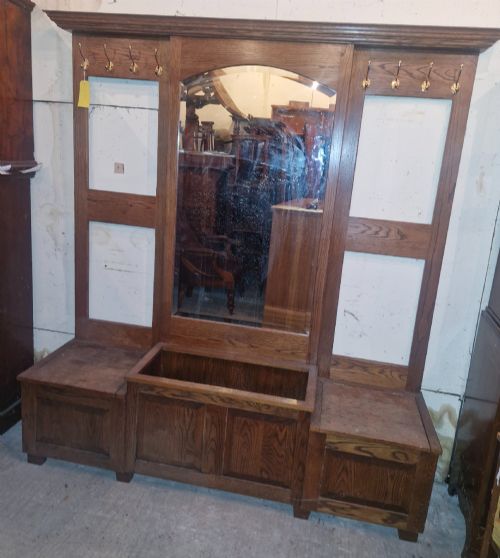
The most common iterations on this page are hall stands incorporating mirrors alongside hat and coat hooks, alongside dedicated floor-standing cheval mirrors and adjustable dressing mirrors. Their origins connect directly to nineteenth and twentieth-century cabinetmaking traditions.
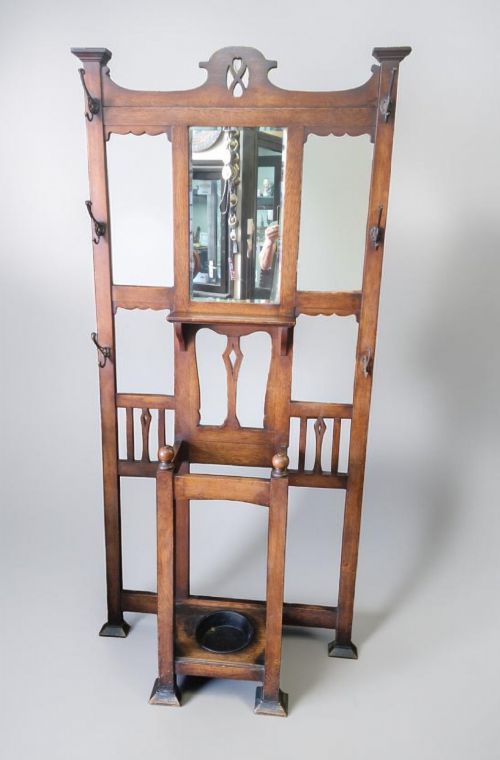
Stylistically, these mirrors draw upon Victorian, Edwardian, Art Nouveau, Arts and Crafts, and Flemish Renaissance Revival aesthetics. Carved details, adjustable frames, and multi-functional designs characterise the selection.
Materials and construction
Makers utilised solid oak and wood veneers for the primary structures, often highlighting the natural grain of brown oak timber. Glass forms the reflective plates, frequently supported by adjustable frames and brass or iron fixings.
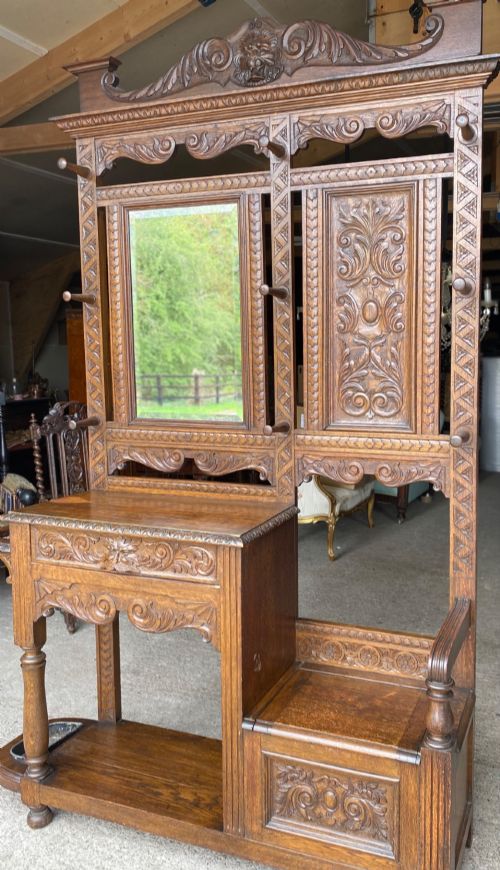
Construction techniques involve robust joinery suitable for heavy daily use, paired with carved ornamentation ranging from geometric motifs to elaborate Greenman masks. Metal hardware such as brass hooks and cast iron elements add both structural stability and functional utility.
Brown Oak Standing Mirror Retail Price Guide 2026
Typical asking prices for brown oak standing mirror among the pieces listed under this phrase on Sellingantiques today, from the lower quarter to the upper quarter. They describe what is for sale here now, not the wider market.
Some Victorian hall stands feature carved Greenman masks glaring out to guard visitor coats from mischief.
What separates the finest examples
Quality in these pieces is dictated by the depth and precision of the carved woodwork, the structural integrity of the timber joints, and the retention of original brass or iron hardware. Finer examples display crisper detailing in styles like Art Nouveau or Flemish Renaissance Revival rather than simpler utilitarian construction.
The clarity of the glass and the smoothness of any adjustable mechanisms also distinguish superior pieces from basic designs. Scale matters too, with exceptionally large or multi-functional hall stands representing more ambitious workshop output.
James Shoolbred
The Brown Oak Standing Mirror Glossary
- Cheval mirror
- A freestanding full-length mirror suspended on a frame that allows it to tilt. This form became popular for dressing areas during the nineteenth century.
- Hall stand
- A multi-functional piece of furniture designed for entrance halls, typically combining a mirror with coat hooks, umbrella stands, and sometimes a seat. Many incorporate carved oak panels and small storage compartments.
- Flemish Renaissance Revival
- A nineteenth-century design style heavily inspired by sixteenth-century Flemish art, featuring dramatic carved ornamentation, scrolls, and robust proportions.
- Art Nouveau
- An international style of art and architecture prominent around nineteen hundred, characterised by organic lines, stylised plant motifs, and flowing asymmetrical forms.
- Shaving stand
- A specialist piece of furniture incorporating an adjustable mirror, small drawers, and surfaces designed for morning grooming routines.
Brown Oak Standing Mirror: Frequently Asked Questions
Where should I place a hall stand?
A hall stand belongs in an entrance hallway where its mirror, coat hooks, and umbrella storage can be used daily. It creates a practical and welcoming focal point near the main door.
Ensure there is adequate clearance for people to use the hooks and check their reflection before leaving the house.
How do I care for brown oak?
Dust the timber regularly with a soft, dry cloth to prevent the accumulation of grit in carved details and joints. Avoid placing the piece in direct sunlight or near heat sources to protect the wood and finish.
Occasional application of appropriate furniture wax helps nourish the oak and maintain a natural sheen over time.
How can I date an oak mirror?
Dating relies on examining the construction methods, hardware materials, and stylistic cues present in the carving. Victorian and Edwardian pieces often display distinct decorative movements such as Arts and Crafts or Art Nouveau.
Inspect the backboards, fixings, and mirror plate bevelling for clues regarding the period of manufacture.