


Brown Oak Standing Clock
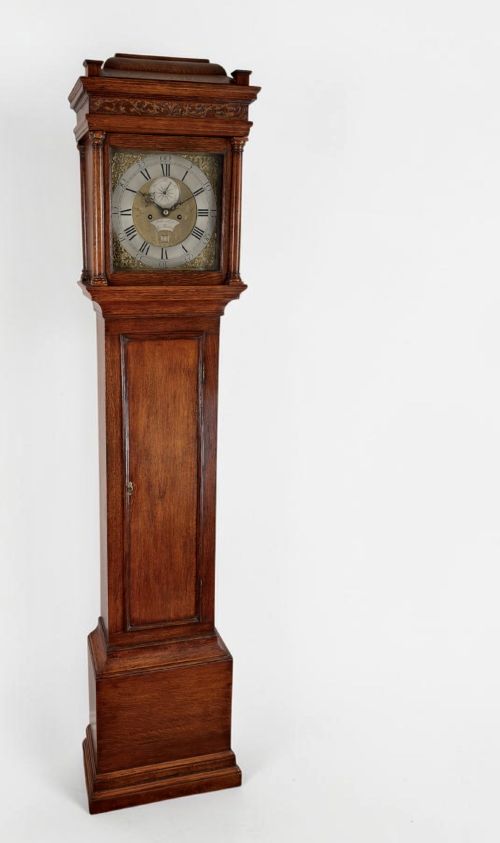
A brown oak standing clock brings the measured tick of the Georgian and Victorian eras straight into a hallway.
Brown Oak Standing Clock
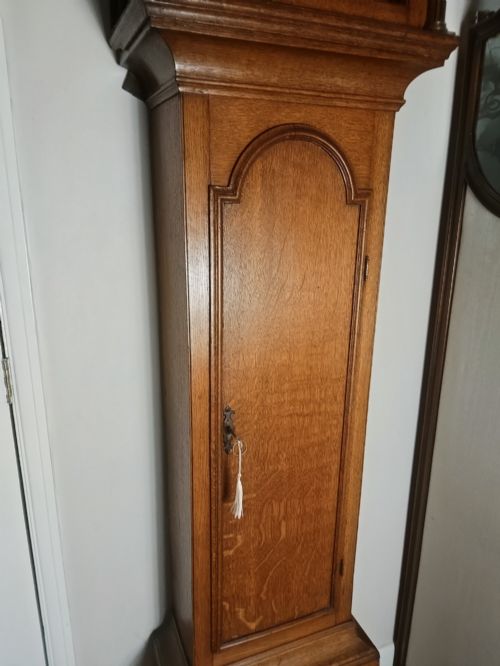
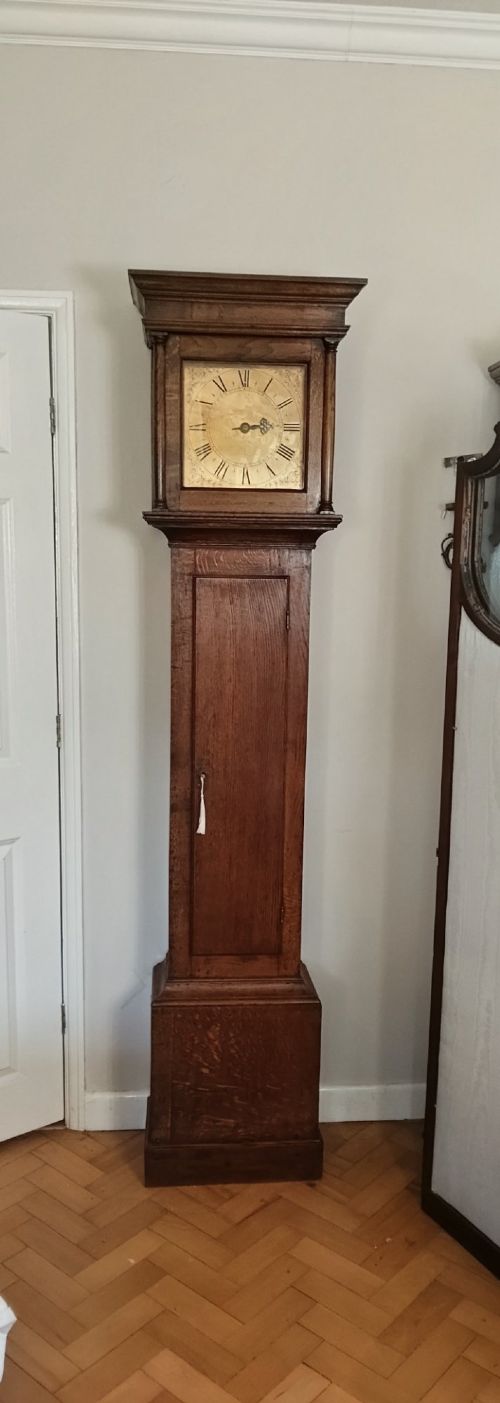
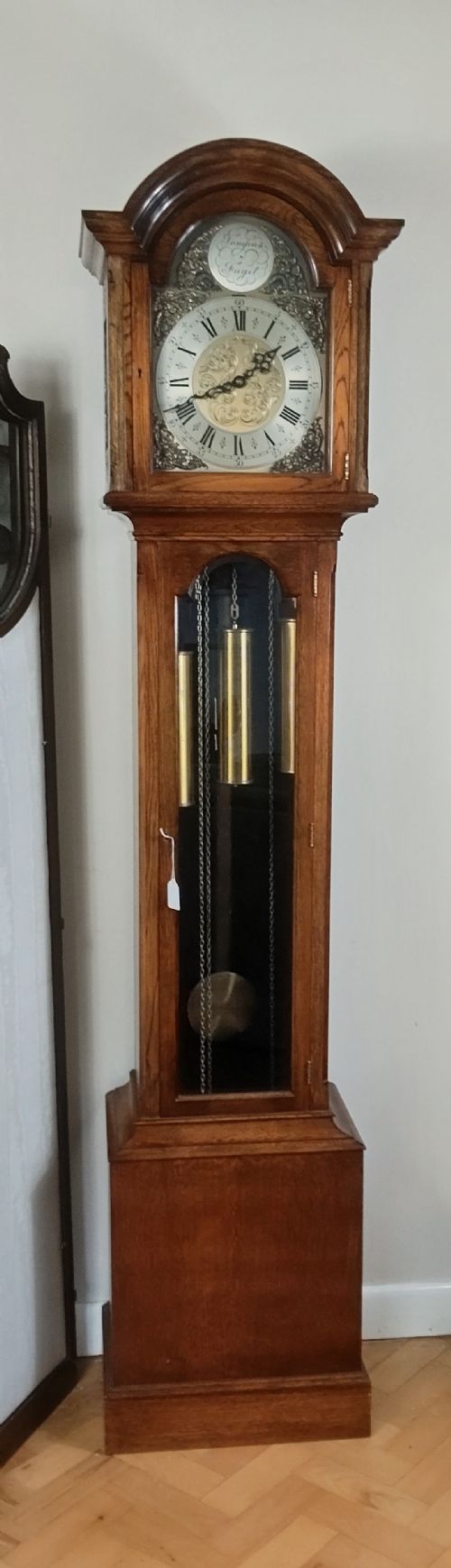
A brown oak standing clock is a tall floor-standing timekeeper housing a brass or painted iron dial behind a glass door. The listings show these pieces principally spanning the Georgian and 19th Century periods, alongside occasional early 20th century examples.
Most items appearing here take the form of traditional longcase or grandfather clocks, constructed primarily from oak timber with occasional mahogany banding or brass dial fittings.
Origins stretch across regional British workshops from Wales to Scotland and England, with makers signing dials from towns such as Chester, Henley and New Quay.
Materials and construction
Makers built these cases using native oak timbers, frequently pairing the warm grain with mahogany crossbanding or highlights. Dial faces combine brass, painted iron, steel and enamel to display the hours.
Movements within these tall cases rely on iron and brass wheel trains driven by hanging weights, housed safely inside timber trunks protected by glass-fronted doors.
The listings span Georgian, Victorian, and 1930s periods, utilising oak, mahogany, brass, glass, iron, and enamel.
Distinctions in craftsmanship
Differences across the range rest in the dial work and the timber selection, where burr oak or crisp regional engraving signal higher ambition from the maker.
Proportion defines the better examples, particularly in smaller dial widths and well-balanced proportions that suit domestic hallways rather than high-ceilinged stairwells.
Lee of Great Marlow·Thomas Webbe of New Quay·Richard Prew Of Tewksbury·Richard Alexander·James Coster Of Henley·W Prior·Jn Wright Linton·Rob Parry Pwllheli·James Draycot Wells·Robert Darling·Smith·Joyce·Foxton·Raine Of Durham·Thomas Baker·Vurley Of Wisbech
The Brown Oak Standing Clock Glossary
- Longcase clock
- A tall pendulum clock enclosed in a wooden case that stands directly on the floor. These tall timekeepers are frequently called grandfather clocks.
- Arch dial
- A clock face featuring a curved semicircular upper section above the main chapter ring. This space often houses a moving moon phase or calendar mechanism.
- Strike and silent
- A mechanical feature allowing the clock's striking train to be muted at night. This mechanism prevents the hourly chimes from disturbing sleep.
- Dial
- The visible face of the clock where hours and minutes are marked by hands. These are commonly fashioned from brass or painted iron by regional makers.
Brown Oak Standing Clock: Frequently Asked Questions
How do I wind a longcase clock?
Winding involves using a crank key to raise the heavy iron or lead weights suspended inside the trunk by cords or chains. Care must be taken not to overwind the movement.
Most traditional eight-day clocks require winding once a week, while thirty-hour versions need attention more frequently using a pull chain.
Where should I place a standing clock?
These tall timekeepers need a stable, dry interior wall away from direct sunlight and strong drafts that could warp the oak case. Placing them on solid flooring ensures the pendulum swings evenly.
Sufficient clearance above the case is required for installation, and the trunk must be secured upright to the wall for safety.
How do I date an oak clock?
Dating relies on stylistic clues in the dial design, wood choice, and the signature of the maker inscribed on the brass or painted face. Georgian examples show square or arched brass dials, while later Victorian versions often feature painted iron.
Regional records and trade directories help pinpoint the active working years of provincial clockmakers listed on the dial plates.