
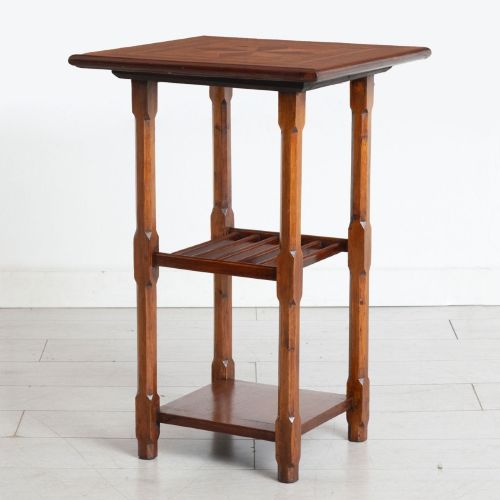
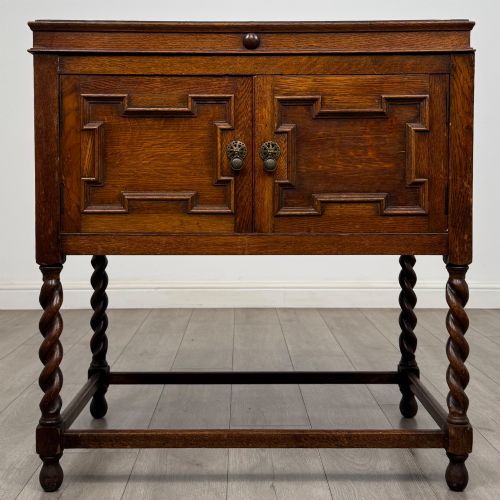
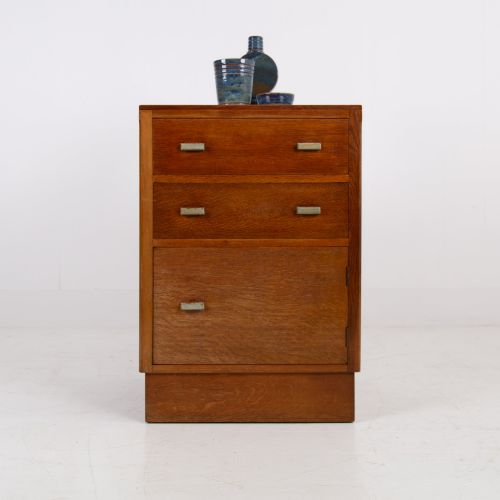
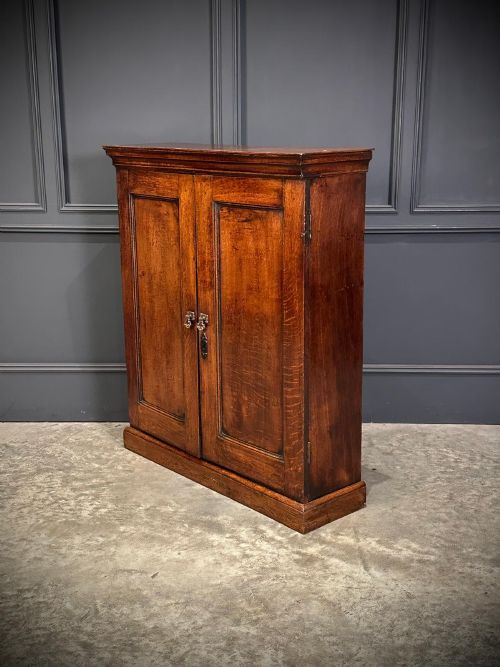
Brown Oak Side Cabinet
A brown oak side cabinet brings rich grain and solid storage to a room, ranging from early Georgian forms to sturdy Arts and Crafts designs.
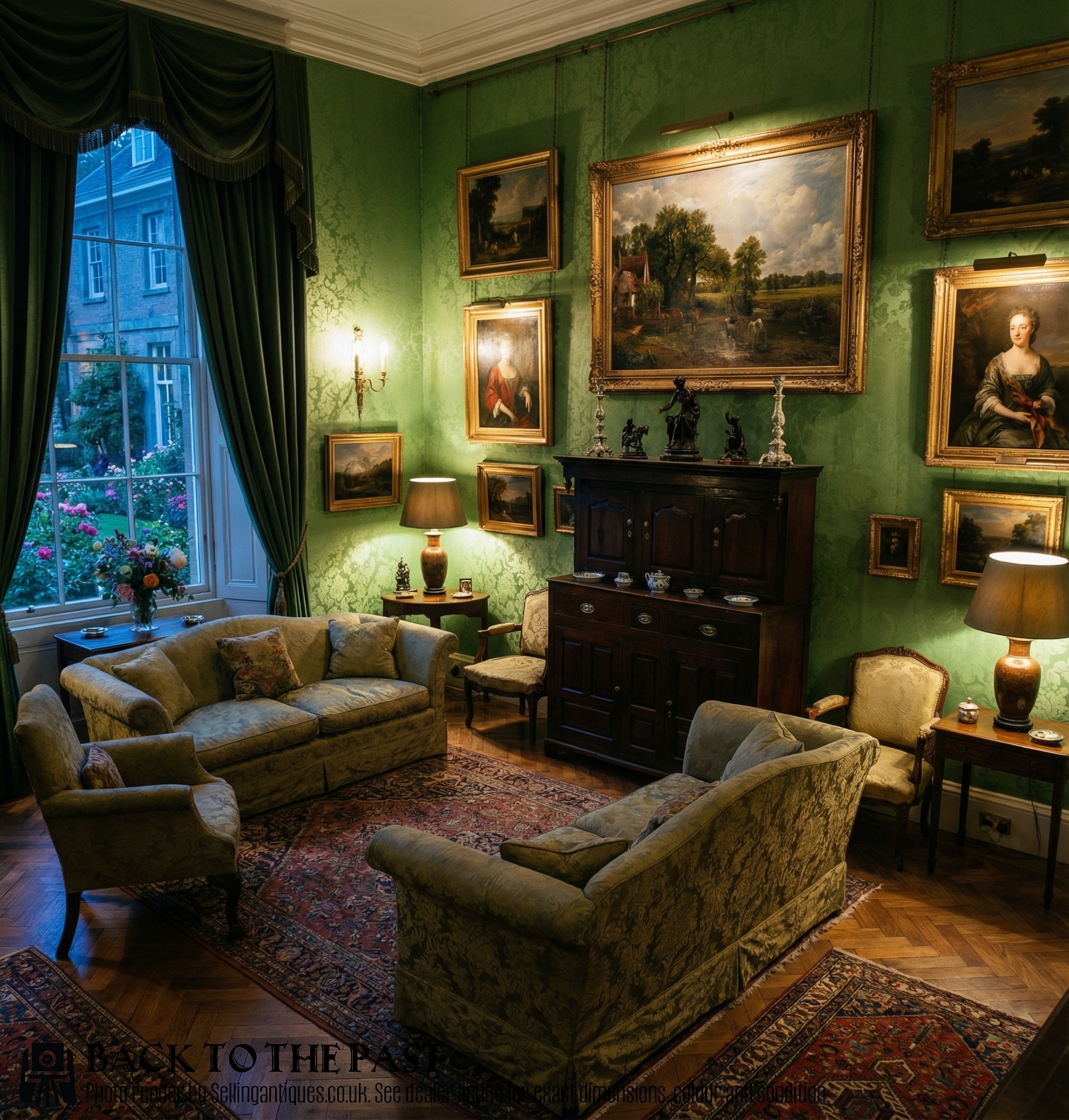
Brown Oak Side Cabinet
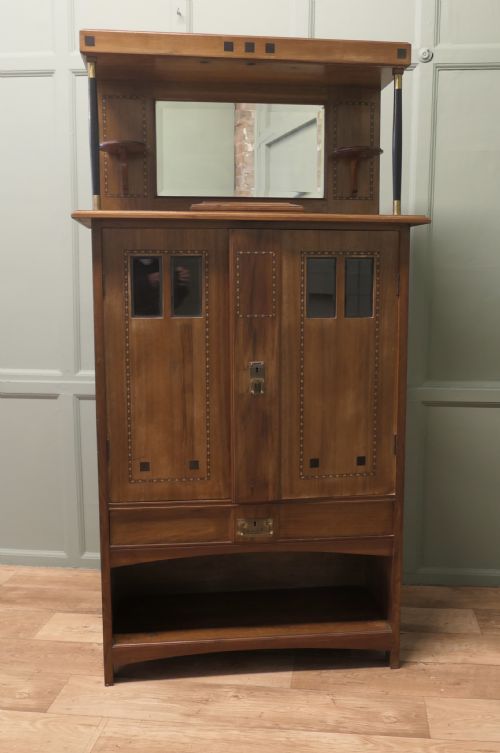
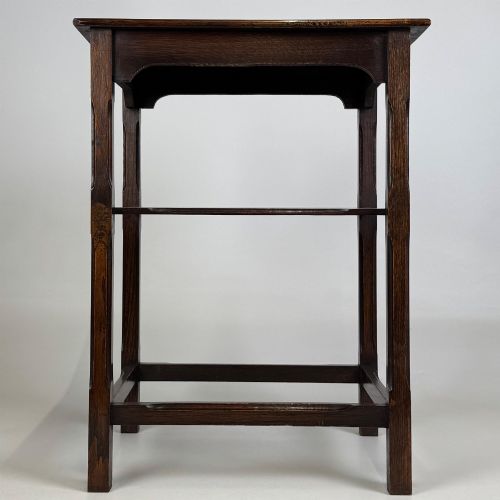
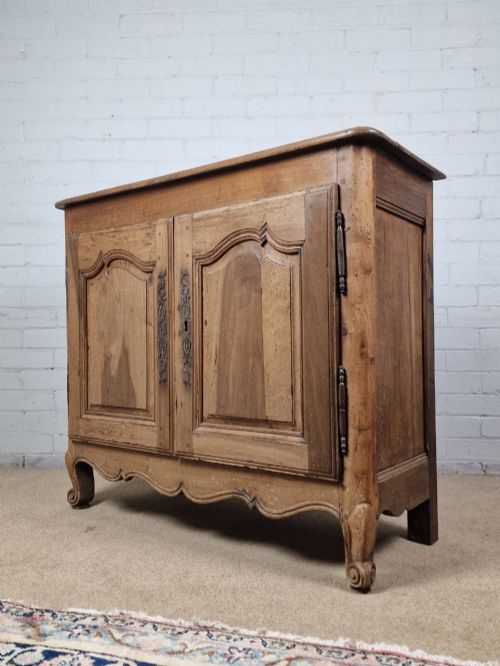
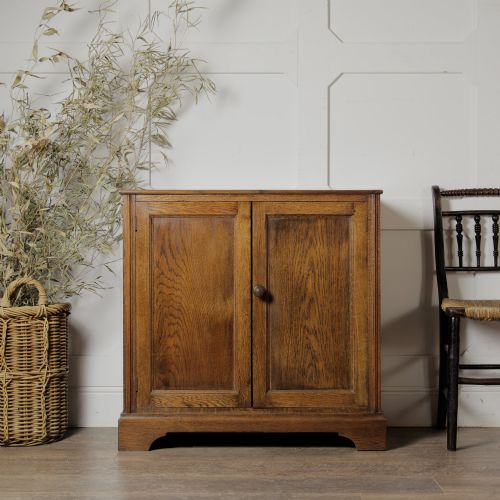
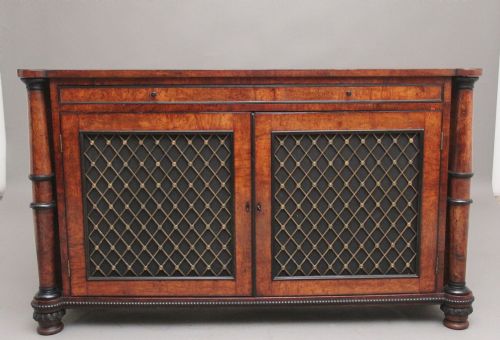
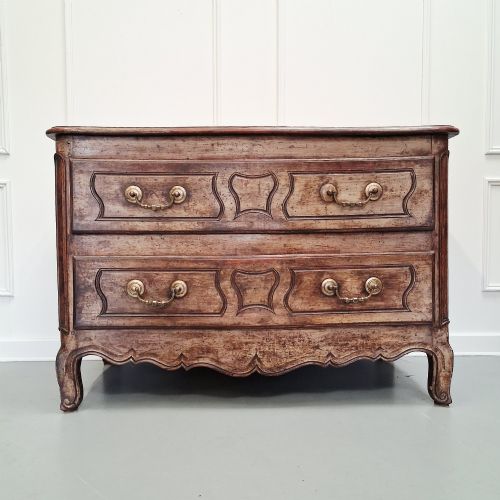
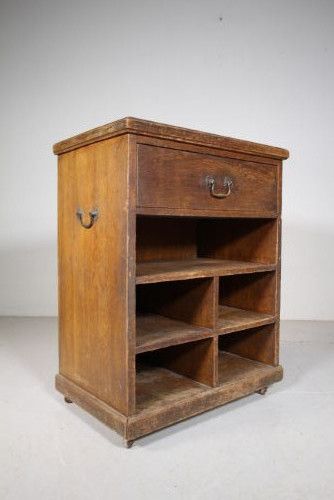
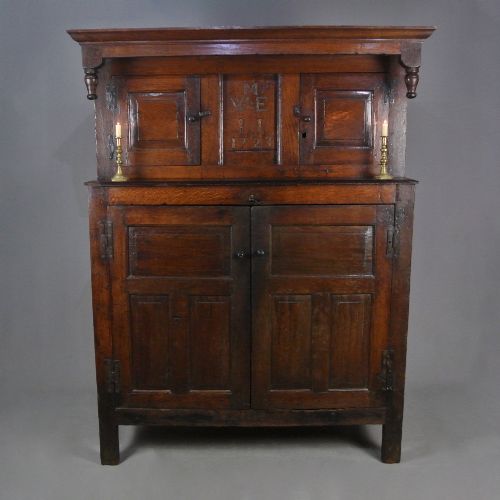
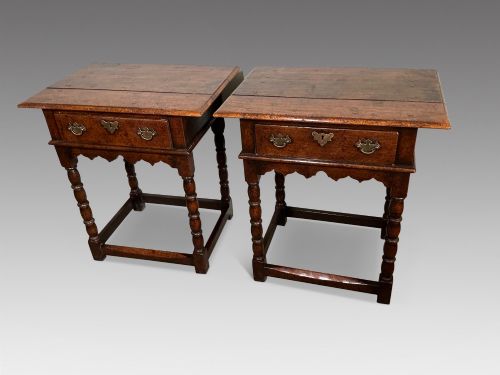
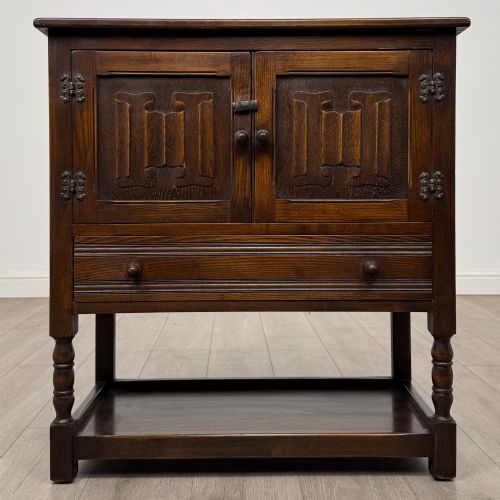
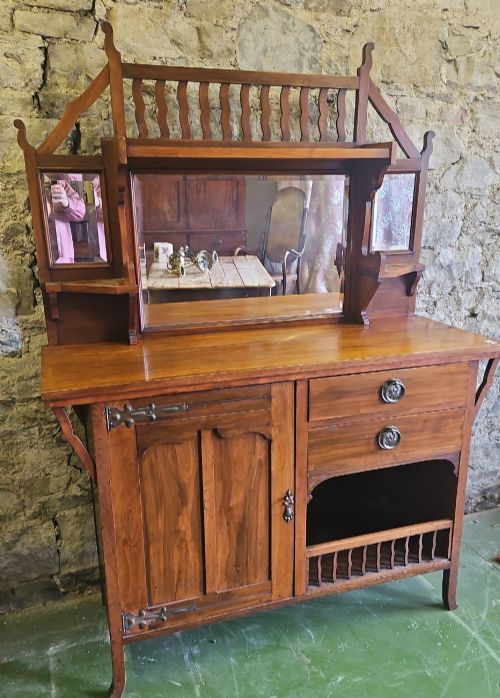
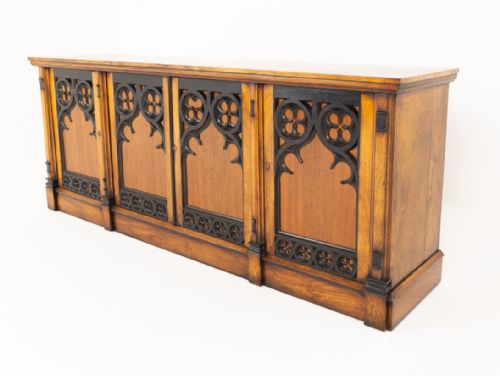
When you search for a brown oak side cabinet, you encounter a variety of timber storage furniture spanning centuries of domestic design. The selections here include low cupboards, court cupboards, bedside cabinets, and sideboards built for practical utility in the home.
The pieces on this page derive from periods such as the 18th century, the Victorian era, the Edwardian period, and the 1920s and 1930s. Styles range from plain country items to revivalist Gothic, Jacobean, and Arts and Crafts expressions.
Materials and construction
Makers relied primarily on solid oak and pollard oak, often accented with contrasting ebony, iron hinges, and brass handles. Selected examples incorporate mirror glass, marble tops, or ceramic tiles.
Joinery techniques include carved panels, linenfold detailing, and distinct period revival motifs such as Green Man carvings. Surface finishes highlight the natural figure of the timber without obscuring the grain.
A Green Man carved into the timber watches over the room from a heavy Victorian buffet.
Qualities of distinction
The caliber of a piece rests upon the crispness of its carving and the selection of the timber grain, particularly where pollard oak or feather banding is utilised. Superior examples display thoughtful proportions and harmonious hardware integration.
Honest patination and structural integrity separate standard utility items from masterwork specimens created during periods like the Arts and Crafts movement or the early Georgian era.
Gomme
The Brown Oak Side Cabinet Glossary
- Pollard oak
- Timber taken from trees that have been pollarded, producing a dense, highly figured grain pattern prized for cabinet doors and desk fronts.
- Court cupboard
- A traditional English two-stage storage piece, often featuring a recessed upper section supported by turned columns.
- Linenfold
- A style of wood carving used on panels to imitate folded fabric, popular during the Tudor and later revival periods.
- Lowboy
- A small table with drawers, typically raised on four legs, used in Georgian interiors for storage or as a dressing table.
- Green Man
- A sculptural architectural ornament depicting a human face enveloped in foliage, frequently seen on Victorian and revivalist carved buffets.
Brown Oak Side Cabinet: Frequently Asked Questions
What is a brown oak side cabinet used for?
These cabinets serve as practical storage units for dining rooms, hallways, and living spaces, holding tableware, linens, or books while anchoring the room's decor.
Their sturdy timber construction allows them to double as display surfaces for lamps, ceramics, and decorative objects.
How do I identify an Edwardian piece?
Edwardian items often reflect earlier styles like Jacobean Revival or incorporate simpler Arts and Crafts utility. Look at the lighter colour of the oak and the restrained carving.
Hardware on Edwardian pieces frequently includes brass drop handles and hinges typical of early twentieth-century manufacturing methods.
Where were side cabinets placed historically?
Historically, these cabinets sat in dining parlours, hallways, and bedrooms to keep domestic goods close at hand. Low cupboards and bedside versions served private quarters.
Larger buffets and court cupboards stood in reception rooms to display silver and serve food during gatherings.
What distinguishes pollard oak from standard oak?
Pollard oak comes from trees pruned specifically to encourage dense, knotty, and swirling growth patterns in the wood. This creates a highly decorative surface texture.
Standard oak displays a straight, linear grain with characteristic medullary rays, whereas pollard oak offers a mottled, dramatic visual movement.