
Brown Oak Seating Set
A brown oak seating set brings rustic warmth and sturdy timber character to a dining room through matched groups of period chairs.
Brown Oak Seating Set
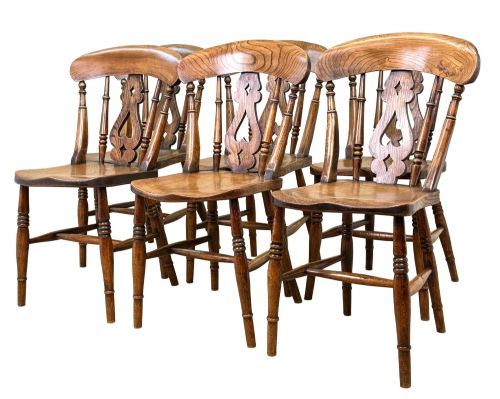
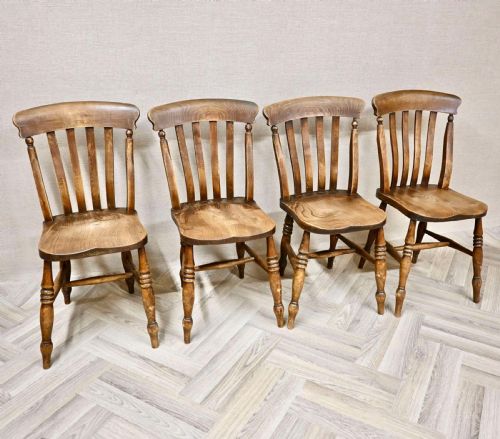
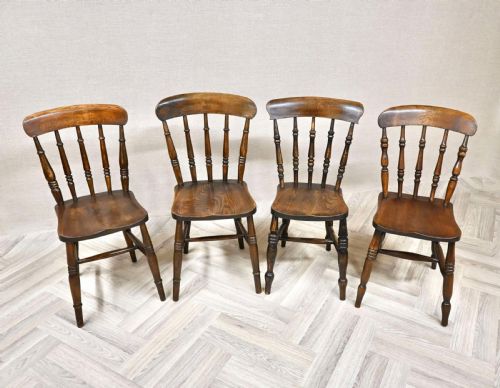
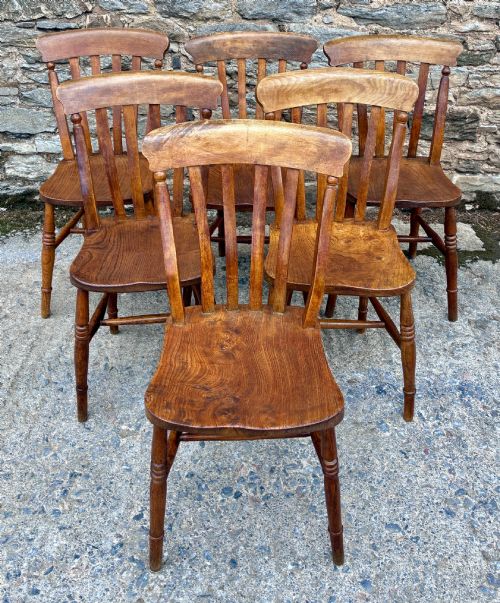
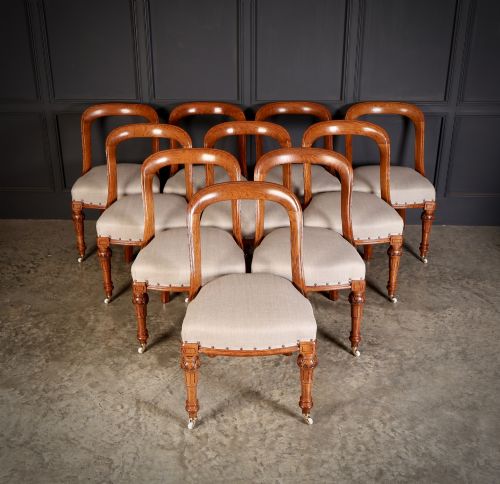
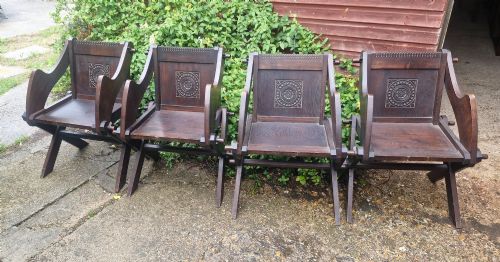
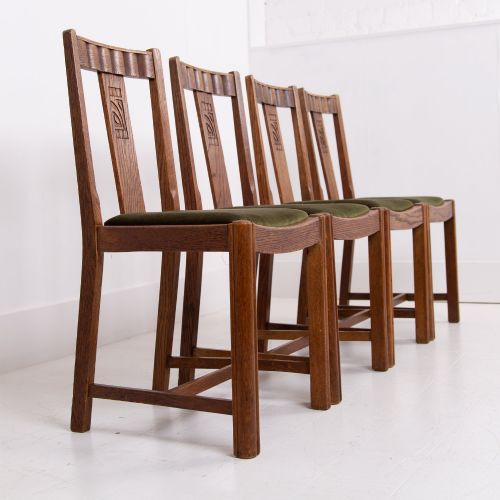
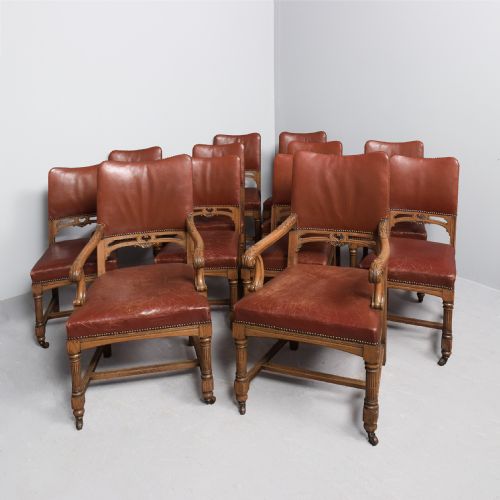
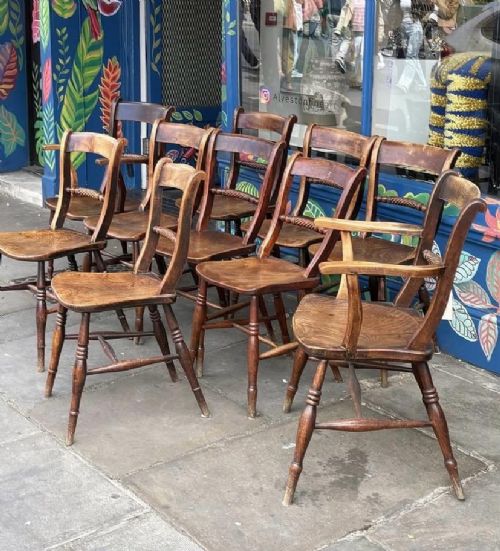
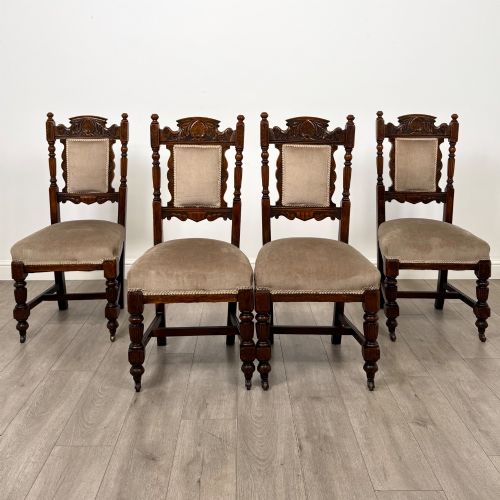
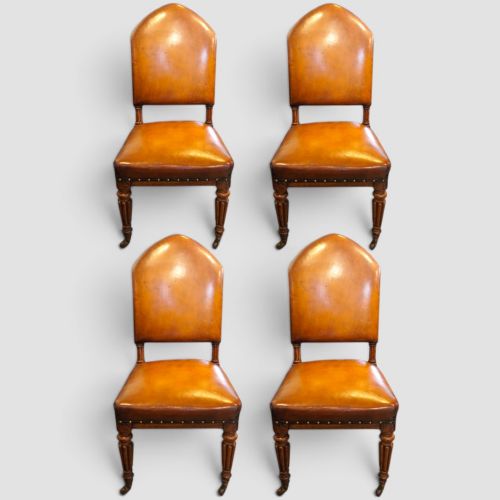
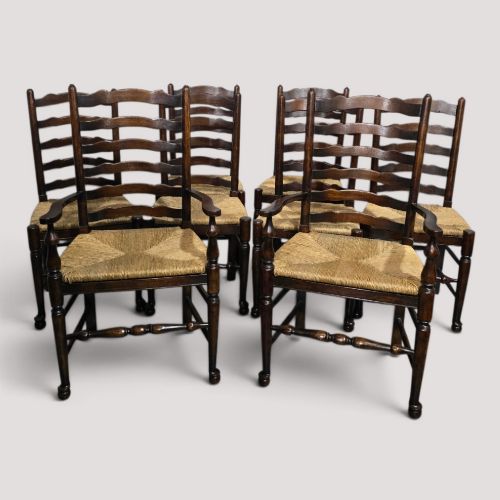
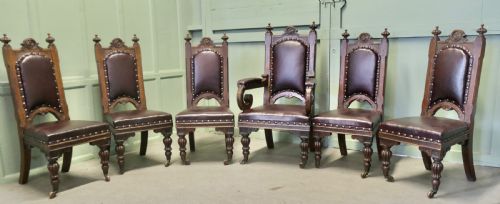
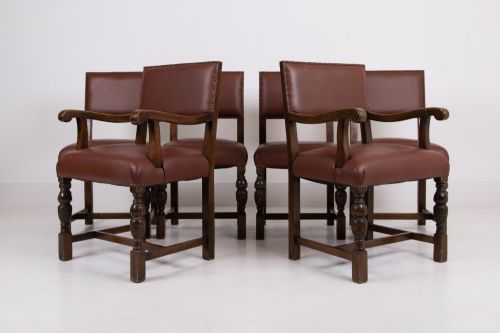
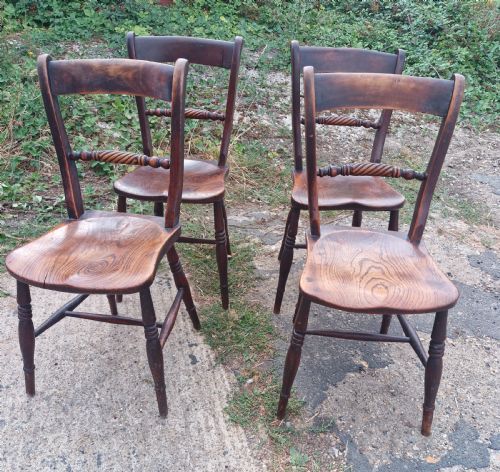
A brown oak seating set comprises matched groups of chairs intended for dining or kitchen use, often gathered in sets of four, six, eight, ten or twelve pieces. When searching for a brown oak seating set, buyers encounter various traditional forms including Windsor chairs, ladder backs, lathe backs, and high-back carved dining chairs.
The periods represented span the nineteenth century, Victorian era, Edwardian period, and the nineteen-twenties and thirties. Many examples derive from English, Welsh, and Irish country traditions, featuring regional variations such as Dales chairs or smokers bow Captains chairs alongside revival styles like Jacobean and Gothic.
Distinctions in Quality
Quality rests upon the uniformity and completeness of the grouping, particularly in larger sets where matching timber grain and consistent patination across all pieces dictate desirability. The depth of the oak figure and the integrity of original construction, such as untouched rush seats or period leather, separate standard utility seating from finer examples.
Maker marks, such as stamps by firms like Strahan of Dublin, elevate specific sets above provincial vernacular pieces. The sophistication of the turning, carving, and overall proportion also marks the difference between simple kitchen chairs and formal dining suites.
Penny seats offer a literal circular indentation of comfort carved straight into the solid wood.
Strahan of Dublin
The Brown Oak Seating Set Glossary
- Brown Oak
- Timber exhibiting a rich, dark brown coloration caused by a fungal attack in the living tree. This wood is prized for its depth of tone and distinctive grain patterns.
- Windsor Chair
- A chair built with a solid wooden seat into which the legs and back spindles are separately bored. These vernacular seats often feature curved armbows and lath backs.
- Ladder Back
- A chair back constructed from horizontal arched slats resembling a ladder. These regional seats frequently utilise rush or wooden plank seats.
- Barley Twist
- A turned wooden furniture leg or stretcher carved in a spiral resembling twisted barley sugar. This decorative feature appears frequently on revival seating from the late nineteenth and early twentieth centuries.
- Bergere
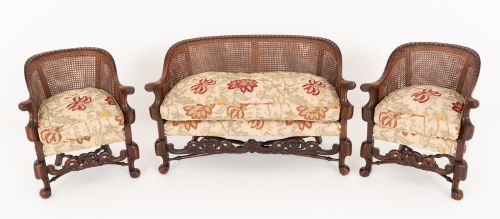
- A cane or wicker-work panel inset into a wooden frame, commonly utilised on the backs or sides of upholstered seats. This technique provides a lighter alternative to solid wooden panels.
Brown Oak Seating Set: Frequently Asked Questions
What periods do these sets come from?
The pieces span the Victorian era, the nineteenth and twentieth centuries, and the nineteen-twenties and thirties.
Designs reflect traditional country vernacular alongside revival styles from different decades.
How many chairs typically form a set?
Sets commonly comprise four, six, eight, ten, or twelve matching chairs.
Some larger groupings include a combination of standard dining chairs and armchairs.
What woods are used besides oak?
Makers frequently incorporated elm, beech, and ash for structural components and secondary parts.
Rush and leather were also utilised for seating surfaces.
Are these chairs suitable for daily dining?
These robust timber chairs were originally constructed for everyday kitchen and dining use.
Their solid construction and vernacular forms allow them to function well in modern dining spaces.