
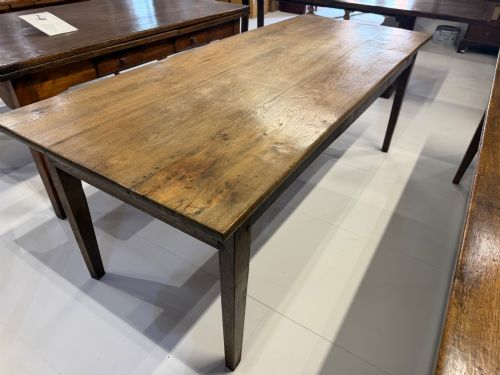
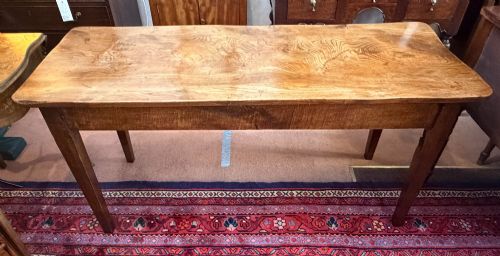
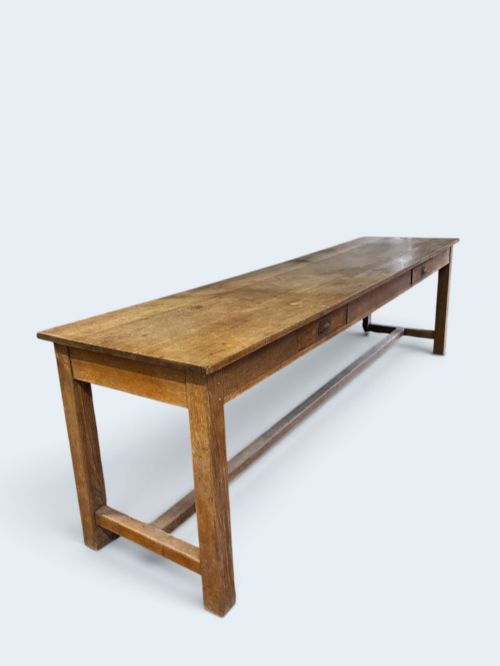
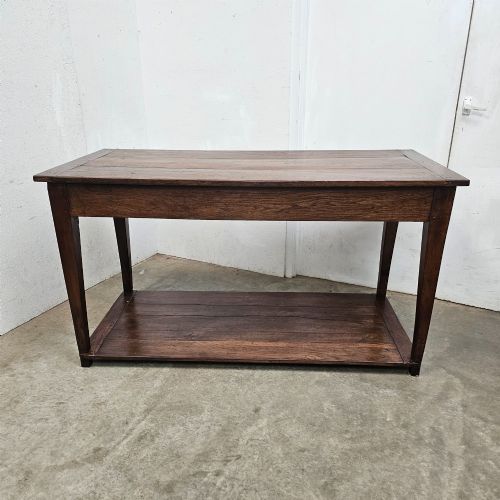
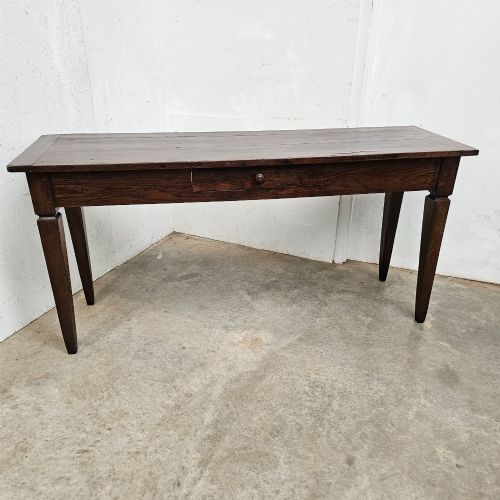
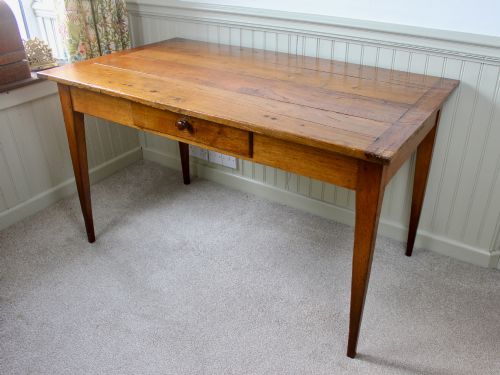
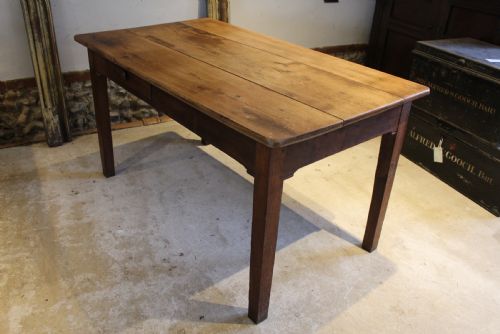


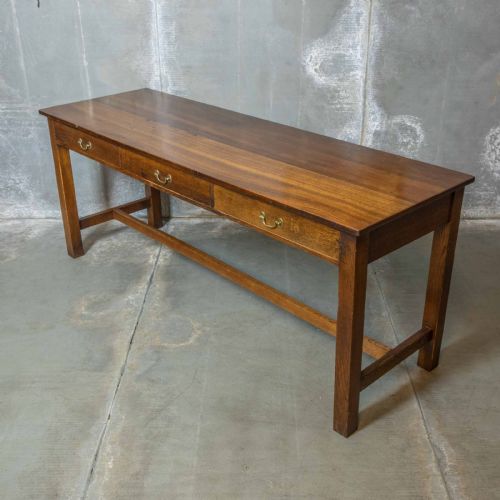


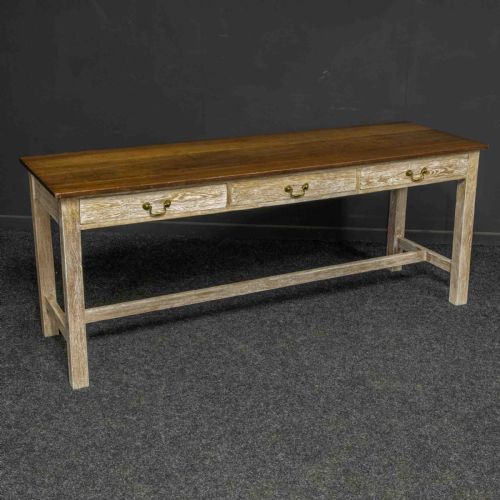
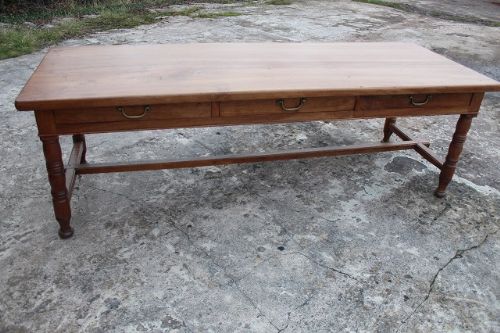
Brown Oak Prep Table
A brown oak prep table brings honest utility and deep timber grain to a room, offering a sturdy workspace shaped by generations of domestic use.
Brown Oak Prep Table
When you search for a brown oak prep table, you encounter robust utility furniture designed for hard work in kitchens, dairies and country houses. These pieces span the nineteenth century, the Edwardian era and the early twentieth century, showing the honest wear of past labour.
The versions most commonly met on this page take the form of farmhouse tables, work tables and serving tables. Their origins stretch from English country workshops to French provincial kitchens, uniting solid oak construction with practical proportions.
Makers built these tables for daily food preparation, bread making and kitchen service rather than formal dining. Their sturdy frames accommodate regular use, making them central working items in modern country kitchens.
How they were made
Makers constructed these tables predominantly from solid oak, sometimes pairing the timber with beech, pine, elm or fruitwood for secondary framing and drawers. They employed traditional joinery techniques capable of withstanding heavy downward pressure and constant scrubbing.
Hardware such as brass and iron appears on drawers and structural fittings, adding utilitarian strength to the design. Surfaces were left unpolished or simply oiled, allowing the dense grain of the wood to take on a rich patina through decades of use.
Some tables retain flour dust embedded deep within the grain from centuries of kitchen work.
What varies in quality
The quality of a brown oak prep table depends on the substance of its timber and the integrity of its original construction. Heavy solid oak tops and thick legs indicate a higher grade of manufacture intended for demanding institutional or large domestic tasks.
Proportion and utility also separate the output, with well-balanced work tables and multi-tiered shelving displaying superior functional design. Pieces retaining original drawers and honest surface marks hold greater character than altered examples.
The Brown Oak Prep Table Glossary
- Prep table
- A sturdy wooden table designed specifically for culinary preparation, baking or kitchen work. These pieces usually feature thick timber tops capable of enduring heavy daily use.
- Refectory table
- A long, narrow dining or service table originating from monastic halls and later adopted in country houses. They offer substantial seating capacity along their flanks.
- Drapers table
- An exceptionally long utility table traditionally used in textile shops for measuring cloth. Their generous length and narrow proportions suit modern hallways and kitchens.
- Harvest table
- A portable or drop-leaf style table used historically for seasonal agricultural meals. They combine lighter framing with generous surface area for communal dining.
- Patina
- The deep sheen and surface character acquired by wood through decades of handling, cleaning and exposure to light. It serves as a visual indicator of age and genuine use.
Brown Oak Prep Table: Frequently Asked Questions
How were prep tables used historically?
These tables served as the primary work surface in large kitchens, farmhouses and rural workshops for tasks like kneading bread and butchering meat.
Their robust timber construction allowed servants and cooks to perform heavy domestic chores without damaging delicate furniture.
Are these tables suitable for modern kitchens?
Their solid construction and enduring utility make them ideal central islands or breakfast surfaces in contemporary homes.
The warm oak grain adds immediate character and practical workspace to both rustic and modern interior schemes.
How do I care for an oak work surface?
Maintaining the wood involves regular cleaning with a damp cloth and occasional application of natural oils to nourish the timber.
Harsh chemical cleaners should be avoided to preserve the natural patina built up over generations.
How do I distinguish nineteenth century examples?
Nineteenth century pieces often display hand-cut joinery, thick pegged tenons and dense oak boards showing deep signs of wear.
Tool marks and structural asymmetry reveal the work of regional carpenters working before mass production took hold.