



Commercial Prep Table
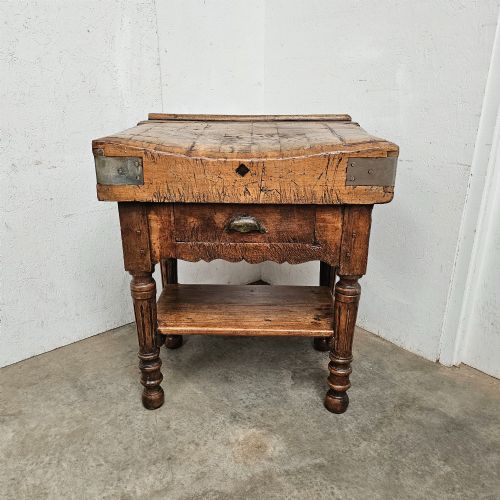
These commercial prep table listings bring together sturdy butchers blocks and drapers tables built for heavy work in past centuries.
Commercial Prep Table
A commercial prep table typically takes the form of a robust butchers block or an expansive drapers table designed for demanding daily tasks. These pieces originate from various periods including the Victorian era, the nineteenth century, and the early twentieth century.
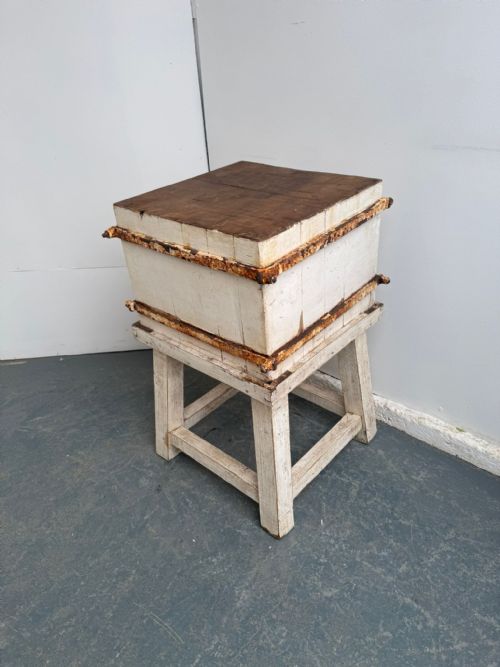
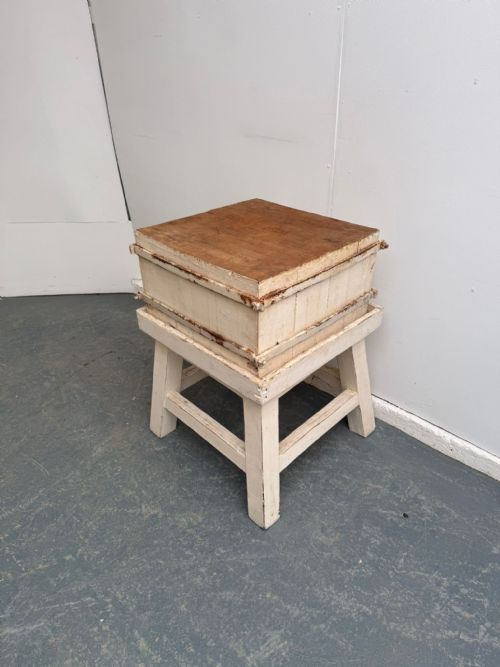
The versions most commonly met on this page include French and Hungarian butchers blocks alongside long drapers tables formed from pine, oak, and mahogany. Many pieces retain original paint finishes or decorative iron bases that reflect their utilitarian origins.
How they were made
Maker construction relies on dense timbers like beech, oak, pine, and mahogany selected for their capacity to withstand continuous physical strain. Heavy wooden tops sit upon iron or painted softwood stands, often secured with metal mounts and brackets.
Surfaces show the marks of practical use, shaped by hand tools and prolonged labour rather than ornamental refinement. Structural integrity is achieved through thick planking and solid joinery designed to bear heavy loads without shifting.
Commercial Prep Table Retail Price Guide 2026
Typical asking prices for commercial prep table among the pieces listed under this phrase on Sellingantiques today, from the lower quarter to the upper quarter. They describe what is for sale here now, not the wider market.
The listings span from the Victorian period through to the 1930s, utilising beech, oak, pine, and painted softwood.
What varies in quality
Quality in a commercial prep table rests upon the integrity of the primary timber top and the originality of its base structure. Thick, well-preserved blocks and substantial drapers tables command greater attention than heavily altered or reduced examples.
The character of the finish also dictates standing, with original paintwork and authentic metal mounts offering more visual substance than later restorations. Proportion and scale play a vital role, particularly in monumental lengths that require exceptional timber selection.
Trussant & Cie·Hennes France
The Commercial Prep Table Glossary
- Butchers Block
- A thick wooden work surface traditionally utilised for jointing meat. These heavy blocks show deep surface grain and robust construction.
- Drapers Table
- A long, narrow table historically used in textile shops for measuring cloth. They often feature multiple drawers and generous length.
- Hardwood
- Timber derived from broad-leaved trees, such as beech, oak, and mahogany. These dense woods provide the necessary durability for prep work.
- Softwood
- Timber sourced from conifers, such as pine, utilised for framing and secondary elements. Painted softwood bases are common in nineteenth-century examples.
Commercial Prep Table: Frequently Asked Questions
What is a commercial prep table used for today?
These pieces serve primarily as kitchen islands, sideboards, or central work tables in domestic and commercial spaces. Their durable surfaces remain entirely practical for food preparation and general display.
Buyers often place them in large kitchens or studios where extra surface area and robust construction are required. The deep wooden tops handle daily tasks with ease.
How do I identify a Victorian prep table?
Victorian examples frequently display specific timber choices, painted finishes, and heavy structural framing typical of the nineteenth century. Examining the joinery and underside often reveals period construction methods.
Makers from this era favoured dense hardwoods and sturdy iron mounts to ensure longevity. Comparing the proportions against known styles helps confirm the period.
Are these tables suitable for modern kitchens?
The generous proportions and hard-wearing surfaces make them ideal for contemporary kitchen environments. They provide substantial workspace and storage potential.
Care involves regular oiling of wooden tops and mindful treatment of original painted finishes. Their utilitarian design complements both modern and traditional interiors.
What timber types should I look for?
Listings feature beech, oak, pine, mahogany, and general softwood components. Hardwoods provide superior resilience for heavy work surfaces.
Pine and softwood are frequently found on bases and drapers table frames, while beech and oak dominate the block tops. Each wood type ages with distinct patination.