

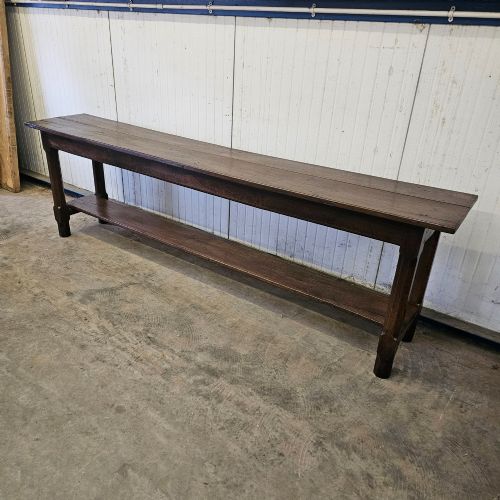
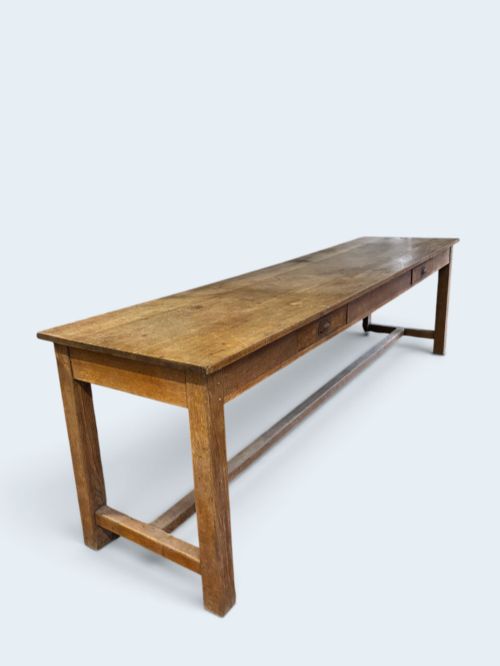


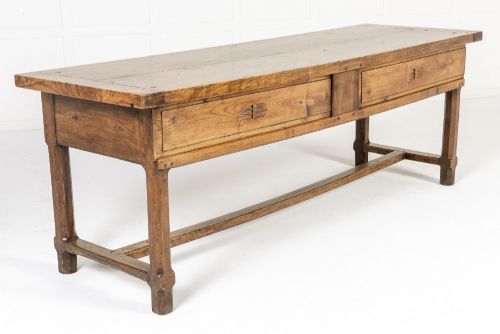

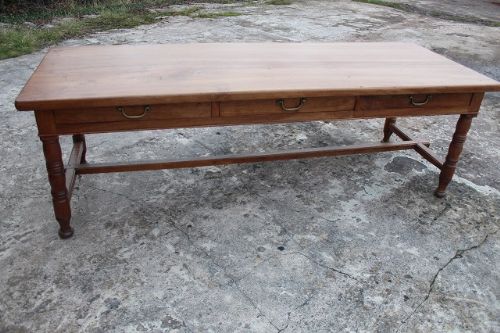


French Oak Draper Table
A french oak draper table offers sturdy utility and timeless rustic charm for a kitchen or dining space.
French Oak Draper Table
When you search for a french oak draper table, you encounter heavy functional pieces originally built for merchant trade and domestic service. These utilitarian surfaces span the eighteenth and nineteenth centuries, emerging in robust forms suited to heavy daily use.
The version you most frequently meet on this page is the nineteenth-century bleached oak draper table, often showing the pale timber finish popular in modern interiors. Alongside these, related serving tables, console tables, and trestle tables appear in solid oak, pine, and timber.
Makers constructed these tables in styles ranging from French country and rustic farmhouse to French provincial. They serve effectively today as kitchen islands, grand dining surfaces, or large console tables in generous hallways.
Materials and Construction
Carpenters built these sturdy frames primarily from solid oak and occasionally pine, utilising substantial timbers designed to withstand heavy loads. Iron and brass hardware appears structurally or decoratively, while some examples carry traces of historic paint.
Surfaces frequently undergo bleaching to lighten the natural dark grain of the timber, yielding the pale finish characteristic of many surviving examples. Construction methods rely on traditional joinery techniques suited to large trestle and multi-drawer formats.
French Oak Draper Table Retail Price Guide 2026
Typical asking prices for french oak draper table among the pieces listed under this phrase on Sellingantiques today, from the lower quarter to the upper quarter. They describe what is for sale here now, not the wider market.
Listings feature pieces spanning the eighteenth and nineteenth centuries, with specific dates including 1860, 1870, 1880, and 1910.
Assessing Quality and Proportion
Quality rests in the proportion and scale of the timber, distinguishing monumental four-metre examples from standard domestic tables. The integrity of the solid oak construction and the evenness of the bleached finish dictate the visual strength of the piece.
The presence of useful functional elements, such as multiple drawers or trestle supports, elevates certain examples above simpler rustic tables. Authenticity of period materials and the natural ageing of the timber anchor the value of the better specimens.
The French Oak Draper Table Glossary
- Bleached oak
- Oak timber treated to lighten its natural colour, producing a pale, dry finish often seen on nineteenth-century examples. This treatment reflects a preference for softer, neutral tones in interior decoration.
- Draper table
- A long, wide utilitarian table originally used in merchant shops for folding fabric and displaying goods. Their generous proportions make them suitable for modern domestic dining and food preparation.
- Trestle table
- A table consisting of two or more supports carrying a horizontal top, allowing for maximum legroom. This historic form provides exceptional stability for large dining and serving surfaces.
- Serving table
- A subsidiary table used historically for holding food and dishes during meals. These pieces share similar proportions and materials with larger draper and dining tables.
- Console table
- A table designed to fit against a wall, frequently supported by wall brackets or legs. They offer a narrower surface option within country house and provincial interiors.
French Oak Draper Table: Frequently Asked Questions
What is a french oak draper table used for today?
These large tables function primarily as spacious kitchen islands, main dining tables, or grand console surfaces in large hallways. Their generous length provides ample workspace for food preparation or entertaining.
Because they originate from commercial and domestic service use, the robust timber surfaces easily withstand the demands of busy modern households.
How do I care for a bleached oak surface?
Maintenance requires simple dusting with a dry cloth and immediate blotting of any liquid spills to prevent staining the porous timber. Avoid harsh chemical cleaners that strip the dry, pale finish characteristic of bleached wood.
Applying occasional natural wax can protect the grain while preserving the historic matte appearance of the oak.
How can I tell the age of these tables?
Dating relies on examining the construction marks, tool traces, and the natural oxidation of the oak over time. Eighteenth-century examples typically display hand-cut joinery and deeper patination compared to nineteenth-century pieces.
The presence of original hardware, such as brass pulls on drawer tables, also helps establish the period of manufacture.
Are these tables suitable for small rooms?
Due to their origins as commercial and large domestic furniture, most draper tables measure significantly long, with monumental versions reaching four metres. Selecting narrower console or trestle formats can sometimes accommodate more compact spaces.
Careful measurement of your room and clearance paths is essential before introducing such a substantial piece of furniture.