
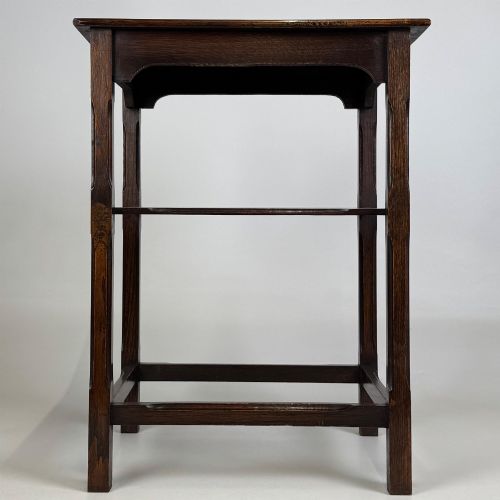
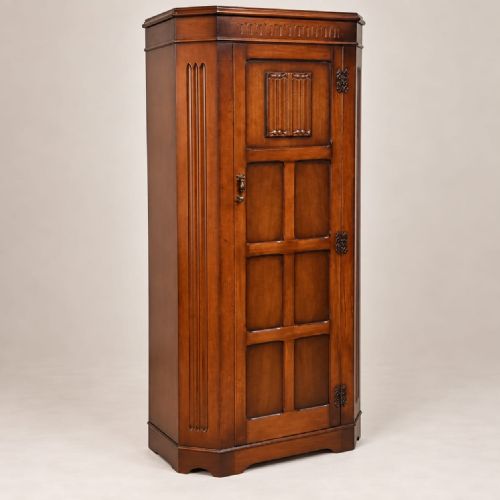
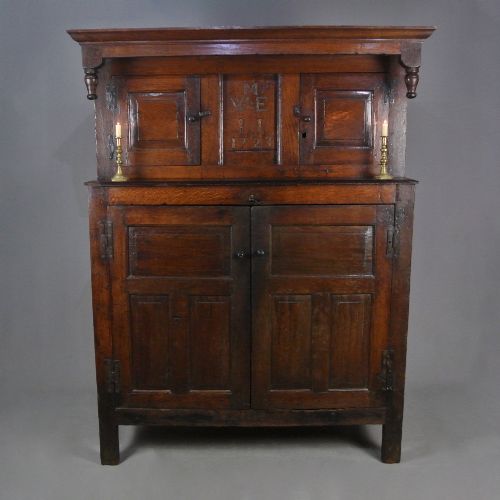
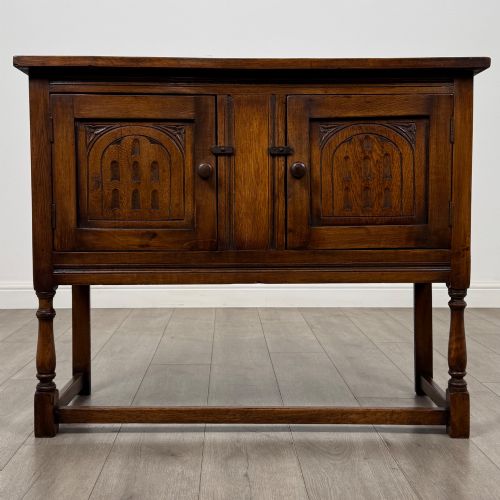




Brown Oak Hall Cabinet
A brown oak hall cabinet provides sturdy storage for coats and hats while anchoring an entranceway with rich, dark timber.
Brown Oak Hall Cabinet
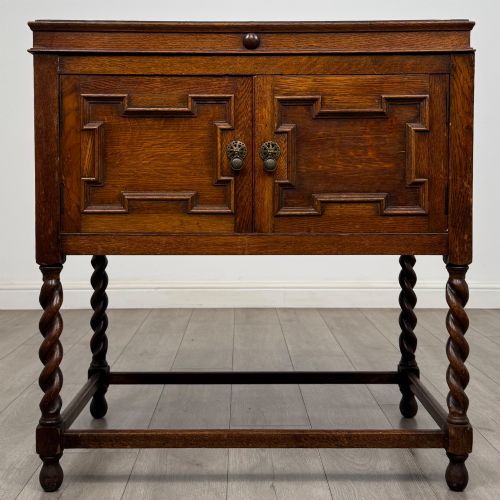
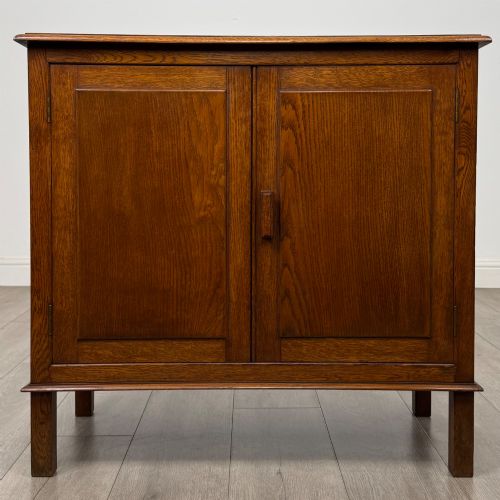
A brown oak hall cabinet serves as a functional piece of entranceway furniture, often appearing as a tall cupboard, a court cupboard, or a side cabinet designed for domestic organisation.
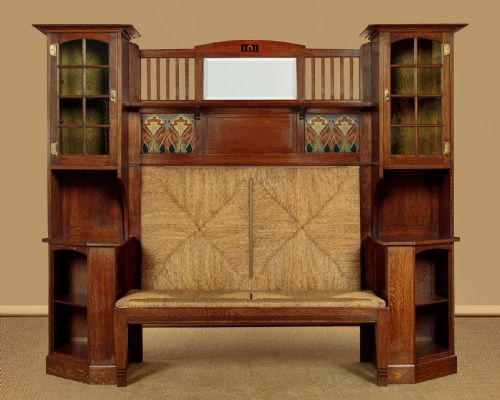
The pieces seen here span multiple periods, ranging from eighteenth-century examples to Edwardian and 1920s interpretations, reflecting enduring styles such as Jacobean Revival, Gothic Revival, and Arts and Crafts.
Buyers will most frequently encounter Edwardian and 1920s iterations alongside nineteenth-century pieces, constructed primarily from solid oak and sometimes fitted with iron or brass hardware.
What varies in quality
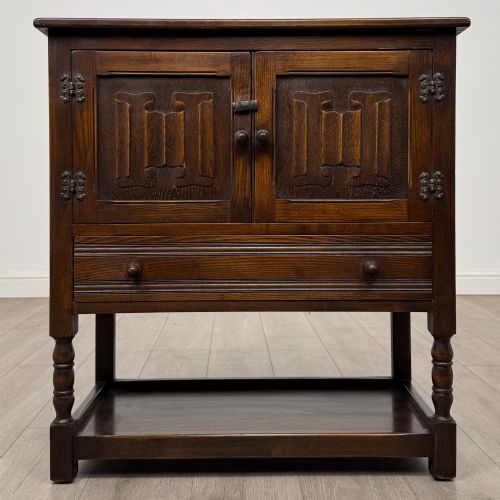
The depth and execution of the carving separate standard production from finer work, with crisp detail in Renaissance or Gothic Revival panels indicating skilled hand-tooling.
Original ironmongery, such as blacksmith-made locks and hinges, adds considerable merit compared to later replacements or machine-stamped fittings.
One exceptional piece listed is a billiard and snooker scoreboard, proving that entranceway storage sometimes kept score of the evening's entertainment.
Walker & Hall·Thurston & Co
The Brown Oak Hall Cabinet Glossary
- Brown oak
- A natural timber variant featuring deep, rich brown tones caused by fungal interaction in the living tree. It is prized for its dark coloration and distinct grain patterns.
- Linenfold
- A style of wood carving that imitates folded linen cloth. It appears frequently on panels of Tudor and Jacobean Revival cupboards.
- Blacksmith lock
- A manually forged locking mechanism produced by ironworkers. These bespoke fittings secure early cupboards and carry distinct marks of hand fabrication.
- Jacobean Revival
- A nineteenth-century design movement copying seventeenth-century English furniture forms. It relies heavily upon dark oak, geometric mouldings, and heavy turned supports.
Brown Oak Hall Cabinet: Frequently Asked Questions
What is a brown oak hall cabinet used for?
These cabinets provide enclosed storage in entranceways for everyday items such as hats, gloves, and miscellaneous accessories.
They also serve as a strong decorative anchor for a hallway, utilising their dark timber and carved panels to set a traditional tone.
How do I date a brown oak hall cabinet?
Dating relies on observing construction methods, timber characteristics, and stylistic revival cues such as Jacobean or Gothic motifs.
Hardware like hand-forged iron locks and hinges often points toward earlier eighteenth-century origins, whereas machine-cut elements suggest Edwardian or later twentieth-century production.
Are these cabinets suitable for small hallways?
Many examples are built with modest proportions, including side cupboards and wall-hanging units designed to fit compact spaces without obstructing passage.
Checking the specific depth and height dimensions ensures the cabinet complements the scale of a narrow entrance area.
How should I care for brown oak furniture?
Polishing the timber occasionally with appropriate wax maintains the natural lustre and protects the dark oak grain from excessive dryness.
Keeping the cabinet away from direct heat sources and strong sunlight prevents the wood from warping or fading over time.