




Brown Oak Desk Box
These brown oak desk boxes span centuries of timber craft, offering sturdy desktop storage for letters, documents and writing tools.
Brown Oak Desk Box
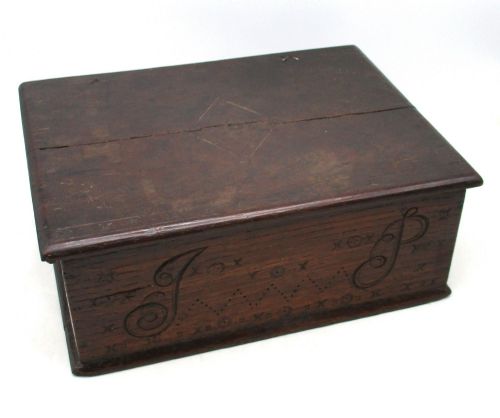
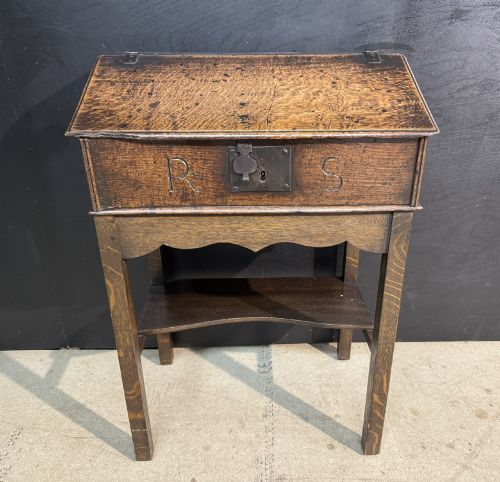
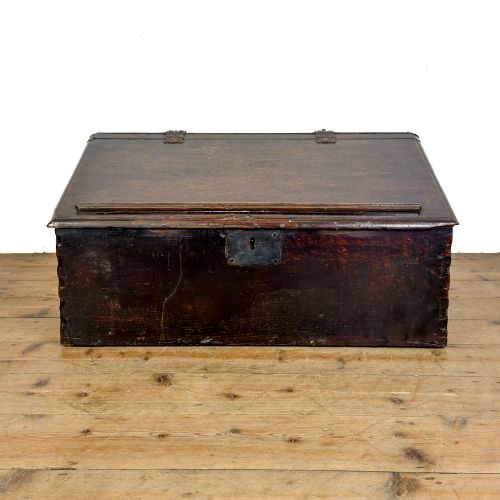
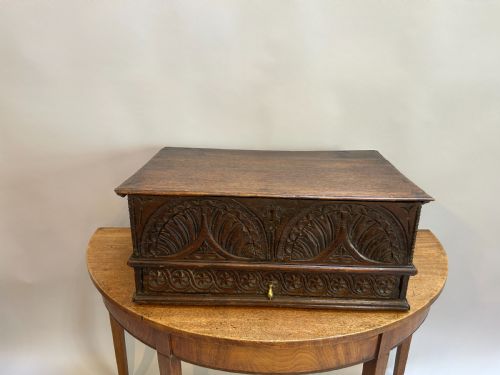
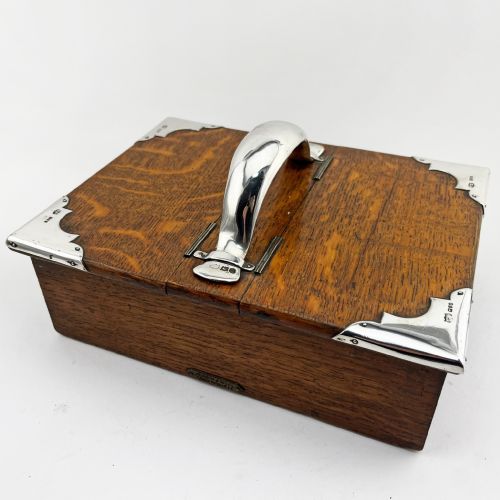
A brown oak desk box sits upon a table or writing surface to hold papers, correspondence and small valuables. The selection ranges from seventeenth-century Bible boxes and deed chests to Victorian stationery cabinets and Edwardian postboxes.
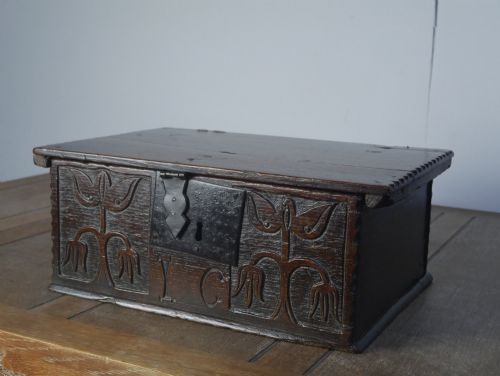
Early examples often display carved panels and sloping lids designed for reading or writing. Later nineteenth-century versions include fitted interiors with glass inkwells, silver mounts and adjustable dates.
Materials and construction
Carpenters constructed these boxes primarily from solid oak, sometimes accented with brass hinges, iron locks and fabric linings. Certain pieces incorporate sterling silver mounts or glass components.
Joinery methods shift across the periods, moving from pegged frame-and-panel construction in the seventeenth century to dovetailed boxes and fitted stationery compartments in the Victorian era.
One curious piece takes the physical form of a GWR coal wagon, proving that Victorian smokers required railway-inspired housing for their tobacco.
Judging quality
Quality rests in the crispness of the timber grain, the integrity of the original joints and the survival of interior fittings such as secret drawers and dividers. Carved ornamentation varies from simple geometric incision to deep relief work.
Hardware contributes significantly to the overall merit. Original brasses, working locks and intact hinges distinguish pieces that retain their original character from those altered or restored over time.
Mappin and Webb·Amberg
The Brown Oak Desk Box Glossary
- Bible box
- A small wooden chest originally made to hold a family Bible or important documents. These typically feature sloping lids and date from the seventeenth and eighteenth centuries.
- Writing slope
- A box with an angled lid that opens to reveal a flat or inclined writing surface and compartments for ink and pens. They are designed for portable correspondence.
- Stationery cabinet
- An upright tabletop cabinet with internal pigeonholes and shelves for writing paper and envelopes. These become common during the Victorian period.
- Deed box
- A secure wooden container utilised for storing legal documents, land indentures and titles. They often feature robust iron locks and corner brackets.
Brown Oak Desk Box: Frequently Asked Questions
What is a brown oak desk box used for?
These boxes serve to organise writing materials, letters, and important papers on a desktop. Historically, they held family Bibles, legal deeds, and personal correspondence.
Today, they function as practical storage for modern stationery or as decorative desk accessories in a study.
How do I date an antique oak box?
Dating relies upon observing the construction techniques, hardware, and decorative styles present. Seventeenth-century examples often feature hand-carved panels, pegged joints, and heavy oak boards.
Victorian and later pieces typically show machine-sawn timber, dovetailed corners, and factory-made brass hinges or locks.
Are these boxes made of solid oak?
The pieces in this selection utilise oak as the primary timber, complemented by brass, iron, and glass elements. Some later stationery cabinets incorporate internal fabric linings and silver fittings.
Solid construction is standard across the earlier centuries, while later Victorian variations combine sturdy oak frames with fitted internal partitions.