
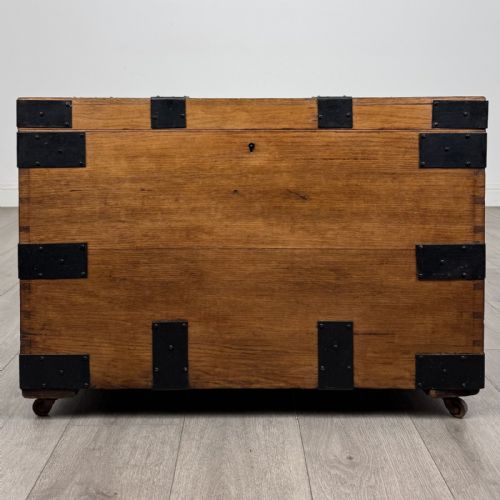
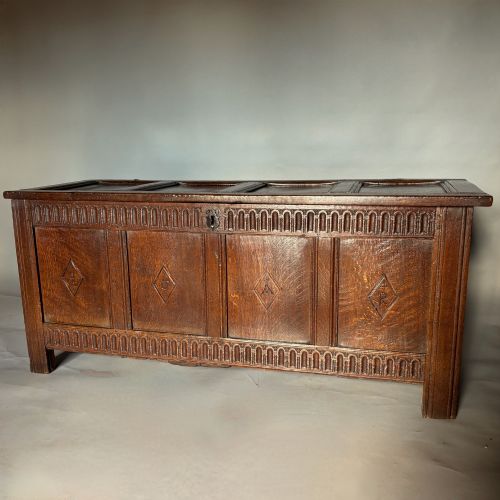
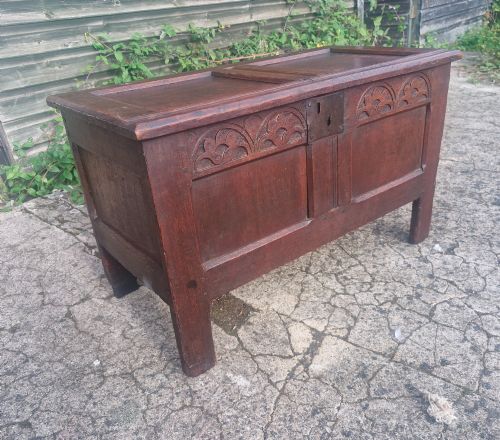
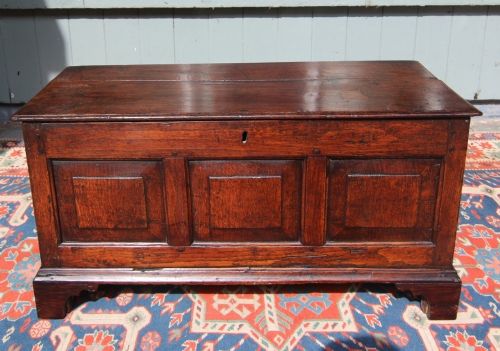
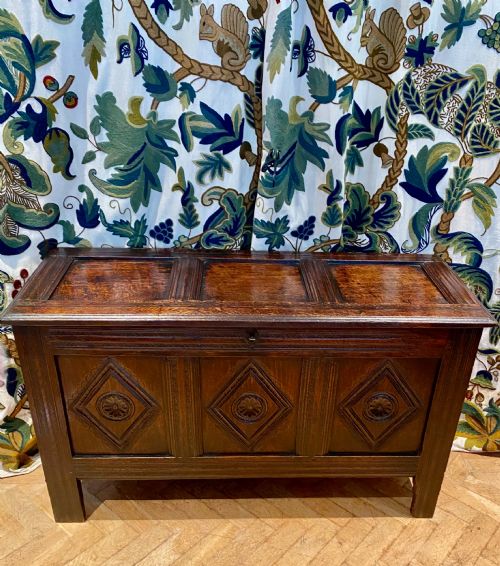
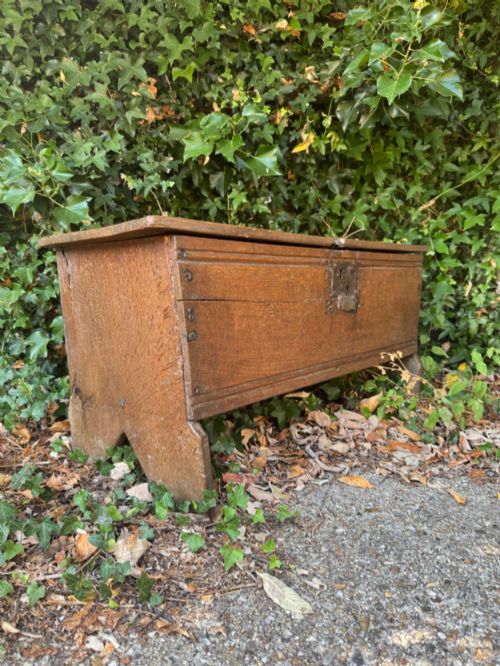
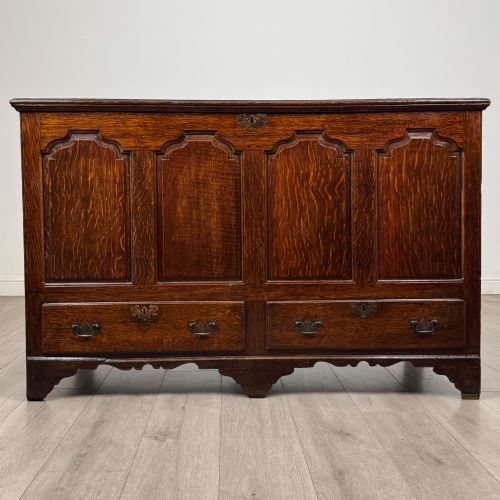
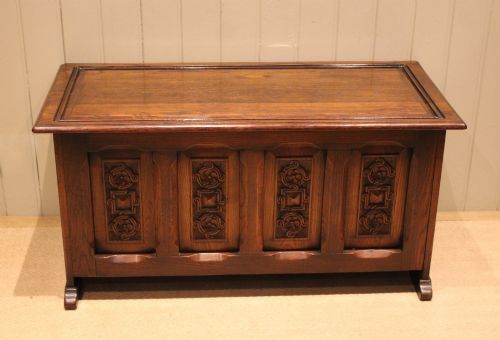
Brown Oak Coffer Trunk
A brown oak coffer trunk brings centuries of solid storage and rich timber into a room, offering both utility and historic character.
Brown Oak Coffer Trunk
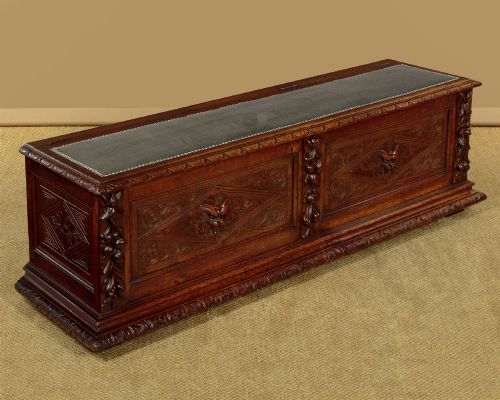
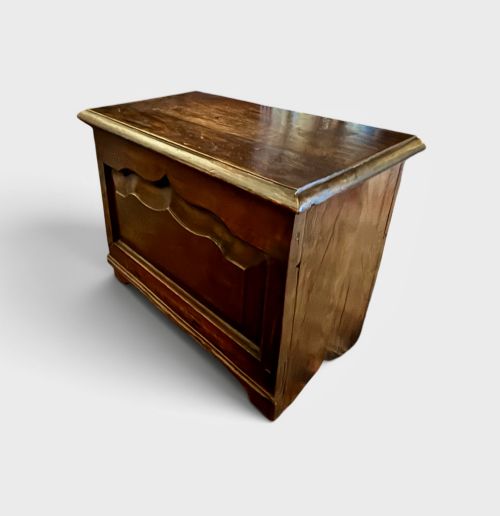
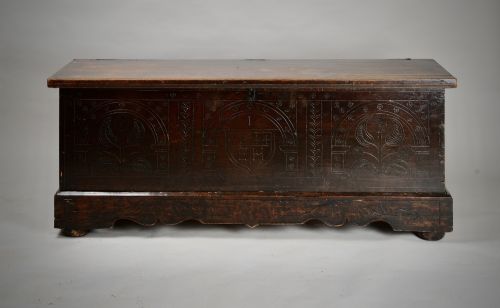
When you search for a brown oak coffer trunk, you enter a domain of sturdy storage furniture fashioned primarily from solid oak. These pieces range from early plank constructions to panelled examples dating across the sixteenth, seventeenth, and eighteenth centuries, alongside later revivals.
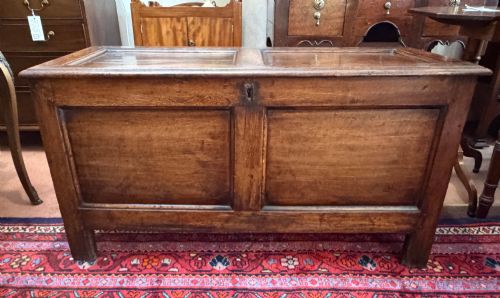
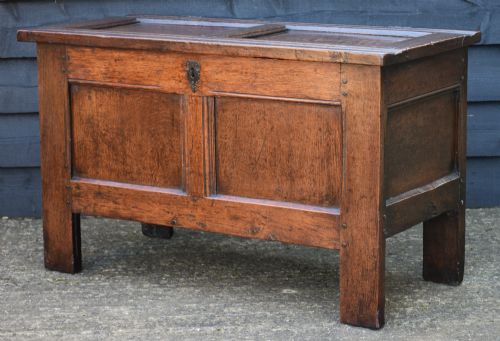
The version you are most likely to meet on this page is a seventeenth or eighteenth-century English or Welsh oak coffer featuring simple panelled construction and a hinged lid. Smaller proportions and mule chests fitted with lower drawers also appear frequently among the listings.
Examples span several distinct periods, including Elizabethan, Jacobean, and Georgian eras, reflecting the changing domestic requirements for storing textiles, documents, and household goods over hundreds of years.
Distinguishing quality across the range
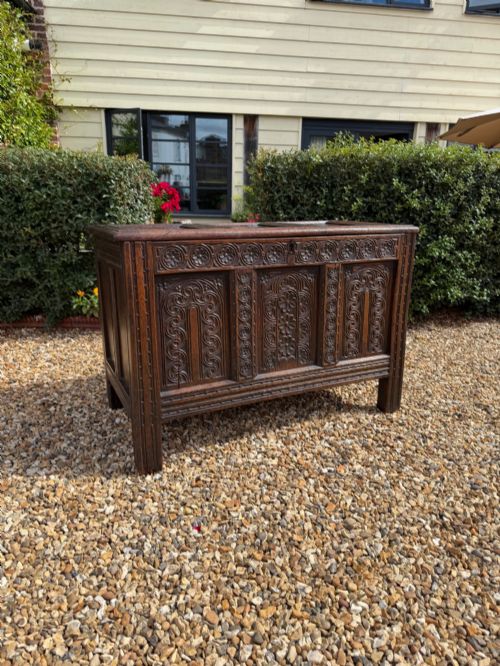
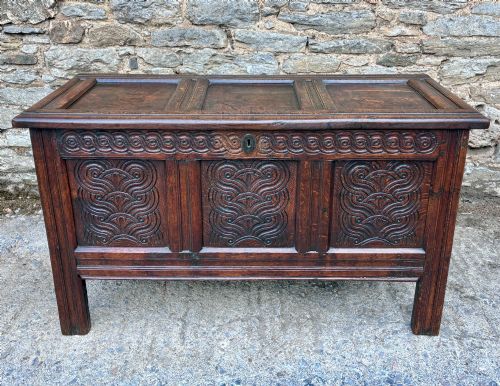
Quality rests upon the integrity of the timber, the crispness of any hand-carved ornamentation, and the originality of the structure. Untouched surfaces displaying deep, warm patination command greater regard than pieces stripped down or heavily rebuilt with modern timber.
The sophistication of the joinery and hardware also separates standard utility chests from finer country workshop pieces or formally styled regional trunks. Proportion and restraint in carving usually indicate a more accomplished maker.
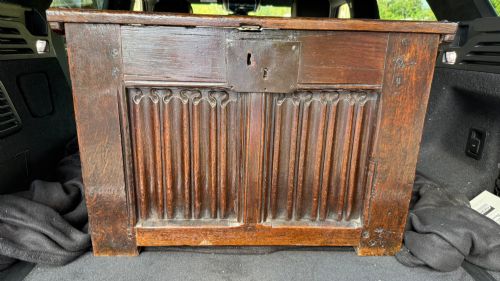
Listings feature oak coffers spanning from sixteenth-century boarded examples to nineteenth-century Gothic and Arts and Crafts revivals.
The Brown Oak Coffer Trunk Glossary
- Cofer
- A large wooden chest used for storing valuables, linen, or documents, usually fitted with a hinged lid. They served as primary furniture in medieval and early modern households.
- Mule chest
- A storage chest featuring one or more drawers built into the base beneath the main compartment. This form emerged as domestic storage needs evolved during the seventeenth and eighteenth centuries.
- Plank coffer
- An early form of chest constructed from heavy vertical planks joined at the edges rather than set within a framed panel structure. These represent some of the oldest surviving examples.
- Panelling
- A method of framing thin boards within grooved stiles and rails to accommodate the natural expansion and contraction of timber. This technique dominates seventeenth-century cabinet making.
- Patina
- The deep surface sheen and colour developed by wood over centuries through handling, light exposure, and polishing. It serves as a key indicator of age and authenticity.
Brown Oak Coffer Trunk: Frequently Asked Questions
What were brown oak coffer trunks used for?
These chests originally served to store valuable personal possessions, textiles, and household documents securely within domestic settings. Their flat lids also allowed them to function as benches or tables when space was limited.
Over time, their primary function shifted towards storing blankets, linen, and winter garments in bedrooms and living spaces.
How do I care for antique oak furniture?
Keep wooden chests away from direct heat sources and dramatic humidity fluctuations to prevent the oak from splitting or warping. Dust gently with a dry cloth and apply natural beeswax sparingly to maintain the surface.
Avoid modern silicone polishes, as they can penetrate the pores of the timber and damage the historic surface sheen over time.
How can I tell a seventeenth-century coffer from a later revival?
Early pieces display tool marks, hand-cut peg joints, and timber shrinkage consistent with centuries of age rather than mechanical production. Ironwork and hinges on genuine period examples are usually hand-wrought rather than mass-produced.
Revival pieces from the nineteenth or twentieth centuries often utilise machine-sawn timber and lack the deep, organic patination found on genuine historic examples.
What is a mule chest?
A mule chest combines the traditional lift-top compartment of a coffer with one or more drawers built into the base. This design bridged the gap between the simple chest and the multi-drawer chest of drawers.
They appear frequently in eighteenth-century Welsh and English country contexts where domestic storage requirements grew more complex.