
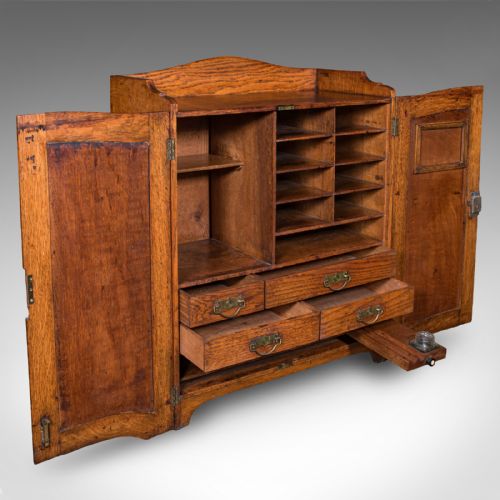


Brown Oak Clerks Desk
These brown oak clerks desk examples are solid working furniture built for counting houses and estates, offering rich timber grain and practical storage.
Brown Oak Clerks Desk
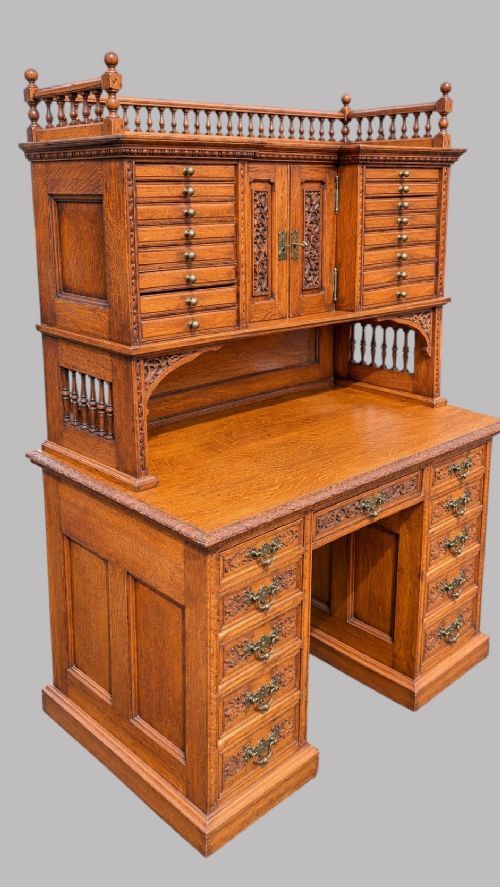
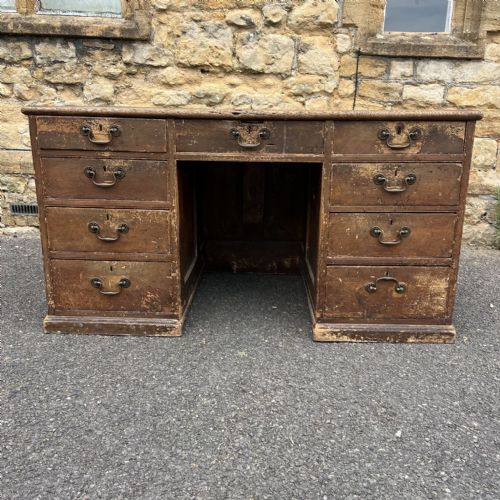
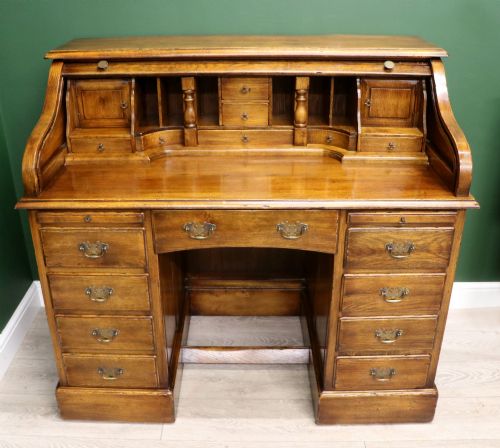
A brown oak clerks desk serves as a sturdy workspace, taking forms from simple tabletop bible boxes to substantial kneehole and roll top pedestals. You will frequently encounter Victorian and Georgian examples built for functional use in offices and administrative rooms.
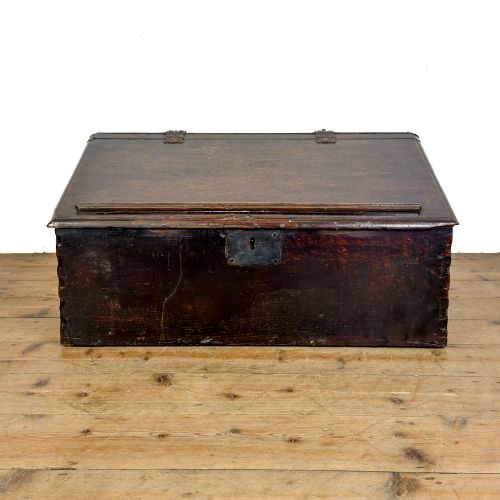
The selection ranges from early format slant-front boxes on stands to large estate desks and bureau cabinets. These pieces reflect utilitarian heritage, utilising durable timber designed to withstand decades of daily ledger work.
How they were made
Construction relies heavily on solid oak, occasionally supplemented with pine or elm for secondary framing and internal partitions. Cabinetmakers joined panels using traditional methods to accommodate the natural movement of dense timber over centuries.
Hardware includes brass pulls, iron hinges, and fitted leather or leatherette writing surfaces on later variations. Marquetry inlay appears on select examples, adding ornamental detail to standard utilitarian forms.
Materials across these listings span solid oak, pine, elm, and iron, alongside decorative brass and leather elements.
What varies in quality
Quality rests in the selection of the oak timber, the integrity of the original joints, and the retention of fitted internal compartments. Superior pieces display thoughtful grain matching and minimal structural alteration over time.
The presence of original stands, working tambour mechanisms, and unaltered brass hardware distinguishes higher grade examples. Simpler estate versions prioritize robust utility over refined decorative embellishment.
The Brown Oak Clerks Desk Glossary
- Bible Box
- A small tabletop box with a sloping lid, originally designed to hold household scriptures or writing materials. These compact pieces often sit directly on tables or dedicated stands.
- Tambour Top
- A flexible roll top closure formed from narrow slats of wood glued to a canvas backing. This mechanism slides smoothly along curved tracks to conceal the desk interior.
- Kneehole Desk
- A freestanding desk featuring a central recessed space for the user's legs, flanked by pedestals of small drawers. This format provides substantial storage capacity while maintaining a compact footprint.
Brown Oak Clerks Desk: Frequently Asked Questions
What is a clerks desk?
A clerks desk is a utilitarian workspace traditionally used for writing and accounting. These pieces often feature sloping tops or elevated compartments designed to hold ledgers and paper.
They were essential furniture in offices, counting houses, and large estates before modern administration took over. Today, they serve as practical writing surfaces with significant historical character.
How do I date an oak desk?
Dating relies on examining construction techniques, hardware, and wood patination. Early examples feature hand-cut joints and pegged frames, whereas later Victorian versions incorporate machine-cut elements.
Hardware styles and secondary timbers like pine or elm also offer clues to the period of manufacture. Comparing panel construction helps distinguish 18th-century pieces from later reproductions.
Where were these desks used?
These desks originated in commercial offices, administrative rooms, churches, and country estates. Clerks and estate managers used them daily for recording transactions and keeping records.
Their robust construction allowed them to endure heavy daily use in busy working environments. This functional history explains the straightforward and durable design found across most examples.
How do I care for antique oak?
Maintain oak furniture by keeping it away from direct heat sources and extreme humidity fluctuations. Applying natural wax periodically helps preserve the finish and nourish the dry timber.
Avoid using harsh chemical polishes that can strip the historic patination accumulated over the centuries. Gentle dusting with a soft cloth is sufficient for routine maintenance.