
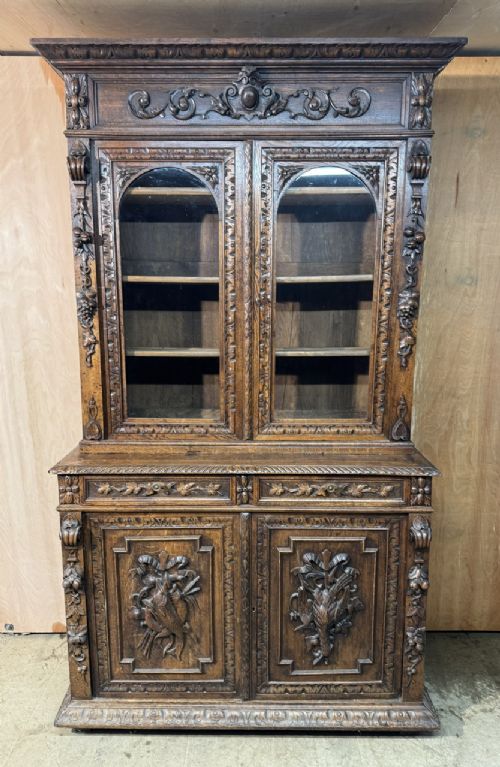
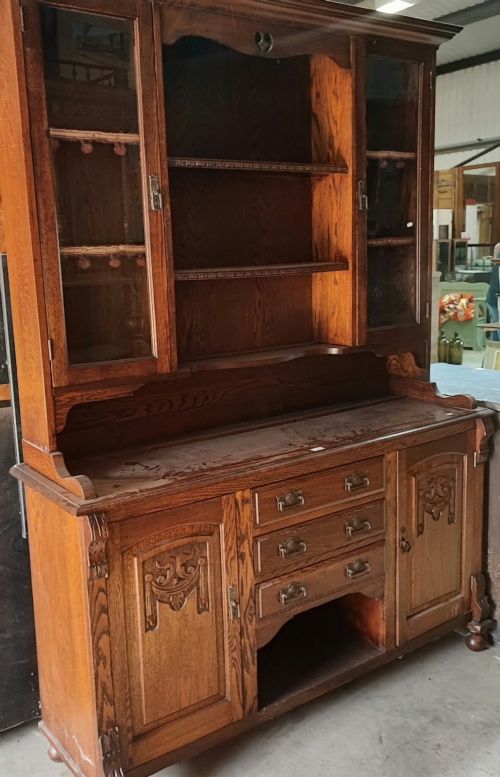
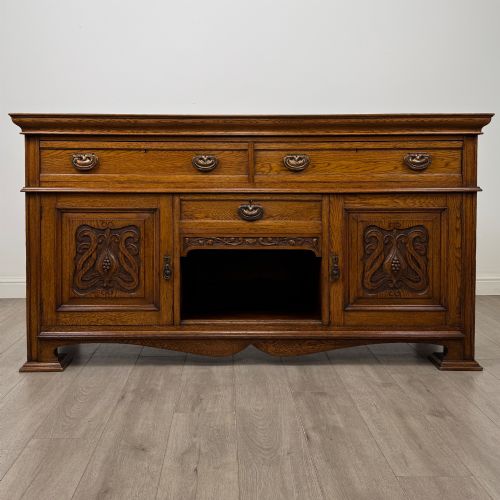
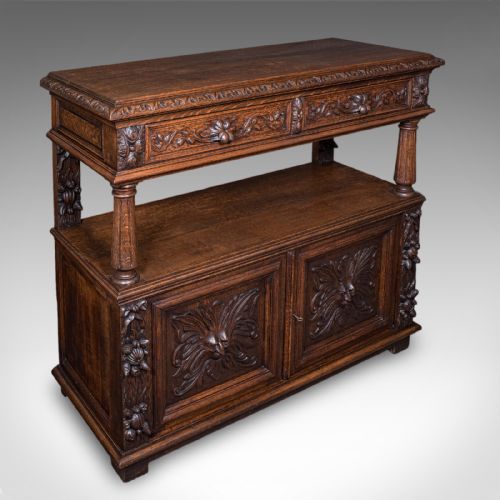
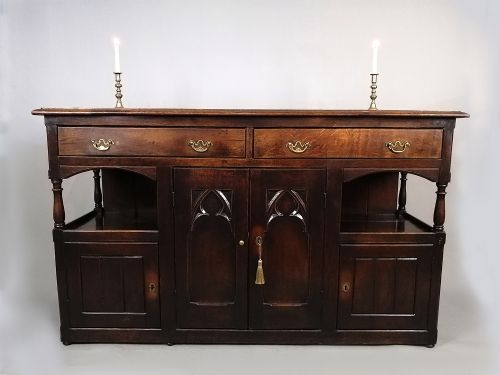
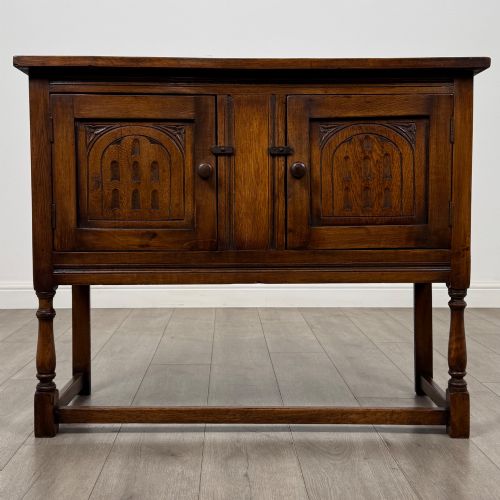
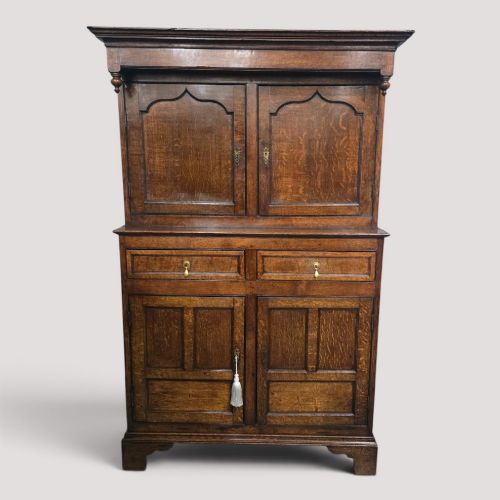
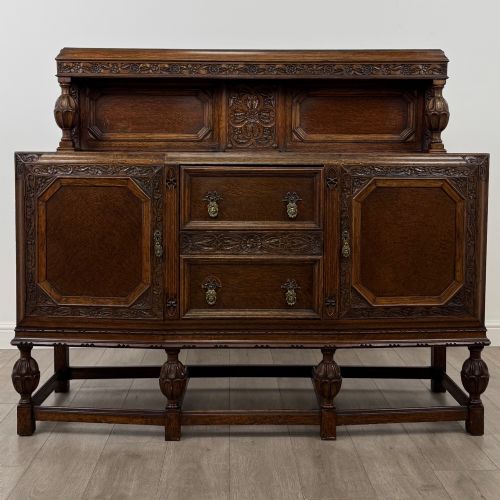
Brown Oak Buffet Cabinet
These brown oak buffet cabinet examples bring rich grain and sturdy storage to a room, spanning centuries of skilled carpentry.
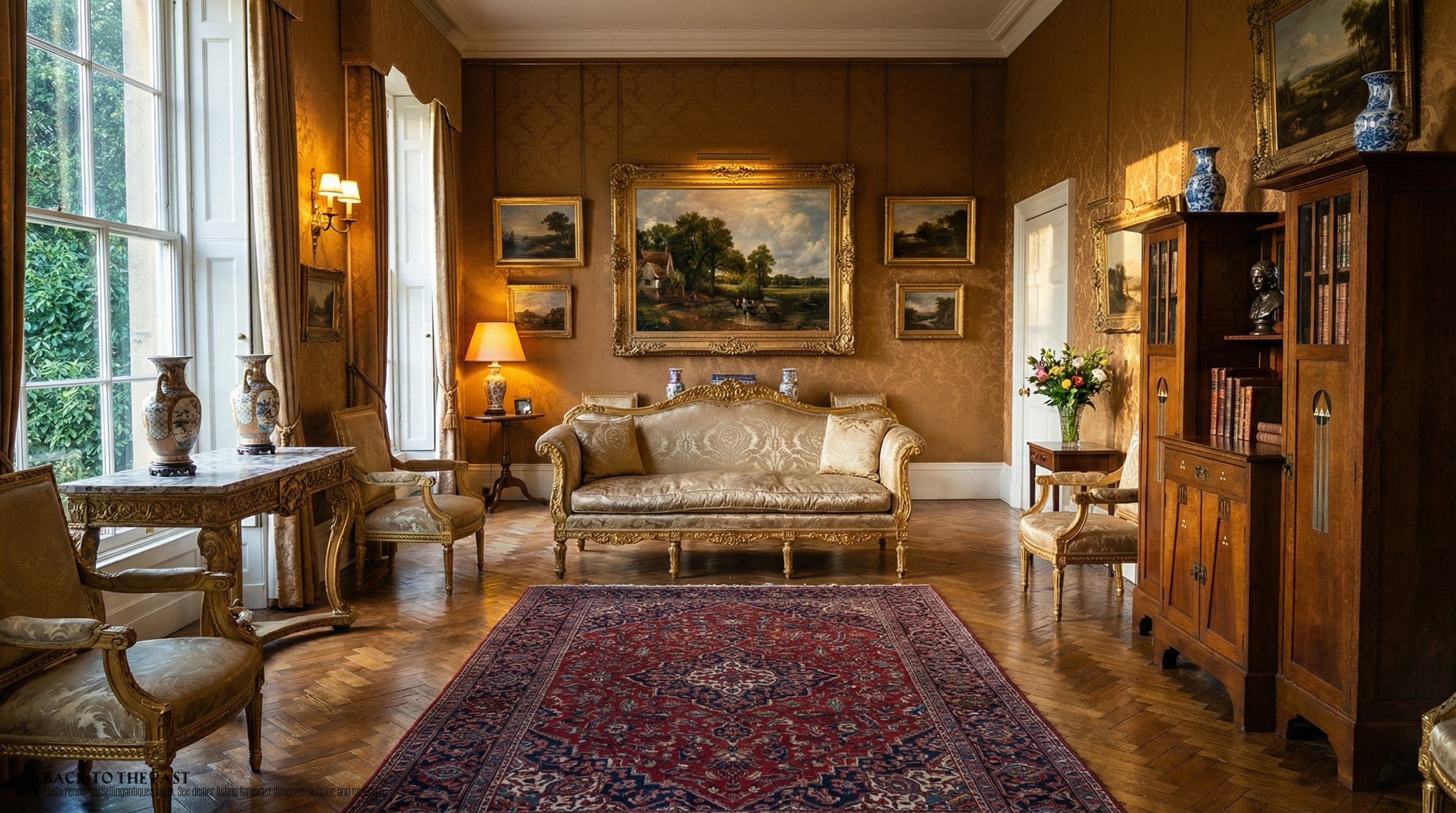
Brown Oak Buffet Cabinet
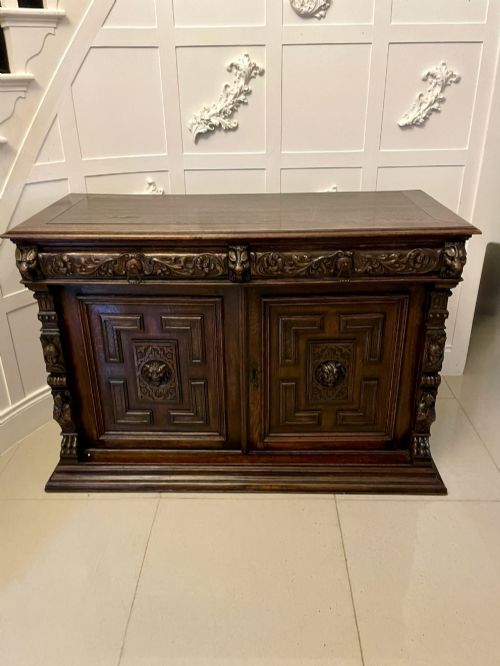
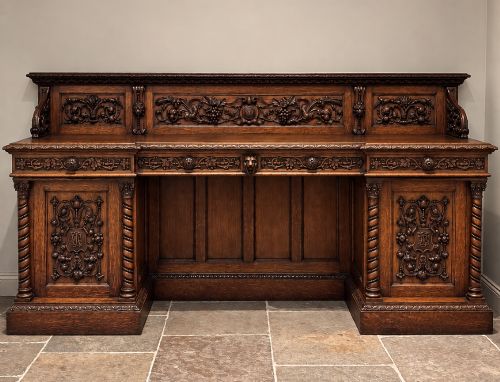
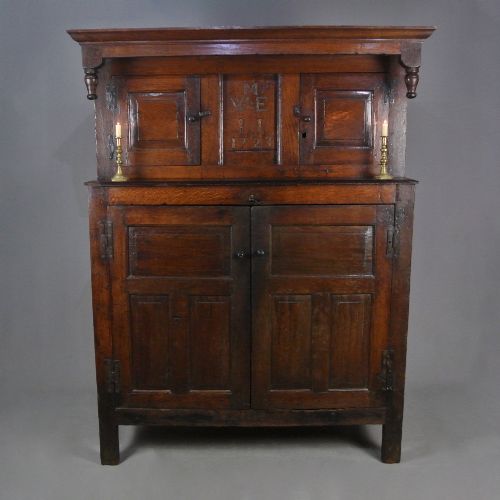
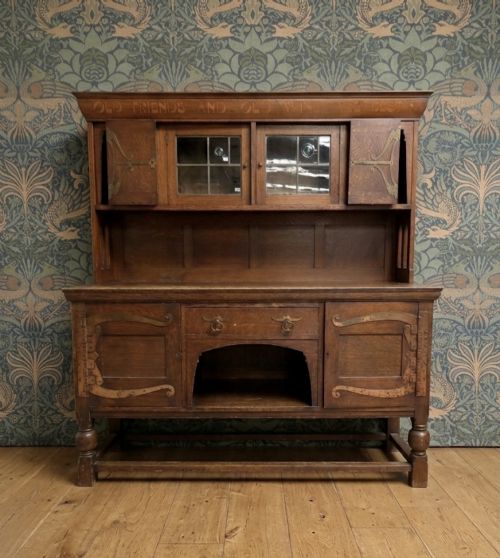
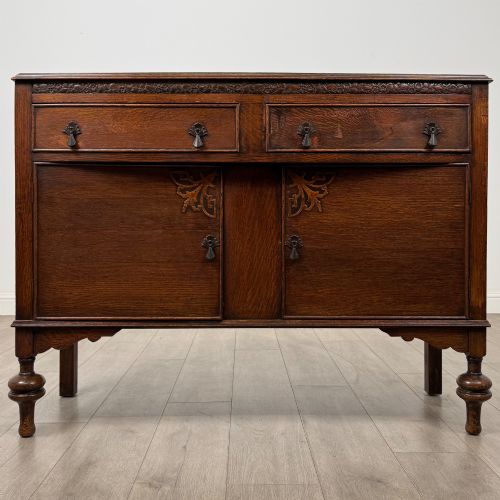
A brown oak buffet cabinet combines the practicality of a storage unit with the distinct warmth and figuring of oak timber. Pieces matching this description range from seventeenth-century court cupboards to Edwardian sideboards and Arts and Crafts designs.
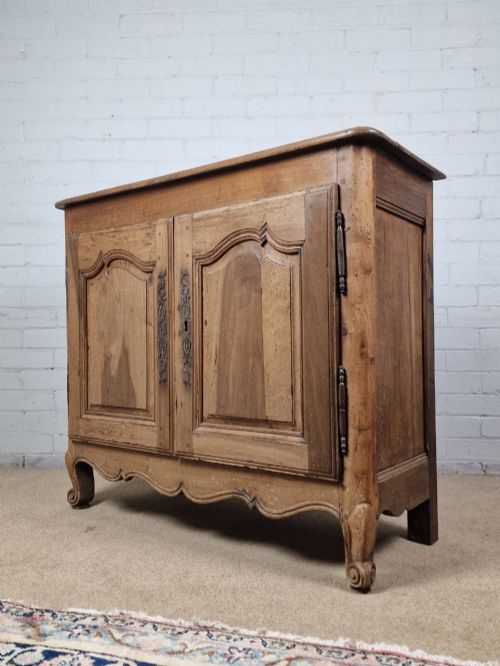
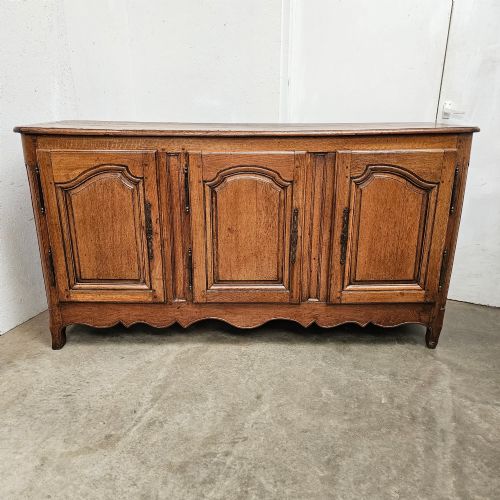
Buyers frequently encounter nineteenth-century interpretations on this page, alongside Georgian dresser bases and French provincial enfilades. These forms serve dining rooms and halls, providing deep cupboards and drawers for household provisions.
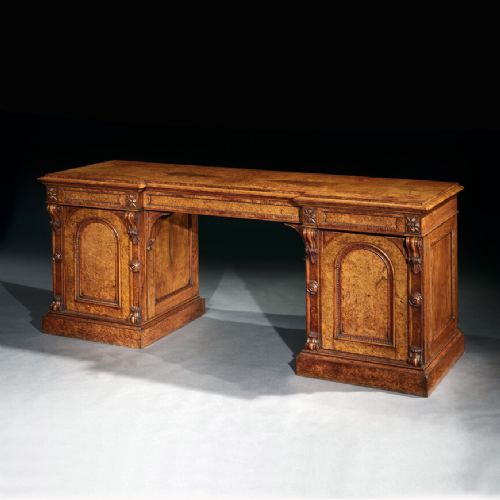
The materials span solid oak and pollard oak, often accented with brass or iron hardware and occasionally incorporating glass doors. The overarching styles cover Jacobean revival, Gothic taste, and clean Arts and Crafts lines.
Construction and materials
Makers utilised solid oak timbers, selecting pollard oak for its distinctive circular figuring to create striking visual contrast on panelled doors and drawer fronts. Cabinet makers employed traditional frame and panel construction to allow the timber to expand and contract naturally over decades.
Iron and brass hinges, handles, and escutcheons secure the heavy doors and drawers, whilst carved surface details define styles from Renaissance revival to Gothic taste. Fruitwood often appears alongside oak in provincial pieces, adding subtle tonal variation to internal shelves and secondary framing.
Materials across the selection range from dense brown oak and figured pollard oak to contrasting fruitwood accents, brass handles, and wrought iron hardware.
Distinguishing quality in older cabinetry
Quality rests in the depth of the timber's grain, the crispness of hand-carved details, and the preservation of original surfaces and patination. Superior examples display thoughtful proportions and harmonious joinery that resists shifting across seasonal changes in humidity.
The integrity of internal fittings, such as original brass hardware and well-fitted drawer linings, separates standard utility pieces from exceptional cabinet work produced by noted designers and workshops.
Ambrose Heal for Heal and Son·Leonard Wyburd·Shapland and Petter·Charles Dudouyt
The Brown Oak Buffet Cabinet Glossary
- Court cupboard
- An antique enclosed storage piece featuring an upper recessed section supported by pillars, typically originating in the seventeenth or eighteenth century.
- Pollard oak
- Timber taken from trees that were cut back close to the trunk, producing tightly clustered knots and highly decorative grain patterns.
- Enfilade
- A long dining or serving cabinet featuring a continuous row of doors, most commonly seen in French provincial furniture.
- Dresser base
- A low sideboard fitted with multiple drawers above cupboards, historically used for food preparation and serving in large kitchens.
- Patina
- The surface sheen and softened colour developed through decades of handling, polishing, and natural ageing.
Brown Oak Buffet Cabinet: Frequently Asked Questions
What is a brown oak buffet cabinet used for?
These cabinets provide substantial storage for dining rooms, hallways, and living spaces, holding heavy tableware, linens, and provisions behind sturdy panelled doors.
They also serve as display surfaces for lamps, ceramics, and decorative objects, combining utility with prominent architectural presence.
How do I care for antique oak furniture?
Keep wooden pieces away from direct heat sources and sudden temperature shifts to prevent the timber from splitting or warping.
Apply a traditional beeswax polish occasionally to nourish the grain and maintain the deep surface sheen without building up heavy residues.
How can I tell a Georgian piece from a Victorian one?
Georgian pieces generally display restrained classical proportions, cleaner lines, and simpler structural mouldings derived from eighteenth-century design standards.
Victorian items often lean towards heavier proportions, elaborate carved ornament, and revivals of Gothic or Renaissance styles.
What distinguishes Arts and Crafts cabinets?
Arts and Crafts pieces emphasise visible hand-craftsmanship, honest joinery, and simpler forms that celebrate the natural texture of the oak.
They frequently feature strap hinges, hammered copper handles, and clean structural lines that reject heavy industrial ornamentation.