
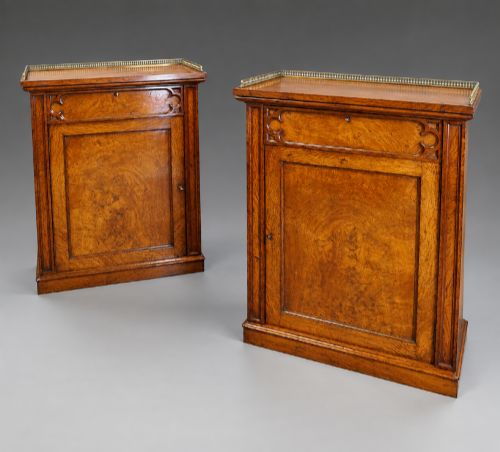
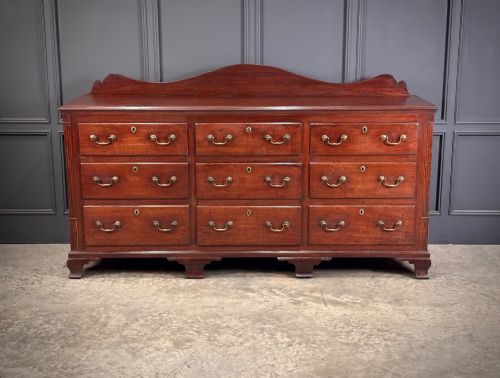
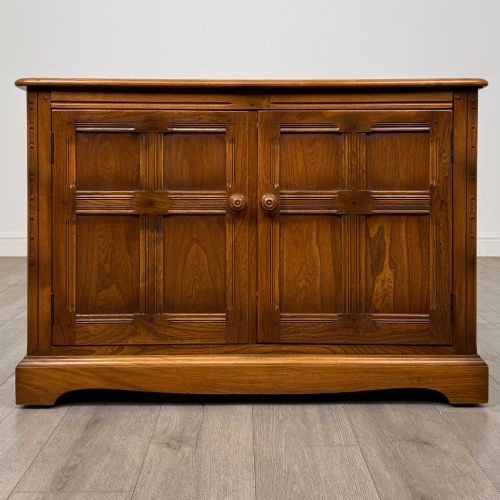
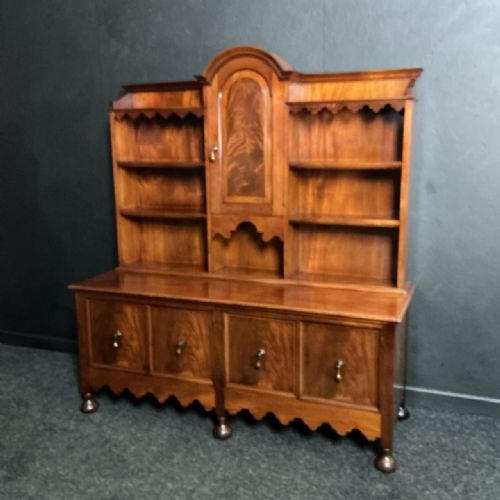
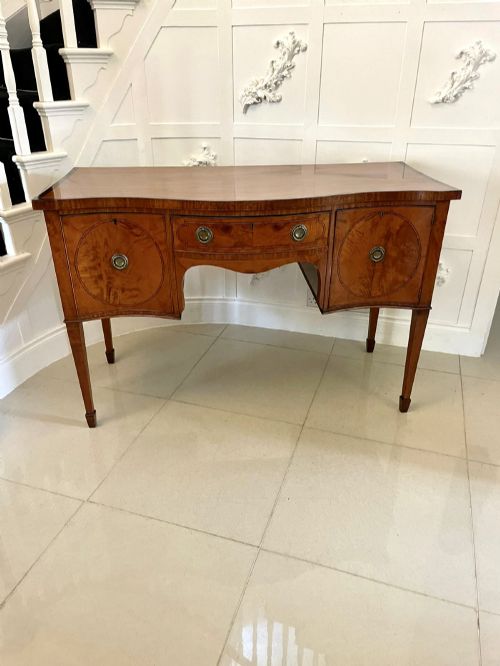
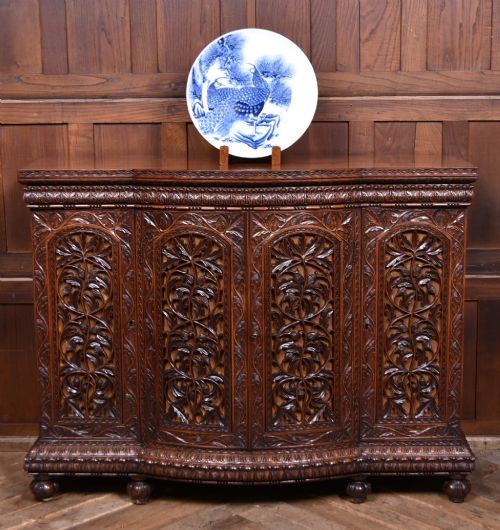
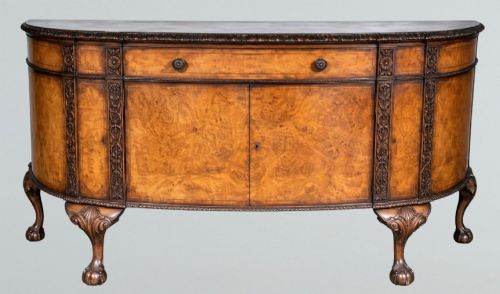
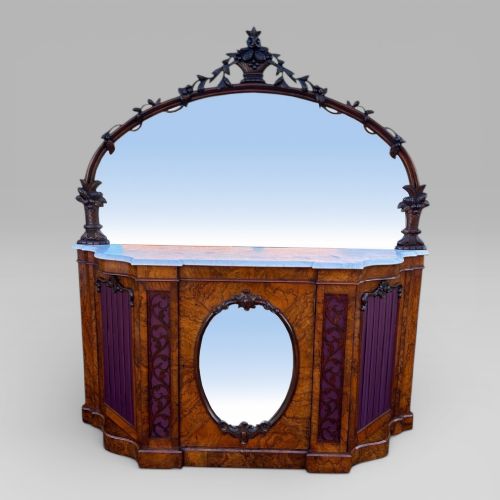

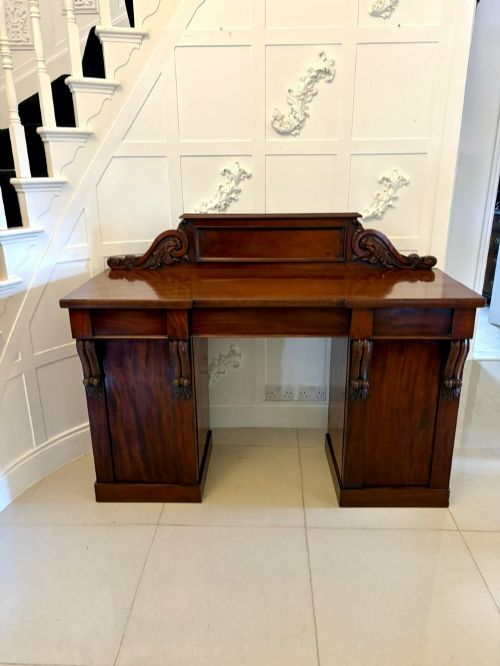
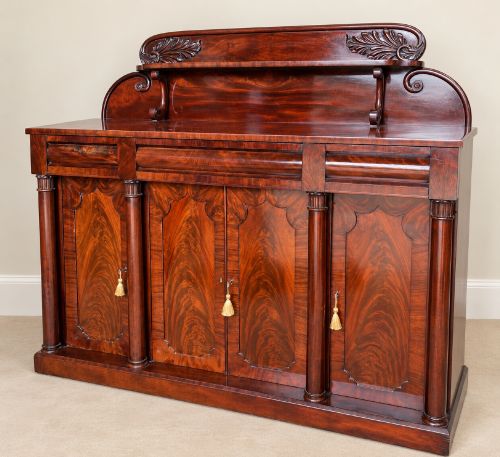
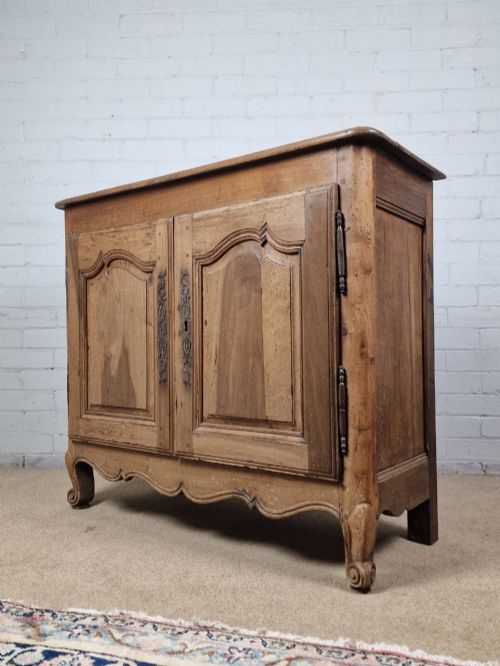

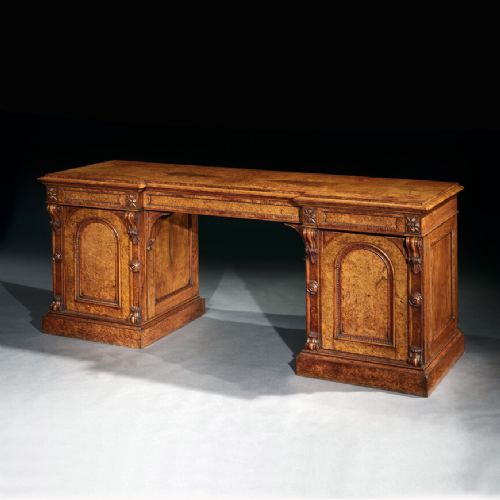
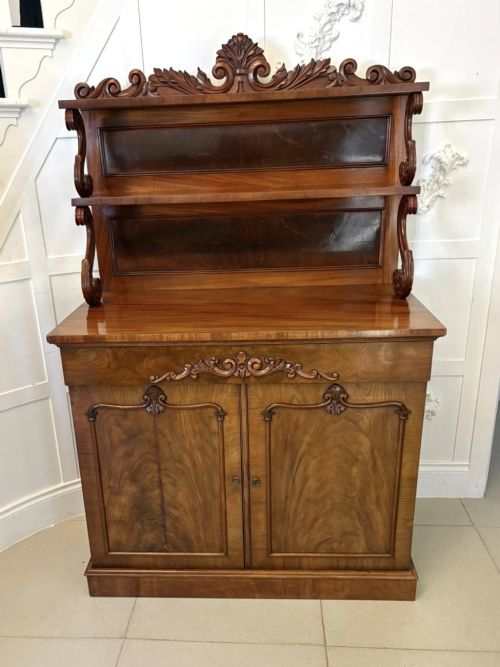
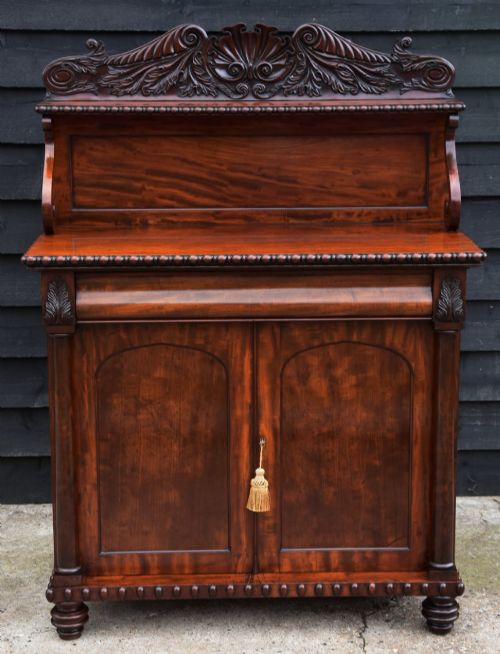
Carved Wooden Sideboard Cabinet
These pieces known as a carved wooden sideboard cabinet span centuries of timber and carving skill, offering substantial storage alongside bold period presence.
Carved Wooden Sideboard Cabinet
A carved wooden sideboard cabinet unites dining room utility with ornamental display, emerging in forms ranging from Georgian court cupboards to Edwardian golden oak storage pieces. When searching this phrase, a buyer encounters everything from Victorian mirror-backed credenzas to 19th-century mahogany servers and oak dresser bases.
The inventory leans heavily towards 19th-century and Edwardian examples executed in oak and mahogany, though walnut, teak, and elm also appear alongside regional styles like Welsh or Anglo-Indian pieces. These items serve primarily as focal points in dining spaces or hallways, offering deep drawers and enclosed cupboards for tableware and linens.
Victorian and Edwardian iterations dominate current selections, often featuring elaborate carving, mirrored backs, or raised backsplashes that reflect the tastes of their respective decades. Buyers frequently select these forms to anchor a room while providing functional surface area and concealed interior capacity.
Materials and construction methods
Cabinet makers relied predominantly on native and imported timbers, utilising solid oak, figured mahogany, burr walnut, and flame mahogany to build durable carcases. Secondary woods like pine often appear in drawer linings and internal shelving.
Surface ornamentation relied on hand carving, linenfold panelling, and inlaid brass or glass details, executed with traditional mortise and tenon joinery. Finishes were typically built up using shellac-based polishes or oils that enhanced the natural grain of pollard oak and satinwood.
Several heavy Indian dowry chests preserve generations of family textiles inside deeply carved teak panels smelling faintly of old teak resin.
Assessing craftsmanship and execution
The distinction between ordinary utility items and superior examples lies in the depth and crispness of the hand carving, the choice of highly figured veneers, and the integrity of the original hardware. Cabinet makers who selected matched flame mahogany or burr walnut for drawer fronts produced visually striking surfaces that elevate a piece.
Structural refinement also determines worth, visible in tightly fitted dovetail joints, smooth-running drawers, and heavy brass hinges or locks that remain fully operational. Lesser pieces often display simpler panel construction and mechanical shortcuts, whereas top-tier items retain original mirrored superstructures and intact cutlery trays.
Gillows
The Carved Wooden Sideboard Cabinet Glossary
- Chiffonier
- A compact sideboard or low cabinet equipped with drawers and shelves, popular during the Regency and Victorian periods for serving food and storing silver.
- Court Cupboard
- An antique enclosed storage piece, typically executed in oak with a recessed upper section supported by turned pillars, dating back to the Tudor and Jacobean eras.
- Dresser Base
- The lower section of a kitchen or dining room storage unit featuring drawers and cupboards, lacking the traditional plate rack superstructure.
- Serpentine Shaped
- A curved front profile characterised by a convex centre flanked by concave ends, requiring advanced woodworking skill to construct.
- Linenfold
- A style of wood carving that mimics the appearance of folded parchment or linen, frequently utilised on Tudor and Edwardian panels.
Carved Wooden Sideboard Cabinet: Frequently Asked Questions
How do I style a carved wooden sideboard cabinet today?
These pieces anchor a dining room or hallway by offering a solid visual base that pairs well with minimalist contemporary art or traditional table lamps. Their surface areas allow for practical display without cluttering the room.
Interior compartments handle everyday tableware or linens, making them as useful in modern open-plan spaces as they were in formal 19th-century dining rooms.
What is the difference between a sideboard and a chiffonier?
A sideboard is generally longer and designed primarily for dining room service and storage, whereas a chiffonier is a more compact cabinet developed during the Regency and Victorian eras.
Chiffoniers often feature a raised backsplash or small shelf on top, making them suitable for smaller reception rooms or parlours.
How do I identify an 18th-century piece from a Victorian reproduction?
Eighteenth-century examples typically display hand-cut dovetails, wider boards with natural shrinkage, and simpler iron or brass hardware indicative of pre-industrial workshops.
Victorian and later revival pieces often incorporate machine-sawn timber, standardised fixings, and denser, more elaborate carved motifs associated with industrial-era production.
Are these cabinets suitable for small apartments?
Compact variants such as low oak chests, side cabinets, and Regency chiffoniers fit easily into narrow hallways or apartment dining nooks.
Their enclosed cupboards and deep drawers provide substantial storage capacity while occupying a relatively small floor footprint.