




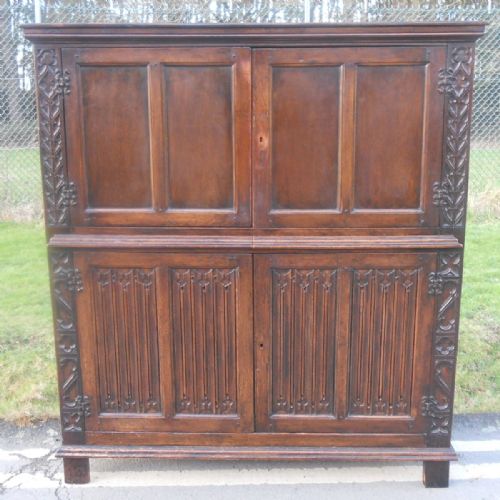
Tudor Revival Cabinet
A tudor revival cabinet brings solid oak timber and centuries-old architectural forms straight into a modern interior.
Tudor Revival Cabinet
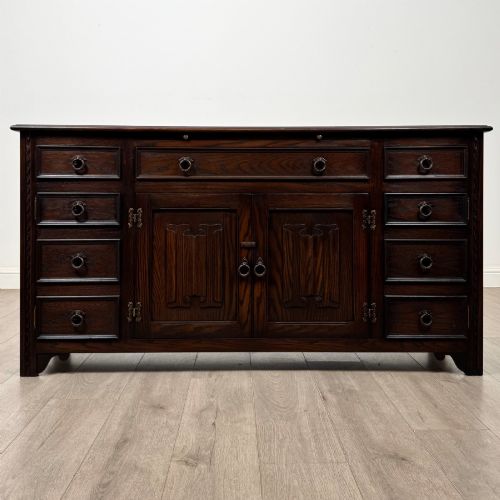
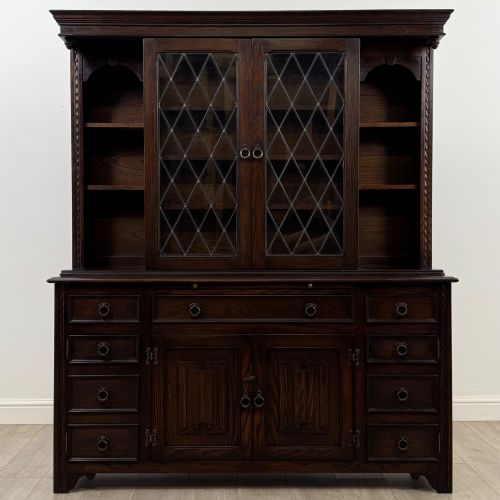
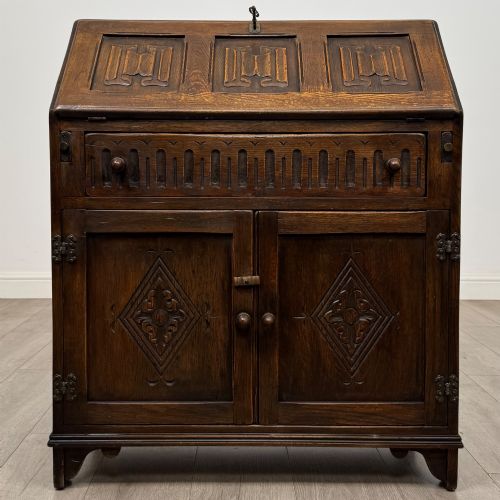
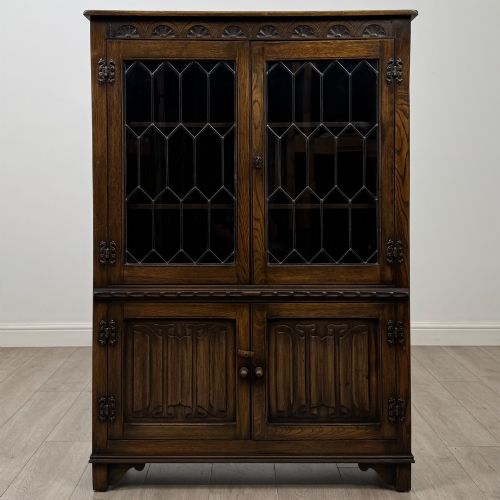
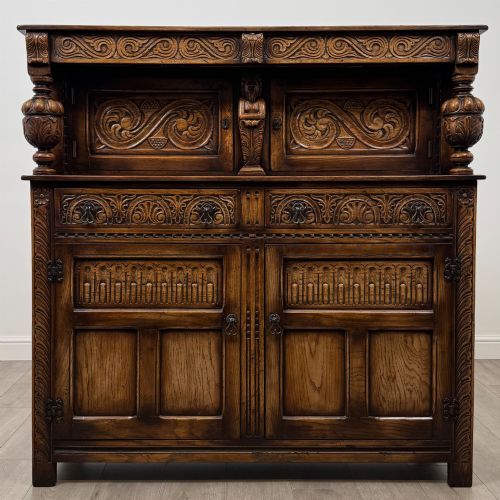
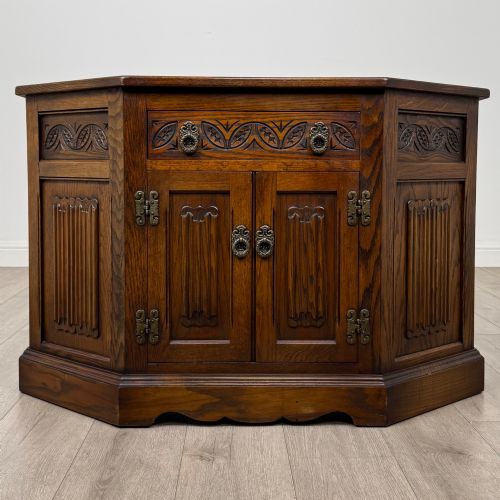
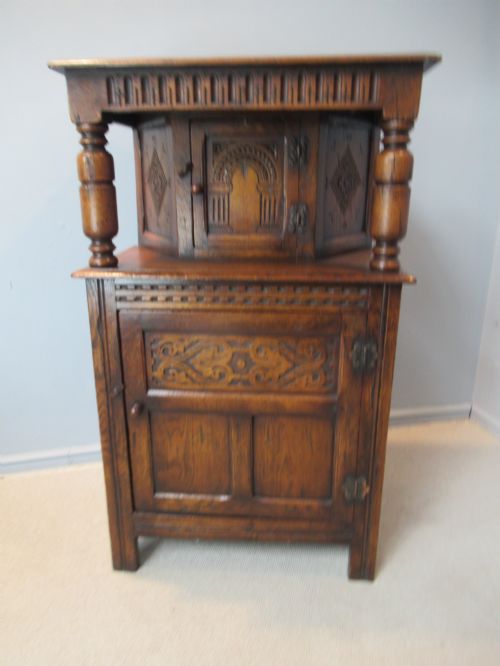
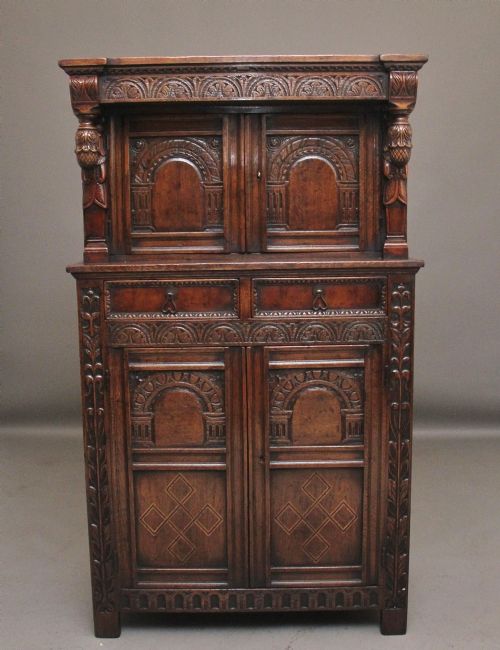
When you search for a tudor revival cabinet, you encounter sturdy timber furniture drawing on sixteenth-century design motifs. These pieces range from court cupboards and display cabinets to linenfold bureaus, side cabinets, and writing bureaus.
The pieces on this page span several eras including the nineteenth century, Edwardian period, and the 1920s and 1930s. Court cupboards and linenfold cupboards in solid oak form the backbone of what you are most likely to meet here.
Makers of these items looked back to Tudor, Elizabethan, and Jacobean styles, alongside Gothic Revival influences. You find tall display units with glass panels alongside low side cabinets and small storage cupboards.
How they were made
Solid oak serves as the primary material for these items, sometimes described as golden oak. Workshops utilised heavy timber framing to build robust storage furniture designed to last generations.
Carving provides the main decorative technique, featuring linenfold panels that mimic folded cloth alongside geometric and floral motifs. Iron and brass hardware, including metal hinges and handles, secure the doors and drawers while glass panels appear in display variants.
Listings feature solid oak across multiple decades, including Edwardian, 1920, 1930, and nineteenth-century examples.
What varies in quality
The depth and crispness of the timber carving separate standard production from superior examples. Hand-carved linenfold panels and deeply recessed mouldings show greater artisan engagement than shallow machine work.
The selection of solid oak timber dictates overall durability and visual weight. Heavier golden oak boards with consistent grain patterns elevate the presence of a court cupboard or side cabinet.
The Tudor Revival Cabinet Glossary
- Court cupboard
- A traditional enclosed storage piece with tiers, often featuring heavy overhangs and carved supports. These items serve as prominent display and storage furniture.
- Linenfold
- A style of woodcarving that imitates vertical folds of fabric, commonly seen on panel doors and bureau fronts during revival periods.
- Jacobean Revival
- An architectural and furniture style drawing on seventeenth-century motifs, closely related to Tudor aesthetics with dark oak and geometric panelling.
- Gothic Revival
- A design movement incorporating medieval architectural elements such as pointed arches and tracery into domestic cabinetry.
- Golden oak
- A description for oak timber possessing a warm, honey-toned hue, often characteristic of early twentieth-century revival furniture.
Tudor Revival Cabinet: Frequently Asked Questions
What is a court cupboard?
A court cupboard is an enclosed wooden storage unit featuring tiered sections and prominent carving. These pieces evolved from sixteenth-century dining hall furniture.
In a modern home, they function well as statement storage in dining rooms or hallways. Their sturdy oak construction provides generous interior space.
How do I date a revival cabinet?
Dating relies on examining the timber construction, hardware materials, and stylistic cues present in the piece. Edwardian and 1920s interpretations often employ machine-assisted joints alongside hand-finishing.
Earlier nineteenth-century examples tend to show heavier hand-cut joinery and deeper patination on the oak surfaces. Comparing the hardware style helps narrow down the decade of manufacture.
Where should I place a heavy oak cabinet?
Heavy oak furniture requires a stable, level floor away from direct heat sources and strong sunlight. Solid timber reacts to environmental changes by expanding and contracting.
Positioning the piece against a load-bearing wall ensures safety, particularly with taller court cupboards or large display cabinets. Leave small gaps behind the furniture to allow air circulation.
What is linenfold panelling?
Linenfold panelling is a carved wooden design that mimics folded fabric, popular on cabinet doors and bureau fronts. Cabinetmakers used gouges and chisels to create the illusion of draped cloth.
This technique adds rich texture to flat wooden surfaces without requiring applied ornamentation. It remains one of the defining visual markers of Tudor and revival furniture.