




Brown Needlepoint Stool
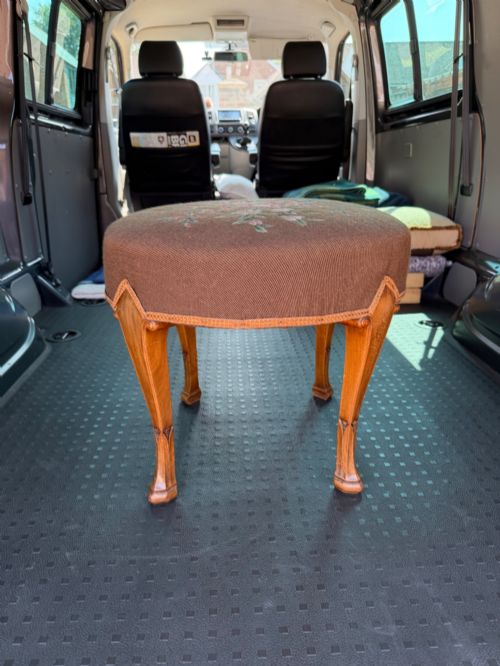
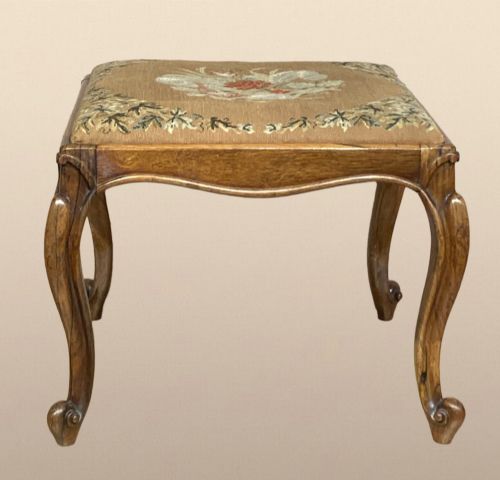
These brown needlepoint stool examples combine traditional timber frames with worked textile tops, offering both decorative warmth and everyday utility.
Brown Needlepoint Stool
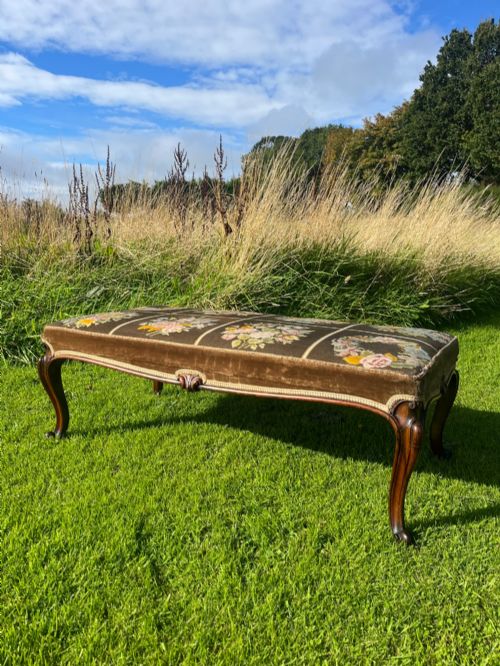
A brown needlepoint stool brings together a wooden base and a patterned textile seat, taking forms such as footstools, dressing stools, and window seats. The selection spans centuries from the eighteenth century to the twentieth century, encompassing periods like the Victorian era, the Georgian revival, and the Edwardian period.
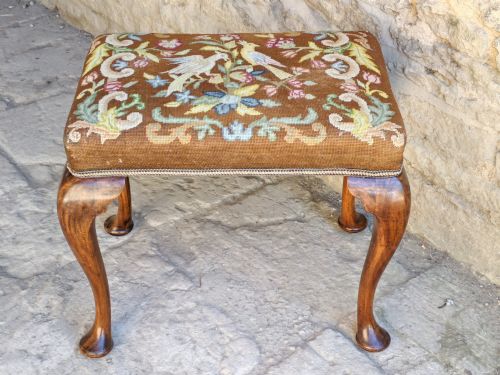
Most pieces you meet on this page utilise mahogany or walnut for the frame, paired with wool needlepoint, tapestry, or fabric upholstery. Styles range from plain proportions to Queen Anne style cabriole legs and Scottish Baronial detailing.
Materials and construction
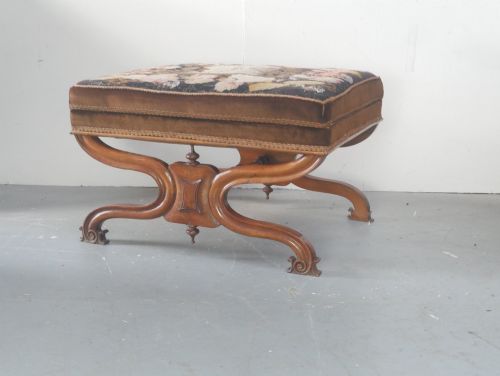
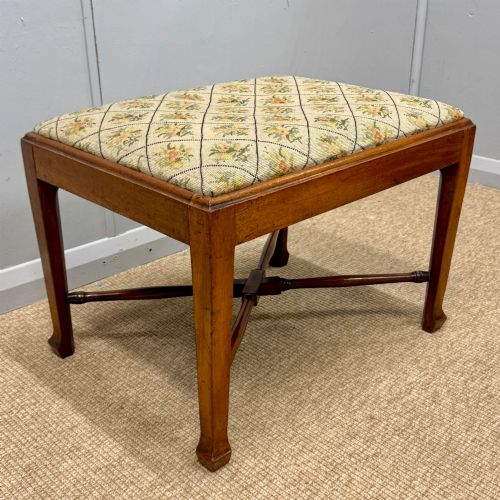
Frames take shape in mahogany or walnut, sometimes incorporating cross stretchers or brass fittings to shore up the structure. Joinery and carving vary from simple turned supports to elaborate cabriole legs.
The seats utilise wool needlepoint, tapestry, velvet, or textile covers pulled over padded foundations. Original fabric survives on certain examples, showing hand-worked wool stitching set directly into the timber frame.
Several stools double as hidden dressing companions, quietly holding centuries of stray pins beneath their needlepoint lids.
Assessing quality in the range
Quality reveals itself in the crispness of the timber carving and the density of the wool stitching on the needlepoint seat. Heavier woods like walnut and mahogany paired with substantial frames generally indicate superior workshop output.
The relationship between the frame style and the textile cover dictates visual cohesion. Pieces retaining original fabric or demonstrating specialist cabinet-making show greater fidelity to their period.
Whytock and Reid
The Brown Needlepoint Stool Glossary
- Needlepoint
- A type of counted thread embroidery stitched onto an open weave canvas. It provides the durable, patterned surface characteristic of these seat covers.
- Cabriole leg
- A furniture leg that curves outward and then tapers inward, typically ending in a pad or scroll foot. This shape appears frequently on walnut and mahogany frames.
- Cross stretcher
- A system of intersecting wooden bars connecting the legs of a stool near the floor to add structural stability. They are often seen on dressing table stools.
- Window seat
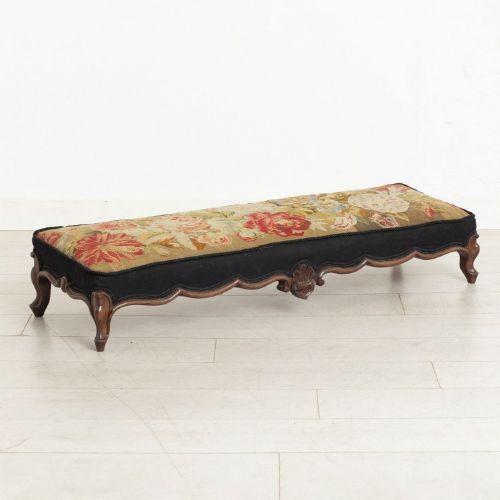
- An elongated stool or low bench designed to sit beneath a window. These pieces combine larger upholstered seating surfaces with timber frames.
Brown Needlepoint Stool: Frequently Asked Questions
How do I date a brown needlepoint stool?
Dating relies on timber selection, leg profiles, and the style of the upholstery. Walnut and mahogany frames combined with specific revival styles point to particular decades.
Examining the underside and joinery offers further clues to the period of manufacture, distinguishing nineteenth-century work from later revivals.
Are needlepoint seats original to the stools?
Many stools retain their original wool needlepoint or tapestry covers, which show natural wear consistent with age. Other pieces have been reupholstered in later textiles to suit modern interiors.
Checking how the fabric is secured to the frame helps determine whether the needlepoint dates to the same period as the woodwork.
What is the difference between a footstool and a dressing stool?
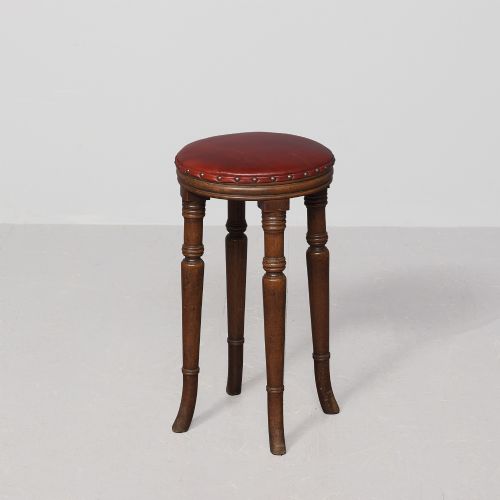
Footstools are generally lower to the ground and more compact, designed for resting feet while seated. Dressing stools stand taller and often feature padded tops meant for sitting at a vanity or table.
Proportions and leg height serve as the primary indicators of how a specific stool was intended to be used in a historic interior.
How should I care for wool needlepoint upholstery?
Protect needlepoint seats from direct sunlight to prevent the wool yarns from fading over time. Gentle vacuuming with a low-suction attachment helps remove dust without damaging the stitches.
Avoid harsh cleaning products on both the textile cover and the polished walnut or mahogany frame to preserve the antique finish.