
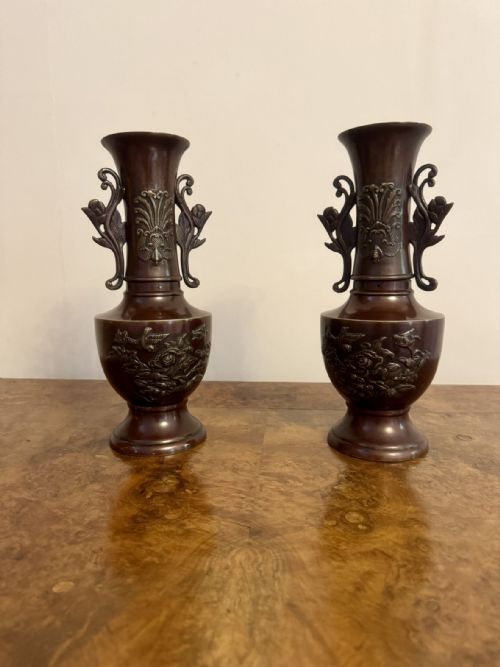

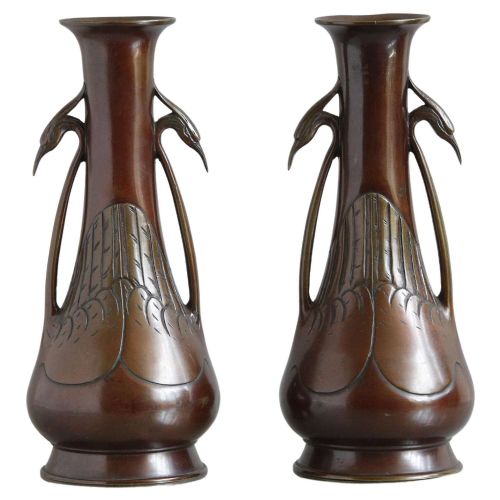


Brown Metal Vase
These brown metal vase examples combine heavy cast bronze, patinated copper and French spelter from the nineteenth century for collectors seeking traditional decorative urns.
Brown Metal Vase
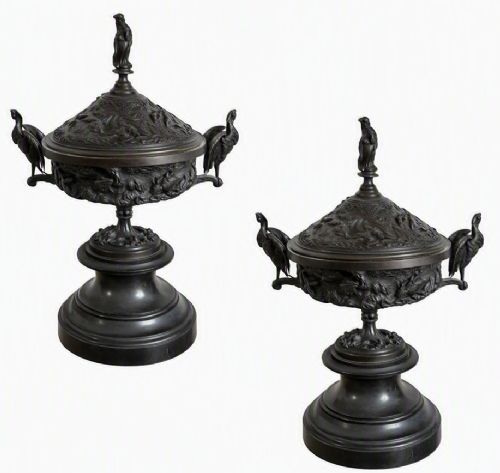
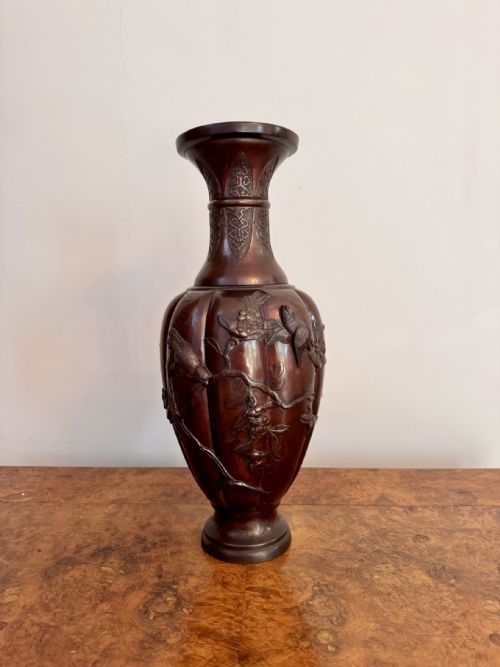
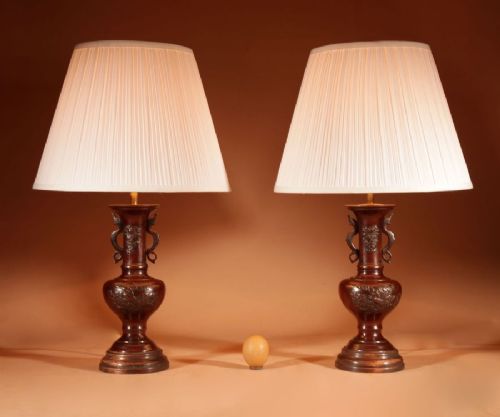
The version most commonly met on this page is the Japanese bronze vase from the late nineteenth century, often decorated with handles shaped as birds or fish and carrying distinct patination. Alongside these, French campana urns and Chinese altar vases appear frequently across the listings.
Materials and construction
Makers utilised casting techniques for bronze, brass and spelter, pouring molten metal into moulds to form campana urns, figural bodies and twin-handle vessels. Many of these surfaces received chemical patination to achieve deep brown, dark green or modulated bronze tones.
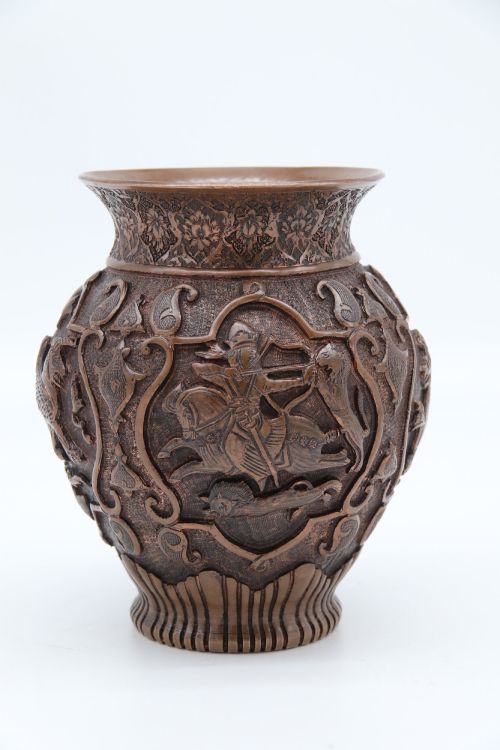
Detailing on copper and bronze involved repoussé work, where artisans hammered the metal from the reverse to raise motifs in relief. Cloisonné and enamel techniques added colour through wire cells soldered onto metal foundations.
Materials span bronze, patinated bronze, brass, copper, wood, fabric, spelter and enamel across nineteenth-century and Meiji period pieces.
Distinguishing quality
The division between standard production and superior work rests on the crispness of the cast and the depth of the metal finish. Heavier pieces with intricate, hand-chiselled surface details demonstrate greater skill from the foundry.
Signed items and matched pairs display an artistic unity that elevates them above solitary, unsigned vessels. The nuance of the patination, whether smooth or intentionally textured like tree bark, dictates the visual success of the piece.
Jules Moigniez·Charles Korschann
The Brown Metal Vase Glossary
- Patination
- The chemical or natural alteration of the metal surface that produces a brown, green or dark coloration. This finish protects the metal while defining its aesthetic character.
- Campana
- A classical bell-shaped vessel form associated with ancient urns and adopted during the Regency and nineteenth-century revival periods. These vases flare outward toward an everted rim.
- Repoussé
- A metalworking technique where the artisan hammers a sheet of copper or bronze from the reverse side to create a raised design on the front. This process allows for intricate pictorial depth.
- Cassolette
- A decorative urn designed with a reversible lid that functions either as a vase or a burner for perfumes. They often stand on stepped plinth bases.
- Cloisonné
- An enamelling method where fine metal wires form cells on a metal body to hold coloured vitreous pastes before firing. The resulting surface displays intricate patterns of metal and colour.
Brown Metal Vase: Frequently Asked Questions
What metals are used in these vases?
The pieces rely principally on bronze, patinated bronze, copper, brass and spelter. Some incorporate enamel work or mixed metals.
These materials determine the weight and colour variation of each vessel.
How do I identify a Meiji period piece?
Japanese works from this era often feature detailed bronze casting, signature marks, and motifs such as birds, dragons or fish. They date from the late nineteenth to early twentieth century.
Many of these items were produced specifically for export during the opening of Japanese trade.
Where were campana urns made?
Campana urns appear in French nineteenth-century manufacturing, using materials like bronze and spelter. They draw inspiration from classical antiquity.
These urns frequently rest on stepped plinth bases and serve decorative interior roles.
How should I clean a patinated bronze vase?
Maintain the surface by dusting gently with a dry cloth to preserve the original chemical or natural patination. Avoid abrasive polishes that strip the coloured finish.
Keeping the metal away from direct moisture protects the historic surface integrity.