



Brown Mahogany Specimen Cabinet
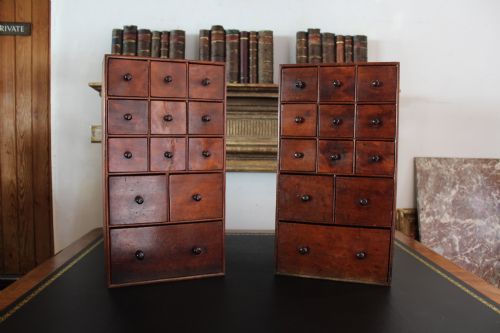
A brown mahogany specimen cabinet holds small treasures in multiple drawers, offering collectors a compact piece of period furniture.
Brown Mahogany Specimen Cabinet
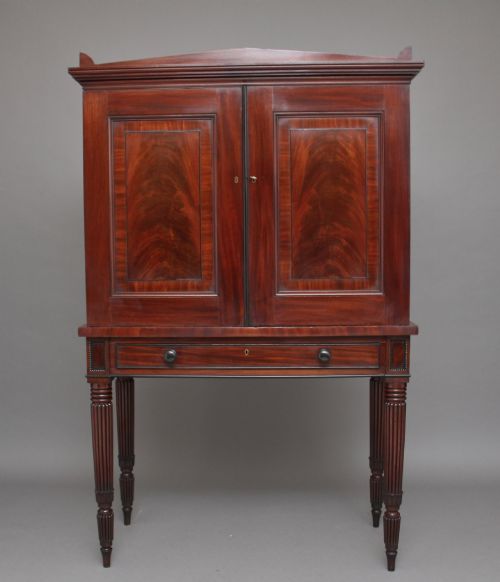
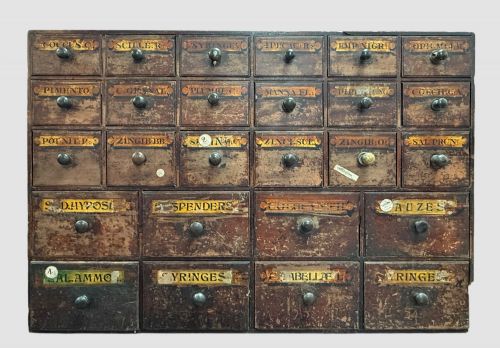
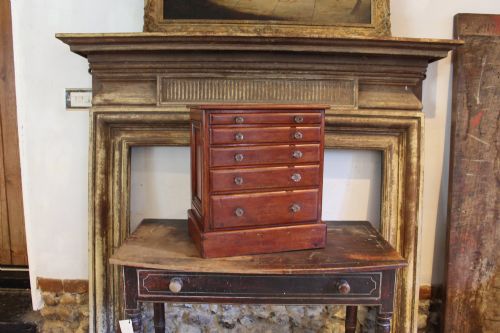
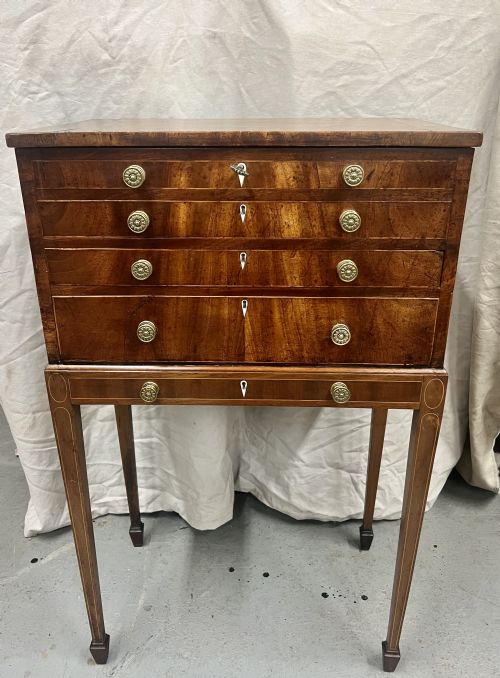
A brown mahogany specimen cabinet provides specialised storage through banks of small drawers designed to house objects such as insects, eggs, microscope slides, or small curiosities. The pieces found here span the Georgian, Victorian, and Edwardian eras, encompassing both tabletop forms and larger chests on stands.
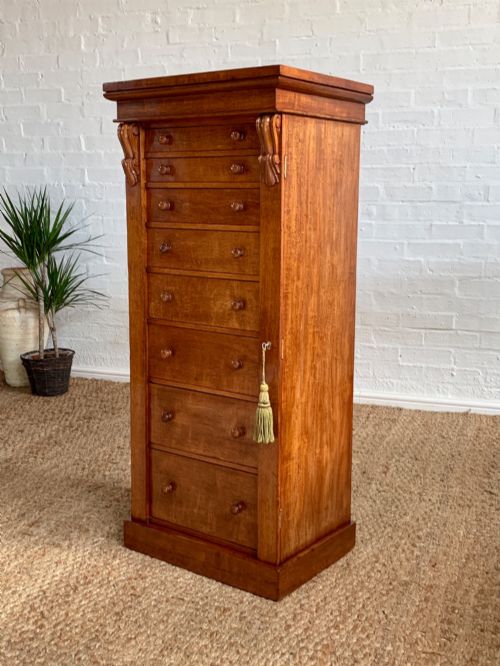
Makers produced these storage units in various configurations, including miniature chests of drawers, apothecary cabinets, and Wellington chests with locking mechanisms. The scale ranges from compact desktop cases to substantial floor-standing pieces intended for serious collections.
Materials and construction methods
Cabinet makers utilised solid mahogany and figured mahogany veneers over secondary timbers like pine, often incorporating satinwood for contrast on drawer interiors or inlay work. Brass handles, glazed glass doors, and bone knobs appear frequently to secure and display the contents.
Joinery techniques on these cabinets include precise drawer framing and tight-fitting dust boards designed to protect delicate contents over long periods. Turned wooden knobs and locking side bars secure multiple drawers simultaneously in many Victorian examples.
Victorian naturalists required dedicated multi-drawer housing for everything from beetle collections to entire cabinets full of carefully documented bird eggs.
Indicators of quality
The standard of a brown mahogany specimen cabinet rests upon the choice of timber, particularly the presence of rich figured mahogany and secondary woods like satinwood. Fine grain matching across drawer fronts and the integrity of original brass hardware elevate certain examples.
Execution of internal drawer construction and the retention of original glass or locks distinguish superior workshop production. Cabinets housing specific fitted trays or numerous numbered drawers demonstrate higher degrees of period craftsmanship.
Watkins & Doncaster·Brady
The Brown Mahogany Specimen Cabinet Glossary
- Wellington chest
- A tall, vertical chest of drawers secured by a hinged locking stile on one side that fastens with a key. This design originated in the nineteenth century and often houses miniature drawers.
- Specimen cabinet
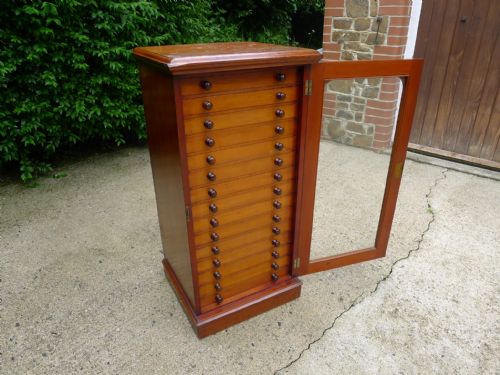
- A piece of furniture containing numerous shallow drawers built specifically for organising natural history collections or small artefacts. These units frequently feature glass panel doors or enclosed locking fronts.
- Apothecary chest
- A multi-drawer storage unit traditionally utilised by chemists and pharmacists for herbs, powders, and medical supplies. These cabinets share similar multi-drawer formats with collector chests.
- Standish
- A portable writing stand or a small cabinet raised on a stand to hold writing implements or specialised collections. The evidence records multi-drawer examples from the late Victorian period.
- Figured mahogany
- Timber exhibiting attractive, natural grain patterns such as flame or curl, selected by cabinet makers for primary visible surfaces. This material distinguishes higher-grade nineteenth-century furniture.
Brown Mahogany Specimen Cabinet: Frequently Asked Questions
What fits inside a brown mahogany specimen cabinet?
These cabinets suit the storage of small items such as geological samples, coins, stamps, insect collections, and microscope slides. The shallow drawer depth prevents small items from becoming lost or piled on top of one another.
Collectors today utilise these pieces for sorting similar small treasures while maintaining an organised period display within a room.
How do I date a brown mahogany specimen cabinet?
Dating relies upon structural characteristics, timber selection, and hardware styles associated with Georgian, Victorian, or Edwardian periods. Pieces from the early nineteenth century often display simpler lines, whereas late Victorian examples incorporate complex locking mechanisms and multiple banks of drawers.
Makers' stamps or labels found inside drawers occasionally provide direct attribution to firms operating in the eighteen-hundreds.
Are these cabinets tabletop or floor standing?
The inventory includes both compact desktop cases designed for placement on tables and larger floor-standing chests or cabinets on stands. Tabletop versions frequently feature glazed doors for viewing contents without opening the case.
Larger units provide extensive drawer capacity and often require dedicated floor space as independent furniture items.
How do Wellington chests differ from standard chests?
Wellington chests feature a distinctive hinged locking side bar that fastens over the drawer edges, securing all drawers at once with a single lock. Standard chests of drawers allow each drawer to open independently without an overarching locking stile.
This mechanism made Wellington styles popular for securing valuable specimens or private documents in the nineteenth century.