

Brown Mahogany Shelf Stand
A brown mahogany shelf stand brings tiered storage and rich timber warmth into domestic spaces through centuries of cabinet-making.
Brown Mahogany Shelf Stand
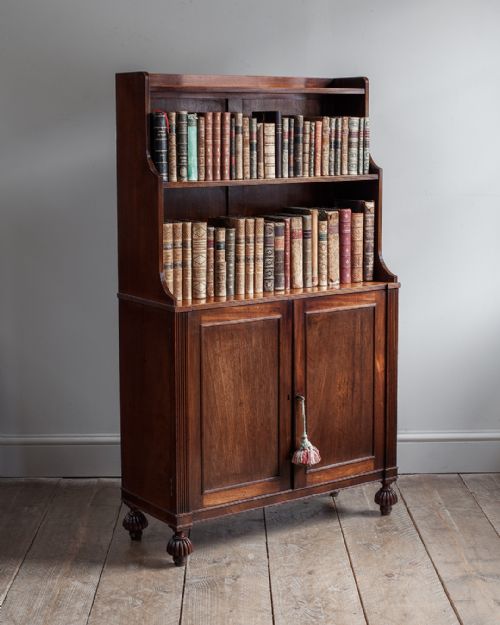
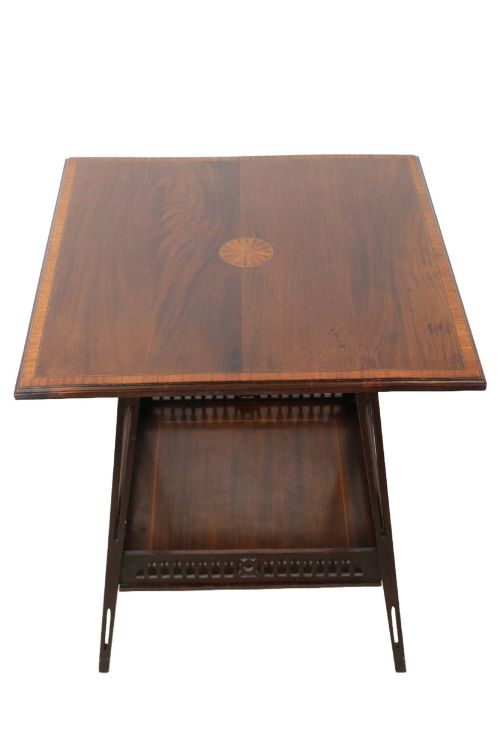
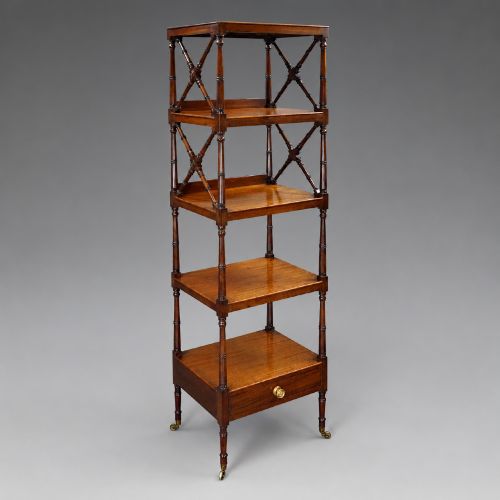
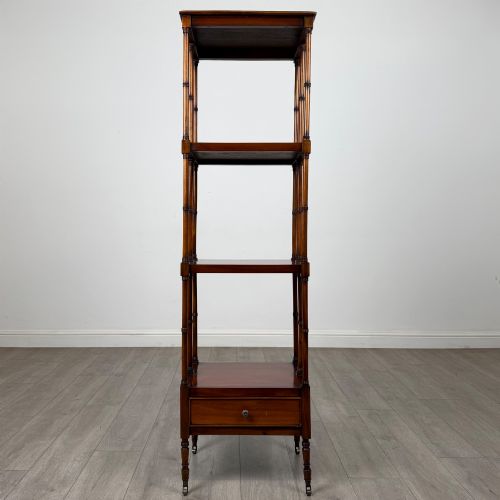
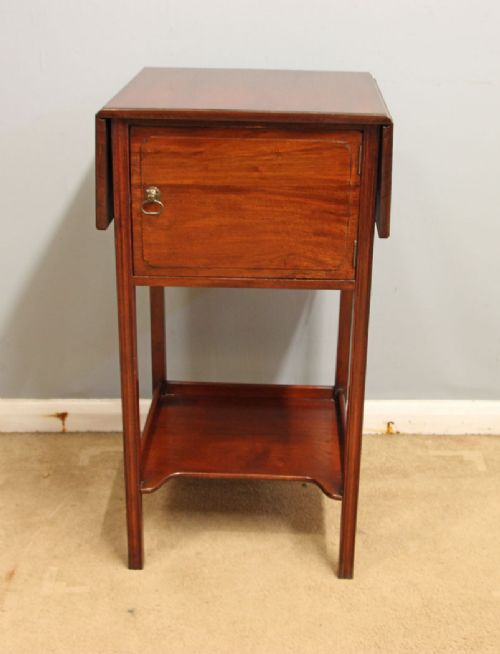
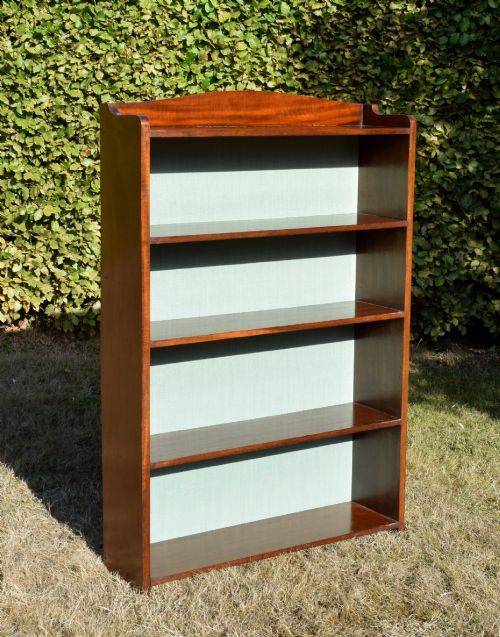
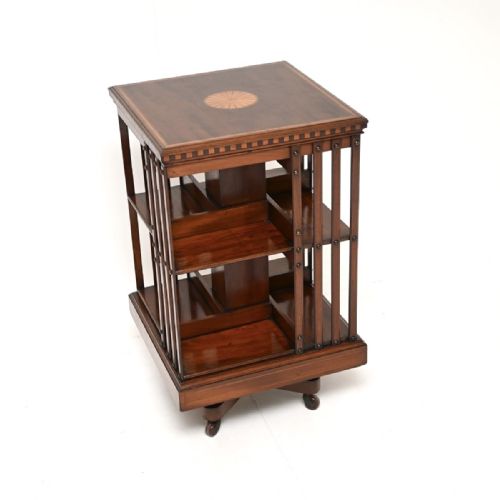
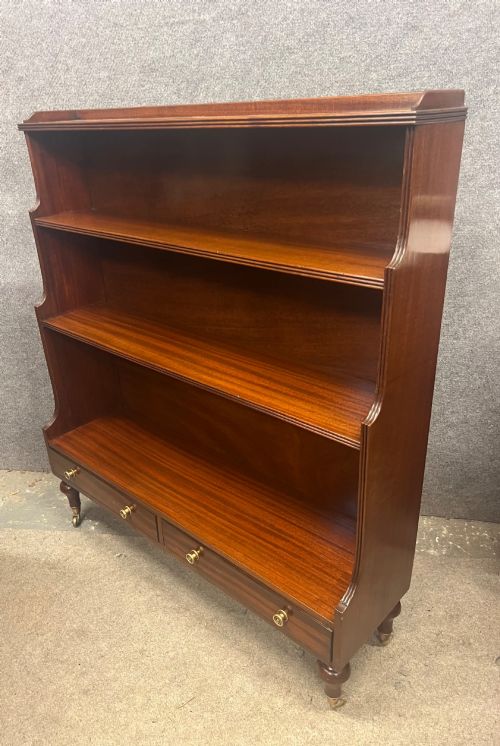
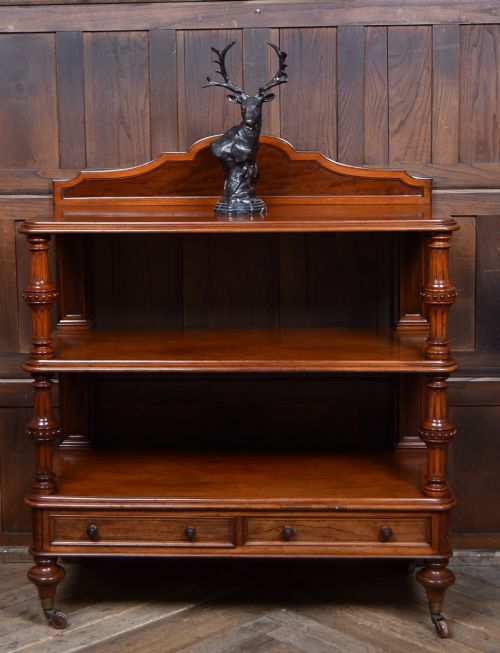
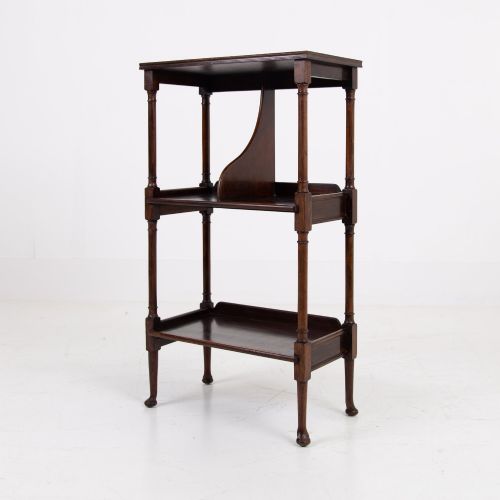
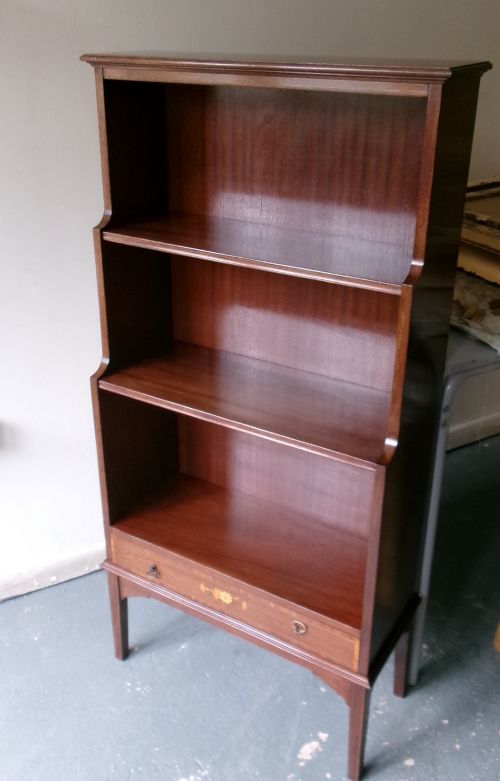
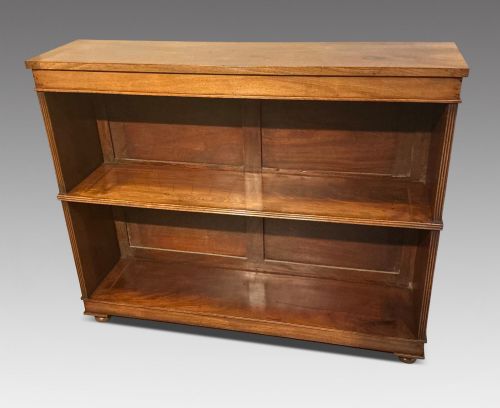
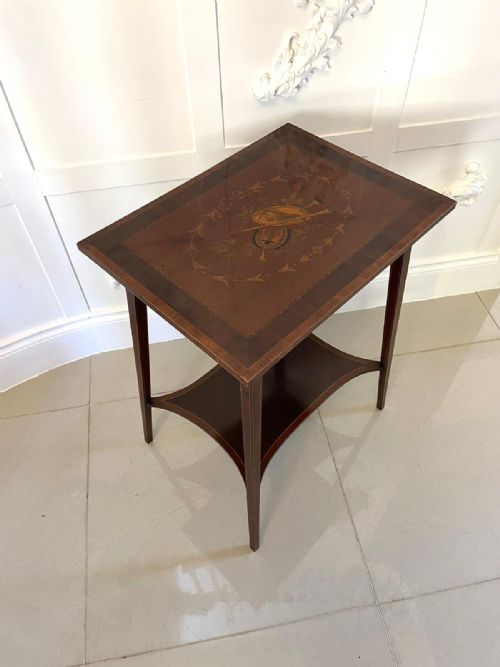
When you search for a brown mahogany shelf stand, you encounter tiered pieces designed for display and storage, encompassing whatnots, bookcases, étagères and occasional tables. These items appear across Georgian, Regency, Victorian and Edwardian periods, demonstrating how cabinet-makers adapted shelving for books, ornaments and daily utilities.
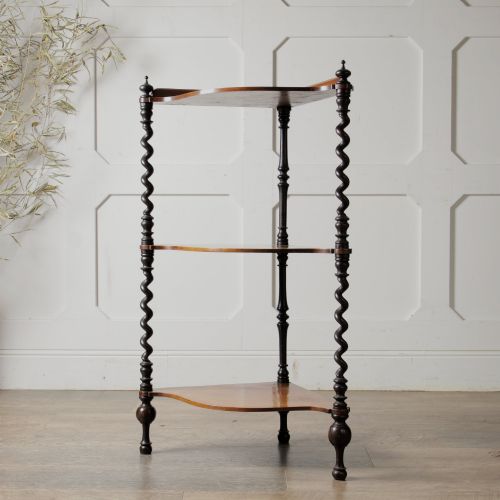
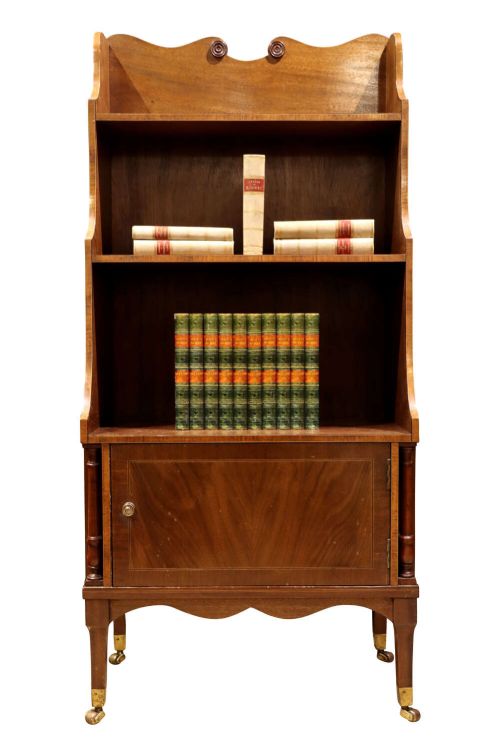
You are most likely to meet open bookcases and multi-tier whatnots on this page, often featuring graduated shelves supported by slender uprights. Many examples incorporate satinwood inlay, brass castors, or small drawers, reflecting the functional requirements of domestic interiors from the nineteenth and early twentieth centuries.
Materials and construction
Makers constructed these shelf stands primarily using mahogany, selected for its stable grain and deep warm hue, frequently complemented by secondary timbers like boxwood and satinwood for decorative inlay work. Structural support often relied on turned wooden uprights or barley twist columns, occasionally mounted on brass castors for mobility.
Detailing in these pieces ranges from delicate stringing and marquetry to structural brass elements and glass panels, depending on the period and form. Joinery techniques ensured that tiered platforms and open bookcase frames remained rigid while supporting the weight of books and decorative objects.
Listings span eight distinct periods from Georgian origins through to the 1960s, showcasing mahogany alongside satinwood, brass and glass.
Indicators of quality
The distinction between ordinary and superior pieces rests upon timber selection, the crispness of the carving and inlay, and the integrity of the structural joinery. Finer examples display well-figured mahogany grain, precise satinwood banding, and substantial brass hardware rather than stamped or plated substitutes.
Proportion and balance define the upper tier of these pieces, where graduated shelves and balanced turned supports reveal a maker's practiced eye. Lesser examples may exhibit clumsy proportions, heavy-handed restoration, or veneer lifting where cheaper adhesives were utilised.
Trevor Page & Co·Shapland & Petter
The Brown Mahogany Shelf Stand Glossary
- Whatnot
- A piece of furniture consisting of several open shelves placed one above the other, used for displaying ornaments or holding books.
- Waterfall bookcase
- A set of open shelves whose sides step back progressively from bottom to top, creating a profile resembling descending water.
- Étagère
- A French term for a piece of furniture with a series of open shelves for displaying small objects or ornaments.
- Satinwood inlay
- A decorative technique where lighter contrasting timber is fitted into recesses within the darker mahogany surface.
- Barley twist
- A type of turning shaped like a screw thread, common on the upright supports of Victorian furniture.
Brown Mahogany Shelf Stand: Frequently Asked Questions
What is a brown mahogany shelf stand used for?
These pieces serve primarily as open storage for books, ceramics and decorative objects within living spaces or libraries.
Their tiered design allows items to be displayed clearly while occupying a modest floor footprint in the room.
How do I date a mahogany whatnot?
Dating relies on observing structural characteristics, timber preparation techniques, and stylistic markers associated with periods from the Georgian era to the Edwardian period.
Turned supports, inlay motifs and edge moulding profiles provide the clearest clues to the decade of manufacture.
Are these stands sturdy enough for heavy books?
Most multi-tier pieces and open bookcases were engineered to carry standard library volumes and decorative collections securely.
However, slender whatnots with delicate uprights are better suited to lighter ornaments and display items rather than heavy folios.
How do I care for mahogany shelves?
Maintenance involves keeping the timber away from direct heat sources and sudden humidity changes to prevent veneer cracking or warping.
Routine dusting with a dry cloth and occasional application of appropriate furniture wax preserves the finish.