


Regency Mahogany Three Tier
Regency mahogany three tier pieces are stacked serving stands and display shelves designed for dining rooms and libraries, offering tiered timber surfaces that collectors prize for utility and proportion.
Regency Mahogany Three Tier
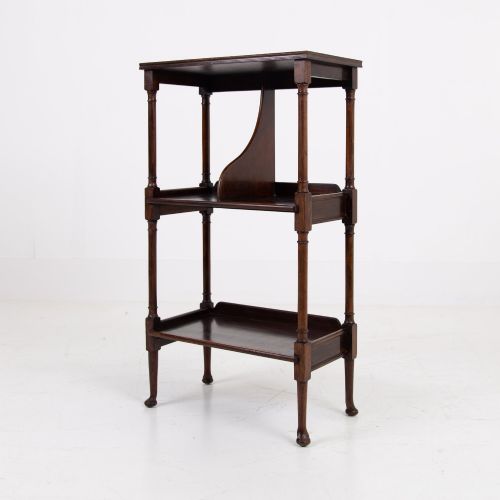
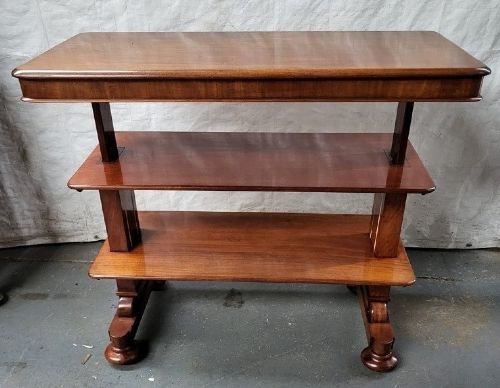
When you search for a regency mahogany three tier piece, you encounter multi-level furniture designed for serving, dining, or displaying books and small objects. The forms span dumb waiters, whatnots, etagères, and buffets originating mainly in the nineteenth century.
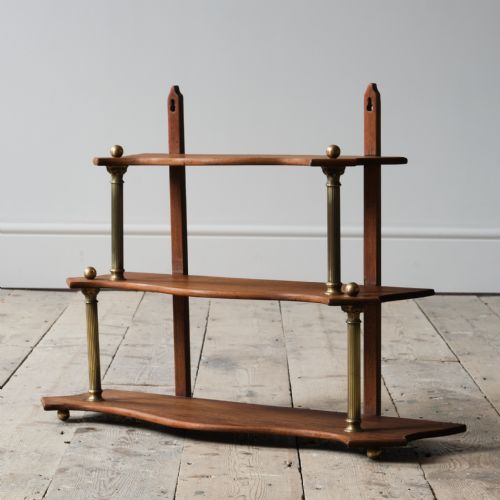
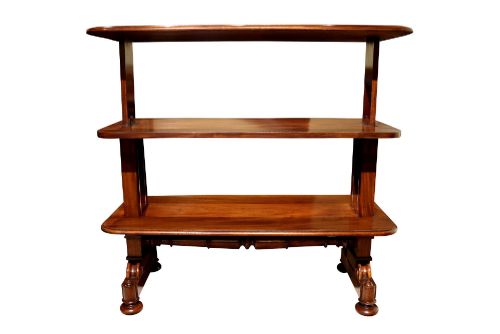
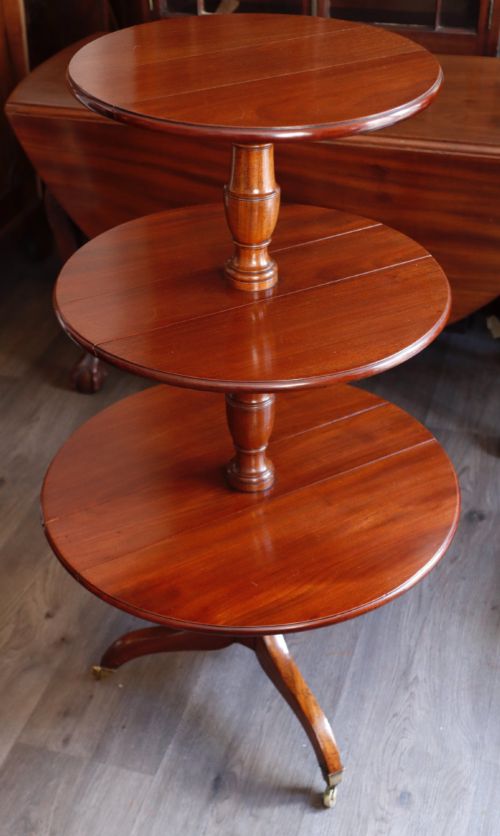
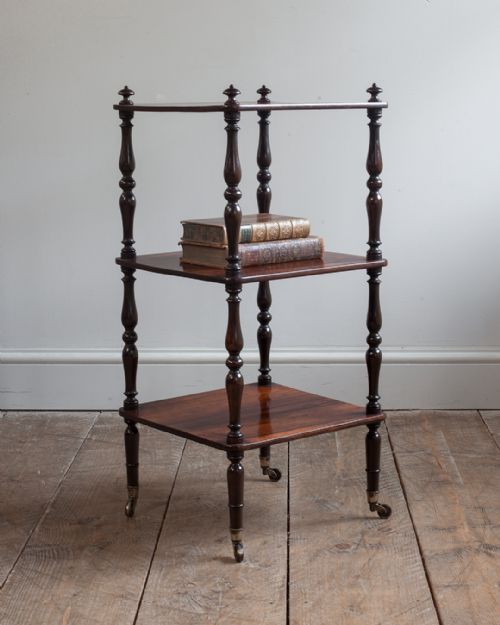
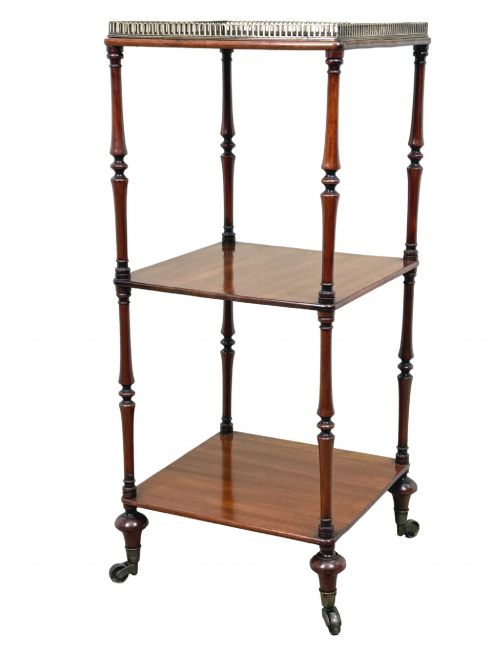
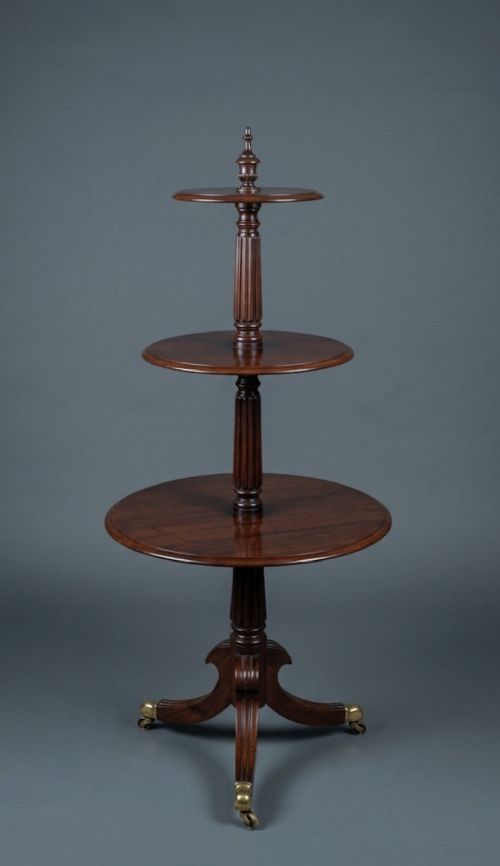
The version you meet most often on this page is the three-tier dumb waiter or whatnot constructed in rich mahogany timber. These examples range from revolving circular serving tiers to stationary open display stands built with three ascending platforms.
Period origins cluster around the Regency, George III, George IV, and William IV eras, though later Regency Revival interpretations also appear. Each piece reflects the functional demands of domestic life in the nineteenth century, balancing vertical storage with a compact footprint.
How they were made
Cabinetmakers built these tiered pieces primarily using solid mahogany and figured veneers, often incorporating brass castors, handles, or gallery rails. The timber was selected for grain movement and depth of colour, particularly in flame mahogany or fiddleback varieties.
Construction relied on turned columns, slender upright supports, and stable platform bases to sustain three distinct levels without excessive bulk. Certain examples integrate mechanical actions such as rise and fall mechanisms or revolving tiers.
The inventory spans the Georgian, Regency, William IV, and Victorian periods, including nineteenth century revival pieces.
What varies in quality
The distinction between ordinary utility items and top quality examples lies in the selection of timber and the crispness of the turning. Fiddleback and flame mahogany veneers elevate a piece visually, while finely carved columns and well-fitted brass components indicate superior workshop output.
Proportion and scale dictate the success of the design, with unusually small or grand grand proportions commanding particular interest. The integrity of the tiers, the smoothness of revolving mechanisms, and the retention of original brass castors separate accomplished cabinet work from standard production.
Gillows
The Regency Mahogany Three Tier Glossary
- Dumb Waiter
- A tiered serving table used in dining rooms to hold dishes and utensils without requiring a servant present.
- Whatnot
- An open shelved cabinet or stand designed for displaying ornaments, books, or collections.
- Etagère
- A piece of furniture consisting of a set of open shelves for displaying small objects.
- Buffet
- A sideboard or serving table used for food presentation and storage during meals.
- Fiddleback Mahogany
- A decorative timber grain resembling the figured maple used for the backs of violins.
Regency Mahogany Three Tier: Frequently Asked Questions
What is a regency mahogany three tier?
A regency mahogany three tier is a multi-level piece of nineteenth century furniture designed as a dumb waiter, whatnot, or serving stand.
These pieces provide three ascending platforms supported by turned columns, utilised historically for dining room service and library storage.
How were dumb waiters used?
Dumb waiters served dining rooms by holding extra plates, glassware, and dishes within reach of guests during meals.
Revolving versions allowed diners to spin the tiers to access items without passing dishes across the table.
Where do you place a whatnot?
Whatnots fit well in reception rooms, libraries, and hallways as open display stands for books and decorative objects.
Their vertical three-tier format maximises display space while maintaining a minimal floor footprint.
How do I identify a Regency piece?
Regency pieces date from the early nineteenth century and typically display rich mahogany timber, brass details, and classical turning.
Comparison with William IV and Georgian styles reveals subtle shifts in proportions, column thickness, and decorative restraint.