



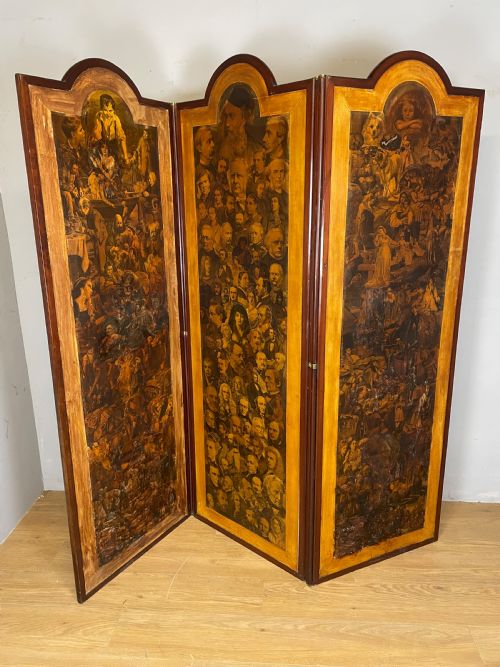


Brown Mahogany Screen
A brown mahogany screen brings warmth and architectural division to a room, spanning folding room dividers and adjustable pole screens.
Brown Mahogany Screen
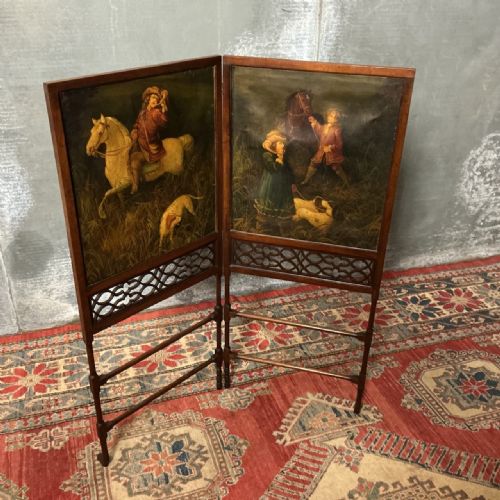
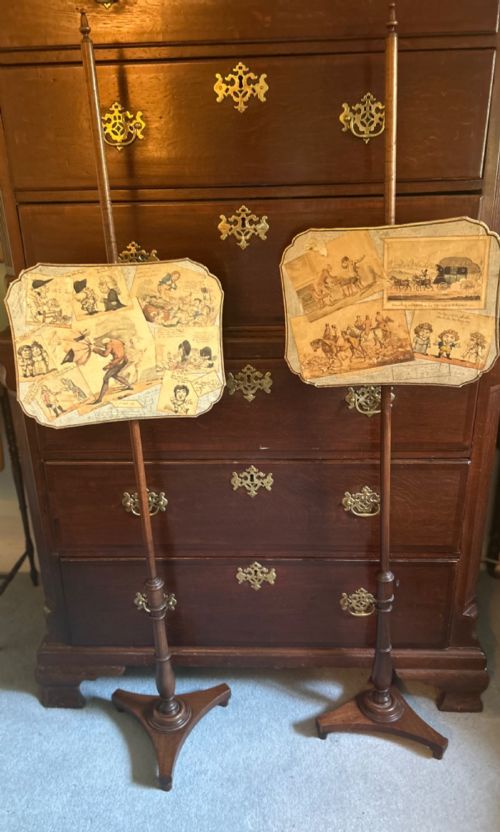
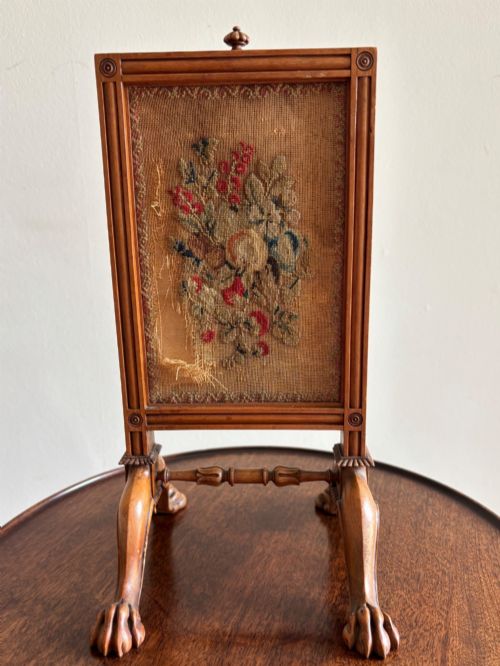
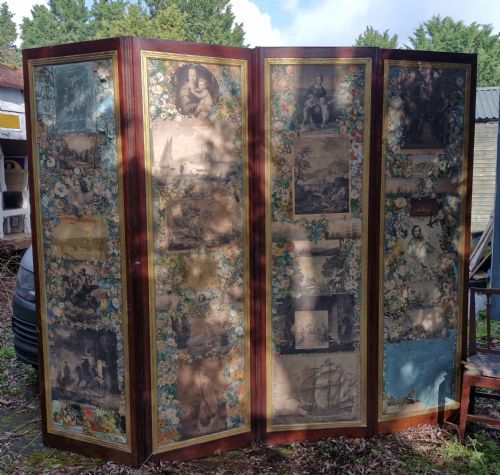
A brown mahogany screen on this page typically takes the form of a pole screen, a multi-fold room divider, or a firescreen, spanning Georgian, Regency, Victorian, and Edwardian periods.
These items originate primarily from English country houses and domestic interiors, offering both functional draught exclusion and decorative division.
Materials and construction
Makers utilised solid mahogany and mahogany veneers for the structural frames, often incorporating brass fittings on adjustable pole screens and lamp conversions.
Panels display a wide variety of inset materials, ranging from hand-woven tapestry and needlepoint embroidery to paper prints, oil paintings, and decoupage scrap work.
Listings span the 18th, 19th, and early 20th centuries, uniting materials like wool, glass, canvas, and brass within mahogany frames.
Quality and craftsmanship
Superior examples demonstrate refined cabinetmaking in the turned or carved mahogany frames, particularly in Regency and Chippendale styles where proportions and joinery receive meticulous attention.
The quality also rests in the fidelity and preservation of the inserted panels, distinguishing finely executed hand-woven needlework and original oil paintings from later or simpler replacements.
The Brown Mahogany Screen Glossary
- Pole screen
- A vertical screen mounted on a tall wooden pole with a tripod or pedestal base, designed to shield a person's face from the radiant heat of an open fire. The panel slides up and down to adjust the height.
- Needlepoint
- A type of canvas work embroidery stitched by hand using wool or silk threads. It frequently forms the decorative central panel of Georgian and Victorian firescreens.
- Bobbin turned
- A method of woodturning that creates a series of rounded, spool-like shapes along the length of a support or leg. This decorative turning appears frequently on Victorian mahogany frames.
- Decoupage
- The art of decorating a surface by applying coloured paper cut-outs and securing them with layers of varnish. Some multi-fold country house screens utilise this technique for their panels.
- Gilt brass
- Metalwork composed of brass treated with a thin layer of gold leaf or gilt wash to give a bright metallic sheen. It often appears on adjustable pole screen mountings and lamp conversions.
Brown Mahogany Screen: Frequently Asked Questions
What is a pole screen used for?
A pole screen stood near an open fireplace to protect a gentlewoman's face from the intense radiant heat, which could melt heavy cosmetic wax.
The adjustable panel allowed the user to direct the shade precisely where needed while seated in the room.
How do I date a mahogany screen?
Dating relies on observing the cabinetmaking style, such as Chippendale fretwork, Regency pedestals, or Victorian bobbin turning.
The materials used in the panels, from Georgian needlepoint to late Victorian scrap work, also offer clues to the period.
Where should I place a room divider?
Multi-fold room dividers work effectively in large living spaces to create intimate corners or to screen off functional areas.
They also serve as decorative backdrops against plain walls, showcasing the rich grain of the mahogany and the inserted panels.
Are pole screens easy to adjust?
Most pole screens feature a small brass thumb screw or internal clutch mechanism that allows the panel to slide along the wooden shaft.
Care should be taken when adjusting older pieces to avoid stressing the original brass fittings and the wooden channel.