

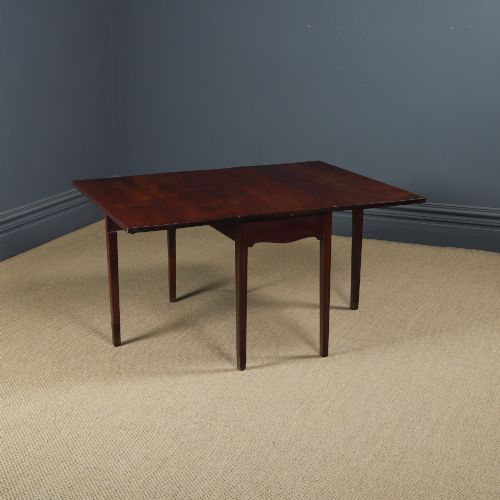
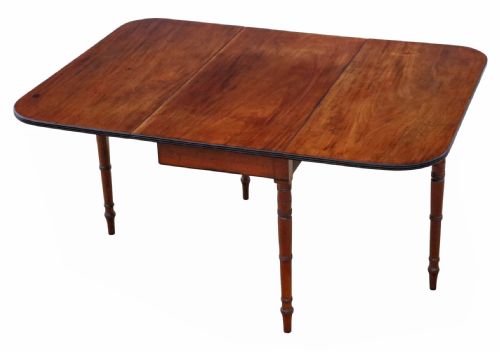


Brown Mahogany Gateleg Table
A brown mahogany gateleg table folds down to save space and opens to seat a dinner party, bringing rich timber grain to the room.
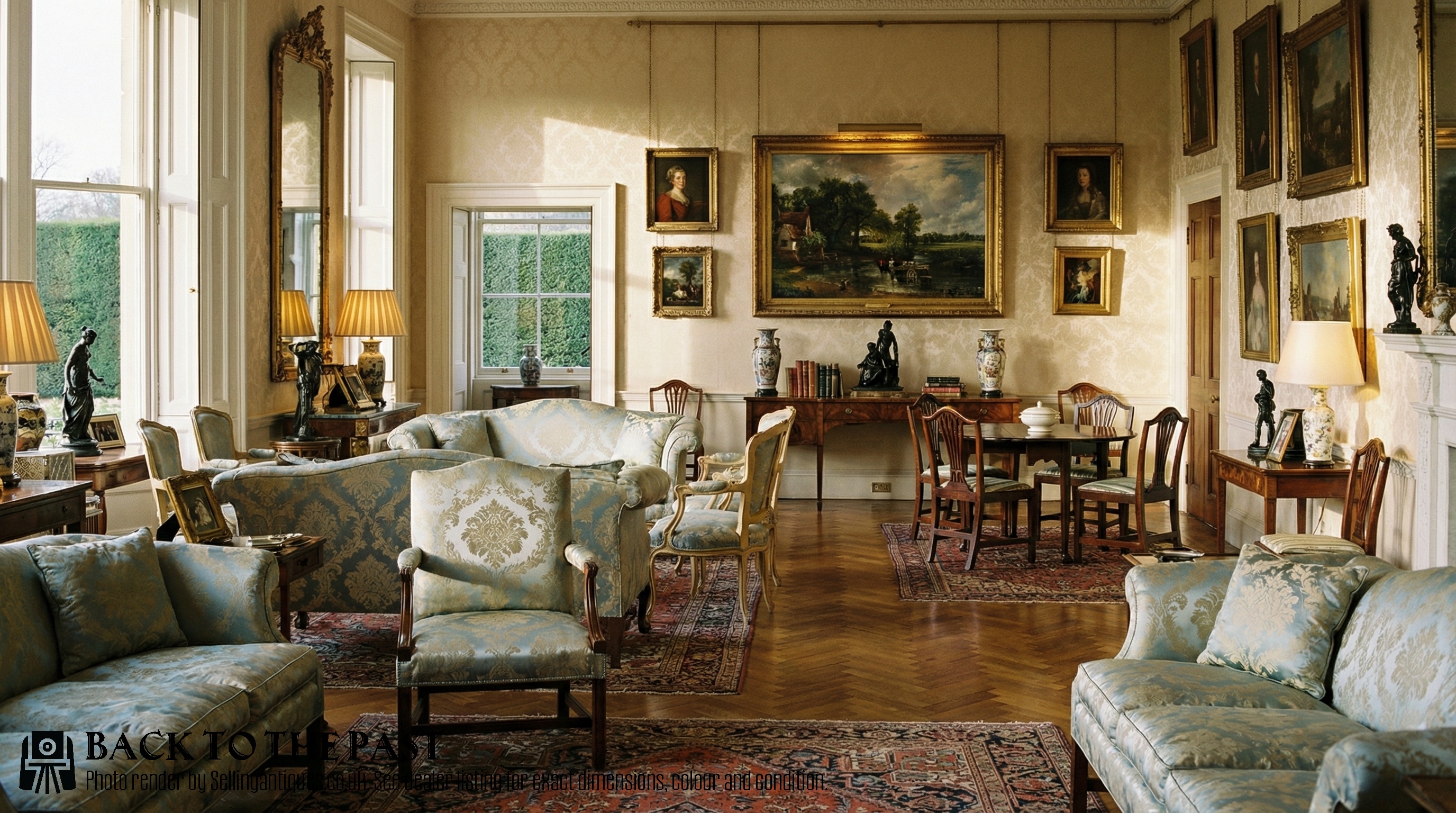
Brown Mahogany Gateleg Table
When you search for a brown mahogany gateleg table, you meet practical folding furniture spanning the eighteenth, nineteenth, and early twentieth centuries. The selection on this page ranges from large dining tables designed for substantial rooms down to small occasional and tea tables.
Most examples hail from the Georgian, Victorian, and Edwardian eras, built with hinged leaves supported by swinging legs. These versatile tables served various household duties, moving easily from parlor to dining room as family needs shifted.
How they were made
Cabinetmakers built these tables using solid mahogany or rich mahogany veneers laid over secondary timbers. Workshops integrated brass castors to ease movement and occasionally added boxwood and satinwood inlay to enrich the surface.
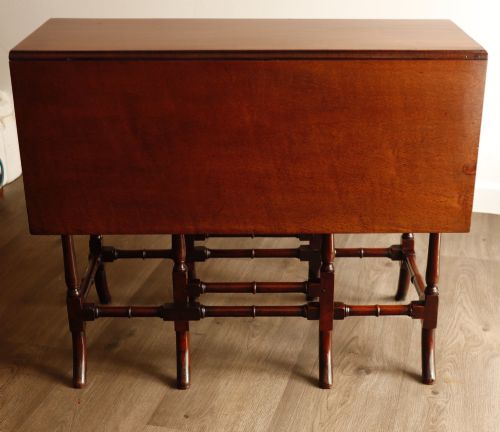
The characteristic gateleg action relies on hinged wooden pivots that swing outward to support the dropping leaves. Carpenters shaped slender spider legs or sturdy pad feet to bear the weight when the leaves open fully.
The listings show mahogany supported by brass, iron, boxwood, and satinwood materials across Georgian, Victorian, and Edwardian periods.
What varies in quality
The quality of a brown mahogany gateleg table depends heavily on the selection of the timber grain and the crispness of the joinery. Superior pieces display deep, rich colour in the mahogany top and firm, well-fitted hinge mechanisms that keep the leaves level.
Early eighteenth-century examples often show finer hand-carving and more slender structural supports than later mass-produced items. The original presence of brass castors and intact pivoting gates also elevates the standing of an individual table.
The Brown Mahogany Gateleg Table Glossary
- Gateleg table
- A table with hinged flaps or leaves supported by legs that swing outward like a gate. This clever design allows the furniture to expand for dining and shrink for storage.
- Sutherland table
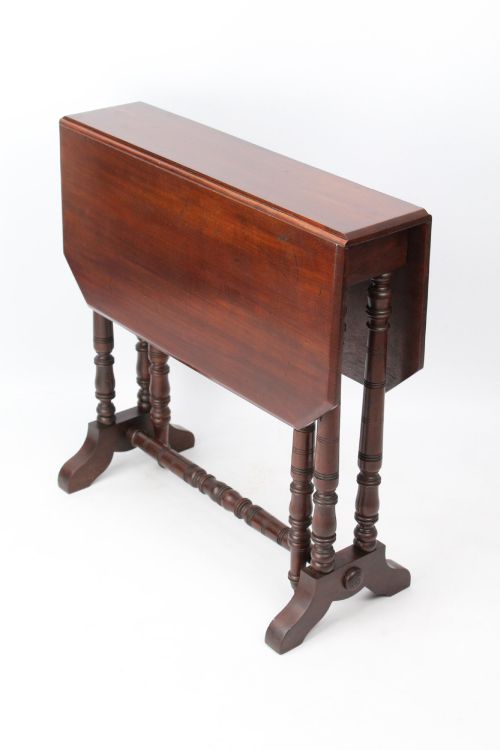
- A narrow-form drop-leaf table featuring exceptionally slender legs and leaves that drop almost vertically. These compact pieces arrived in Victorian parlours as tea or occasional tables.
- Pad foot
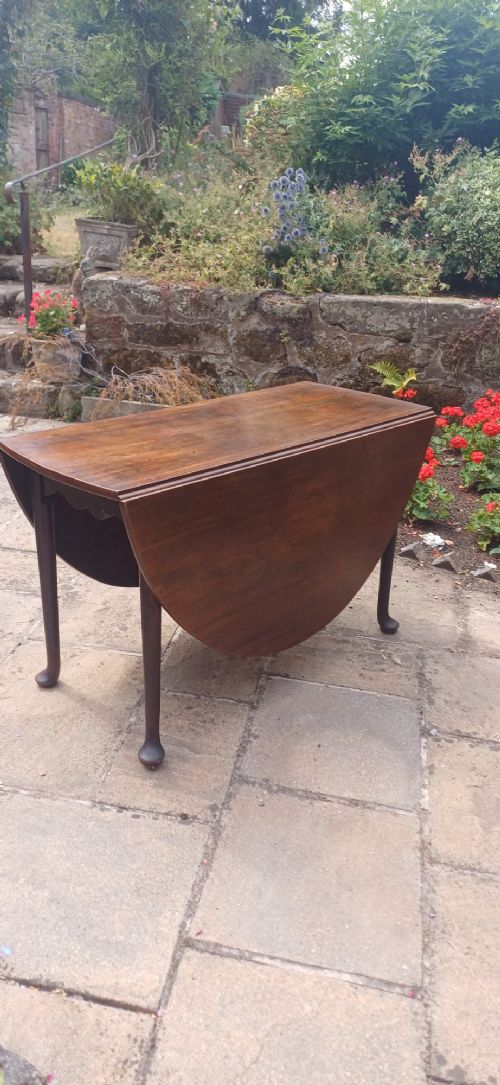
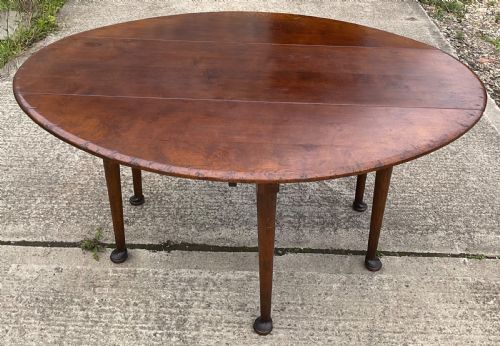
- A compact, rounded foot resting flat on the floor at the base of a cabriole leg. Cabinetmakers frequently paired this foot style with eighteenth-century dining tables.
- Spider leg
- An extremely thin, delicate turned wooden leg braced by fine stretchers. Tables bearing these slender supports usually function as tea or occasional pieces rather than heavy dining furniture.
- Drop leaf
- A hinged section of a table top that folds down when not in use. Supported by swing-out legs, these leaves transform small side tables into large dining surfaces.
Brown Mahogany Gateleg Table: Frequently Asked Questions
How do I use a gateleg table daily?
Keep both leaves dropped against the central frame to use the piece as a narrow side or hall table. Pull it out and swing the supporting legs outward whenever you need a dining or writing surface.
Position the table away from direct heat sources to protect the mahogany wood and its polish. Clear the leaves before folding them down to avoid straining the wooden hinges.
How do I tell a Georgian table from a Victorian one?
Examine the timber colour, leg thickness, and overall proportions of the piece. Georgian tables typically display simpler lines with pad feet or early tapered legs, while Victorian items often incorporate slender Sutherland frames or heavier cottage proportions.
Check underneath the leaves for construction marks and the style of the hinges. Earlier examples rely on hand-forged iron or brass fixings that differ from later industrial production.
Will a gateleg table seat four people?
Many medium and large versions easily accommodate four diners when both leaves are raised. Smaller tea and occasional tables suit smaller gatherings or serve as side displays rather than primary dining spots.
Measure the open top against your available dining chairs to ensure adequate legroom beneath the frame. The placement of the swinging gatelegs dictates how comfortably chairs tuck under the edges.
What maintenance does mahogany require?
Dust the surface regularly with a soft, dry cloth to prevent grit from scratching the polished finish. Apply a quality beeswax periodically to nourish the mahogany grain and maintain its deep lustre.
Avoid placing damp items directly onto the wood without protective mats. Keep the table away from radiators and direct sunlight to prevent the timber from drying out or fading.