




Brown Mahogany Bergere
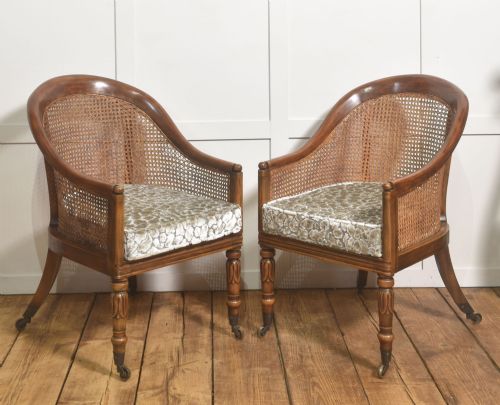
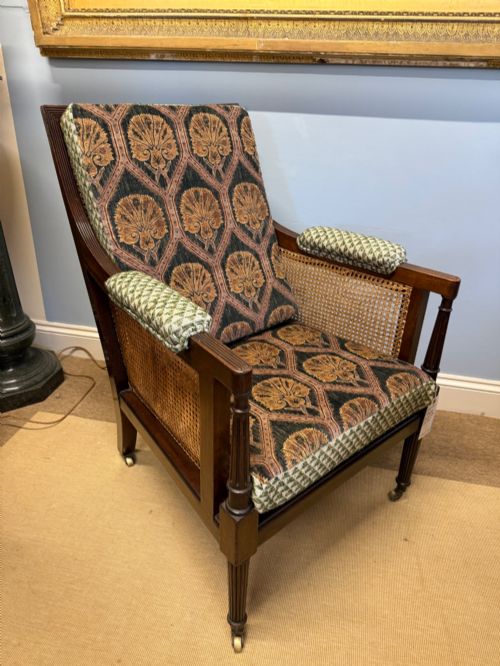
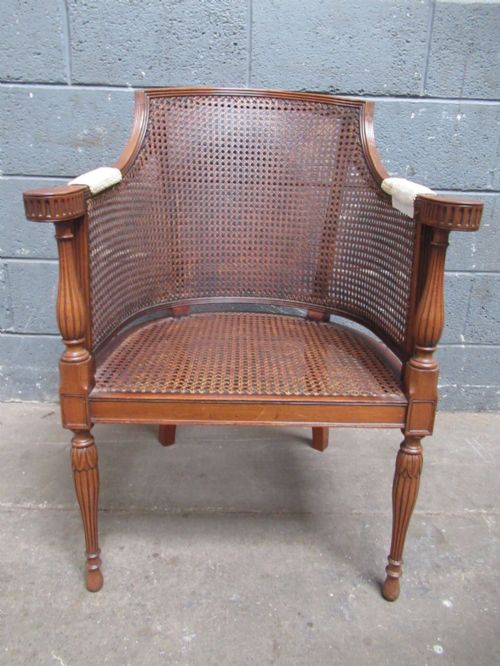
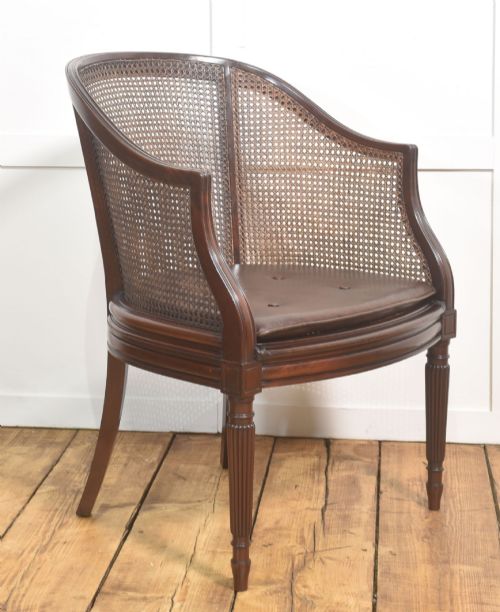
A brown mahogany bergere offers deep upholstered comfort framed in rich timber, combining library scale with refined caning.
Brown Mahogany Bergere
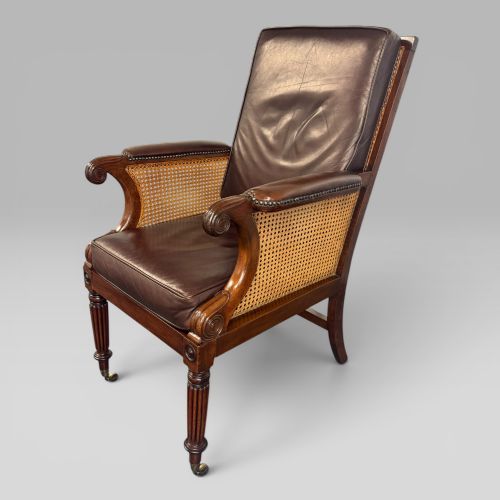
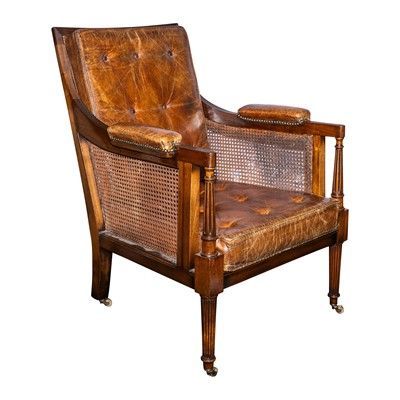
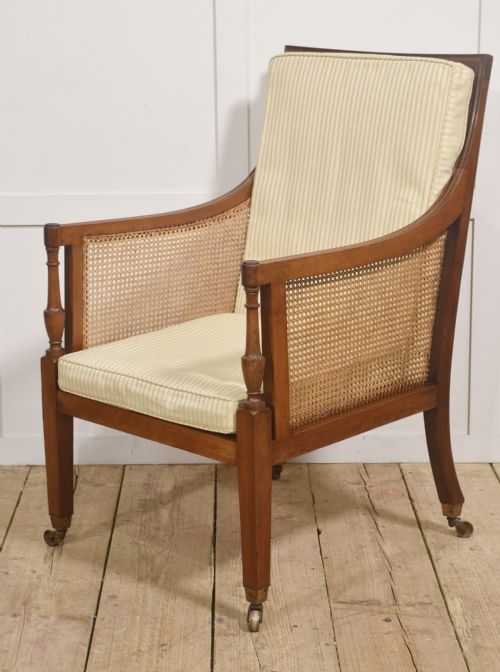
A brown mahogany bergere is a spacious, enclosed armchair designed for reading and repose, featuring woven cane panels and a timber frame. When you search for a brown mahogany bergere, you encounter sturdy library seating from the Regency, William IV, and Edwardian periods.
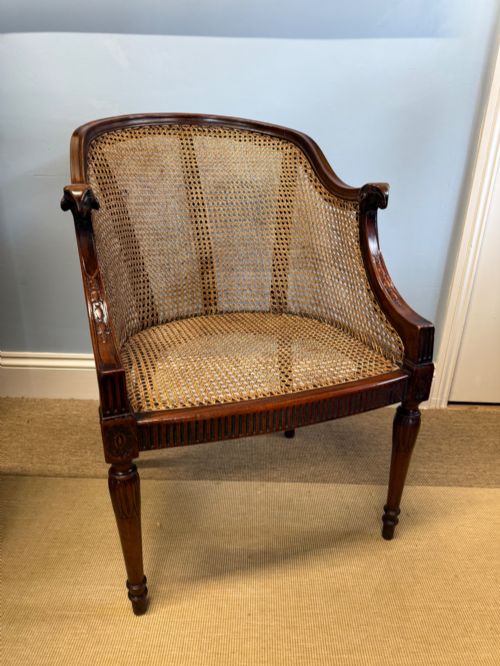
Most examples take the form of tub-shaped armchairs with sweeping arms and low seats meant for cushions. The selection includes occasional pairs and single library chairs spanning the nineteenth and early twentieth centuries.
How they were made
Frames are constructed from solid mahogany, sometimes incorporating carved details, brass mounts, or delicate inlay. Caning is woven by hand through drilled holes or channels in the timber frame, providing a flexible and supportive backing.
Many chairs are designed to accept loose squab cushions in leather or fabric to complete the seat. Steam-bending techniques appear in specific bentwood iterations alongside traditional joinery.
The inventory spans the nineteenth century through the Edwardian era, with strong representation from the Regency period.
What varies in quality
The sophistication of the timber figure and the crispness of any carved ornament dictate the stature of a piece. Well-proportioned library chairs with generous curves and tight, uniform cane work sit at the upper end of the scale.
The integrity of the structural frame and the survival of original secondary woods reveal the standard of workshop execution. Subtle design touches, such as lyre fronts or finely turned legs, separate standard seating from exceptional examples.
Gillows
The Brown Mahogany Bergere Glossary
- Bergere
- An enclosed upholstered armchair with wooden sides and a caned or padded back. This French form became popular in British libraries during the Regency period.
- Caning
- A woven mesh made from rattan cane used for chair backs and seats. It provides a resilient and breathable surface.
- Regency
- A British design period spanning the early nineteenth century. Furniture from this era often draws inspiration from classical antiquity.
- Squab
- A loose, thick cushion placed on the seat of a chair. These are typically upholstered in leather or fabric.
- Tub chair
- An armchair with a continuous curved back and arms forming a rounded enclosure. This shape offers enveloping comfort.
Brown Mahogany Bergere: Frequently Asked Questions
Are these chairs comfortable to sit in?
Yes, they provide deep seating when fitted with a suitable squab cushion. The enclosed arm design offers natural support for reading.
Most library models feature generous proportions intended for extended periods of sitting. The cane back also flexes slightly to accommodate the body.
How do I care for the cane panels?
Keep the woven cane hydrated by wiping it lightly with a damp cloth occasionally. Avoid placing the chair near direct heat sources that might dry out the material.
Weight distribution matters, so avoid kneeling on the cane seat. Gentle dusting with a soft brush keeps the mesh clear of debris.
Can I reupholster the cushions?
Yes, the loose seat cushions can be recovered in leather or fabric to match your interior scheme. Many pieces survive with removable squab pads designed for this purpose.
Ensure any new upholstery respects the period character of the mahogany frame. Traditional fillings like horsehair suit older frames best.
How do I distinguish Regency from Edwardian pieces?
Regency chairs exhibit heavier classical proportions, often featuring bold scroll arms and reeded legs from the early nineteenth century. Edwardian revivals tend to be lighter, frequently incorporating delicate inlay or Edwardian satinwood stringing.
Examining the internal construction and tool marks helps confirm the manufacturing period. Older pieces show hand-cut joinery methods distinct from twentieth-century production.