

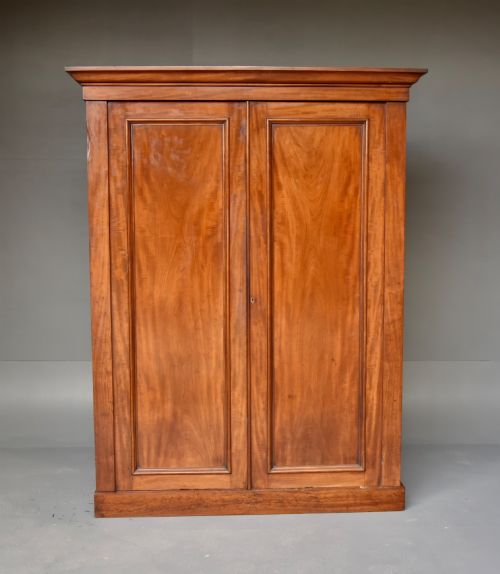
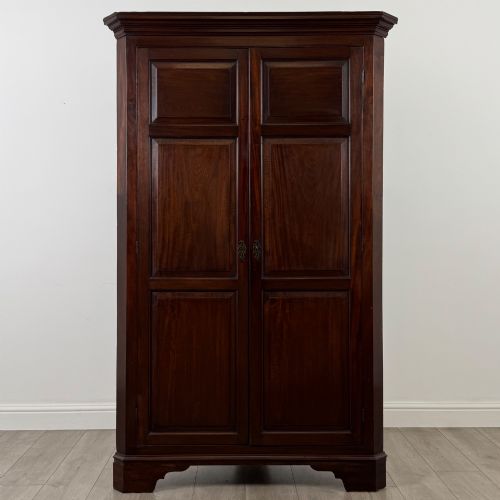
Brown Mahogany Armoire
A brown mahogany armoire brings substantial timber and architectural presence to a bedroom, offering deep storage through centuries of cabinet-making.
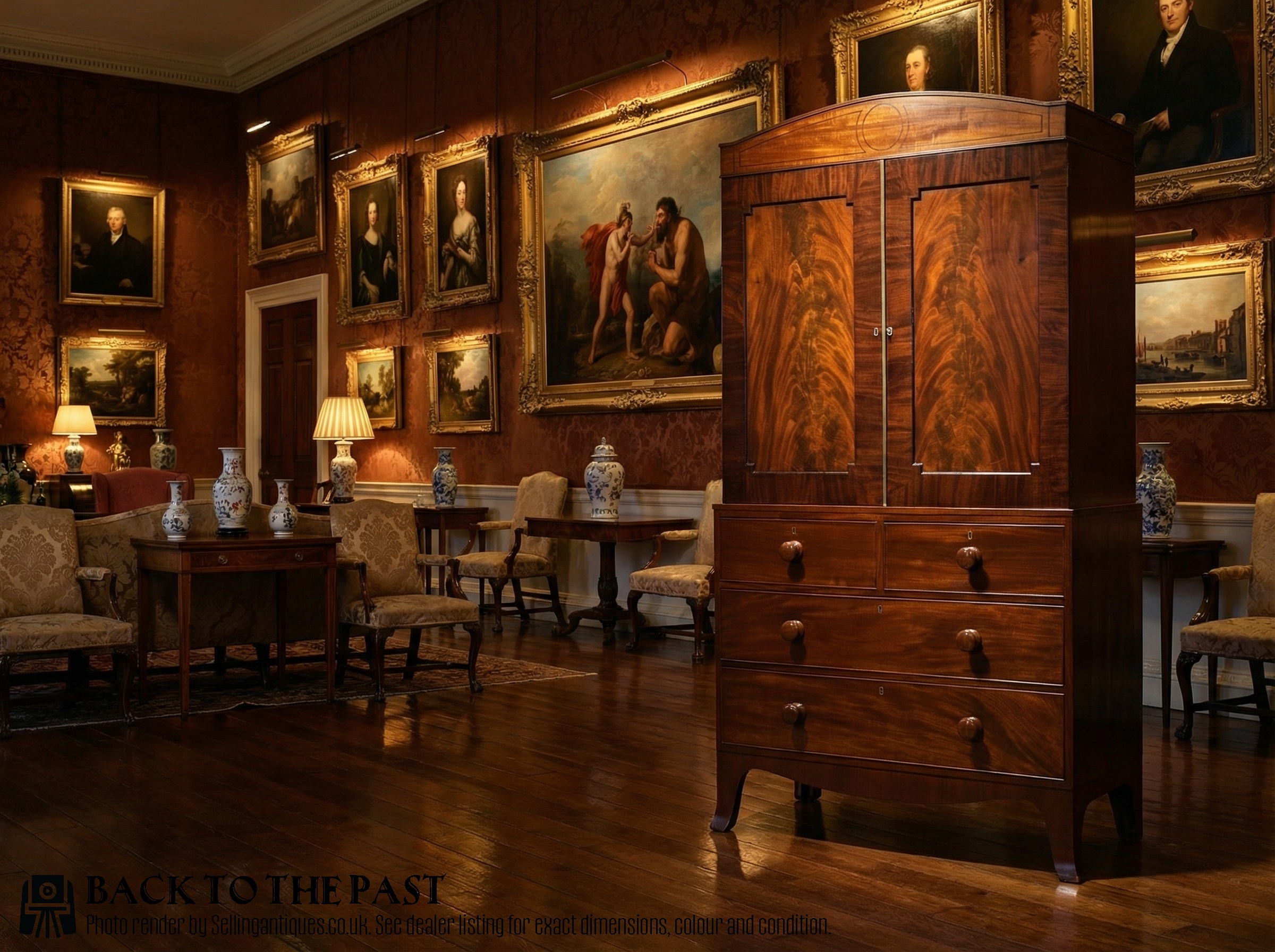
Brown Mahogany Armoire
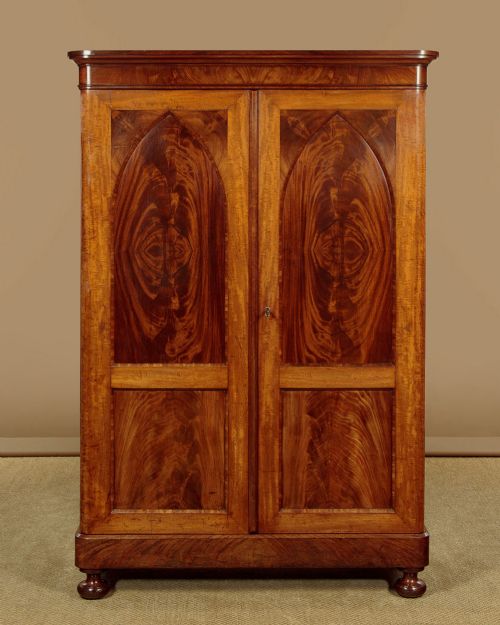
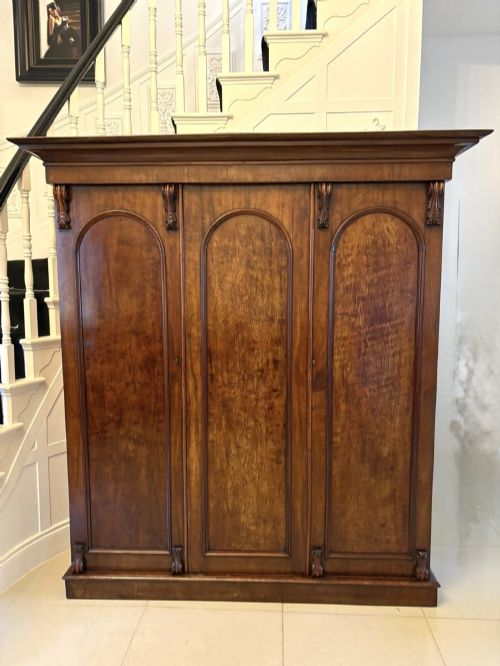
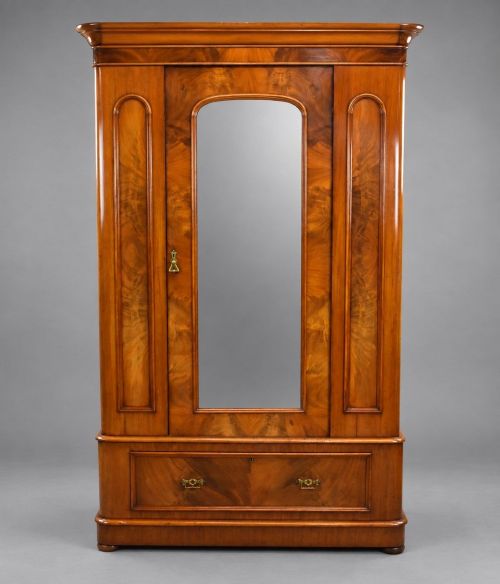
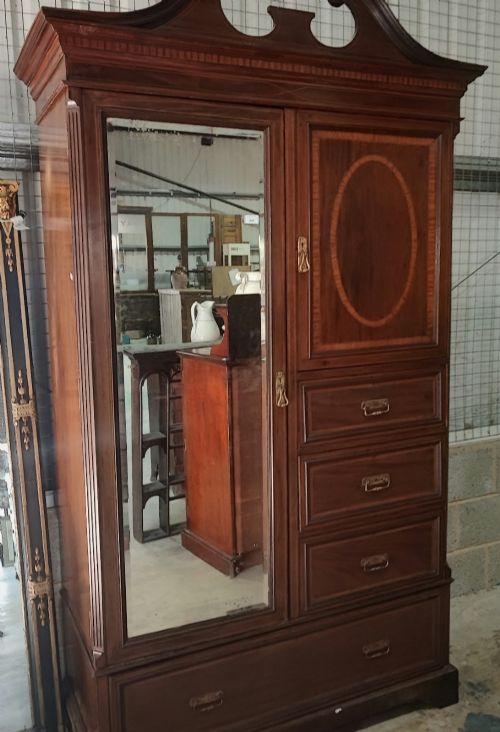
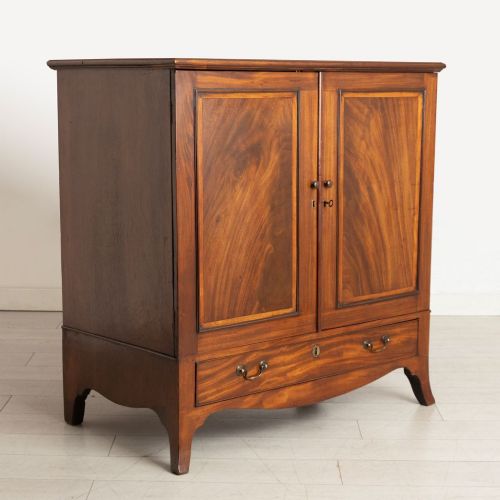
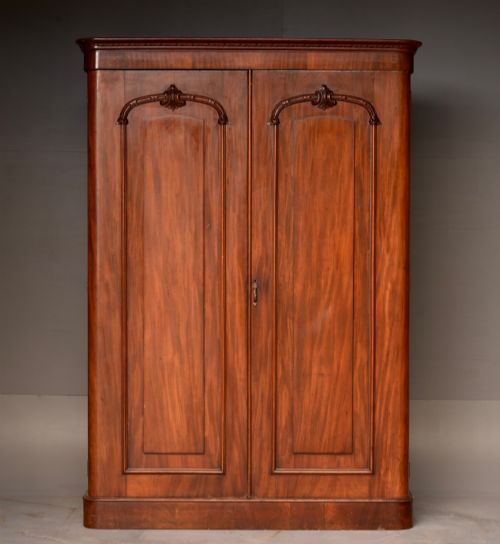
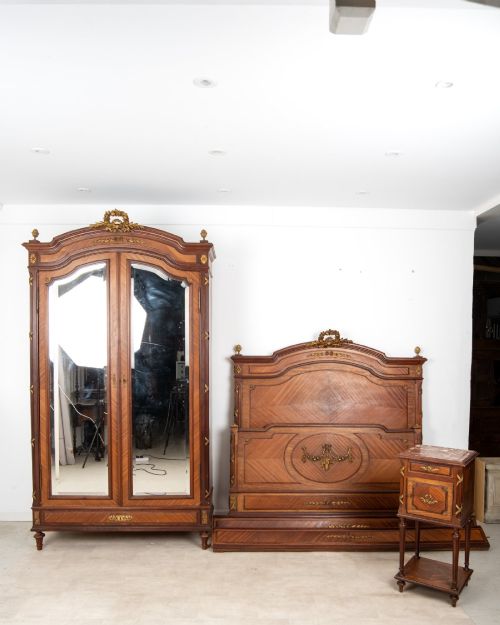
When you search for a brown mahogany armoire, you encounter a range of large storage furniture spanning the eighteenth, nineteenth, and early twentieth centuries. These pieces serve primarily as wardrobes, linen presses, and compactums designed to hold clothing and household textiles.
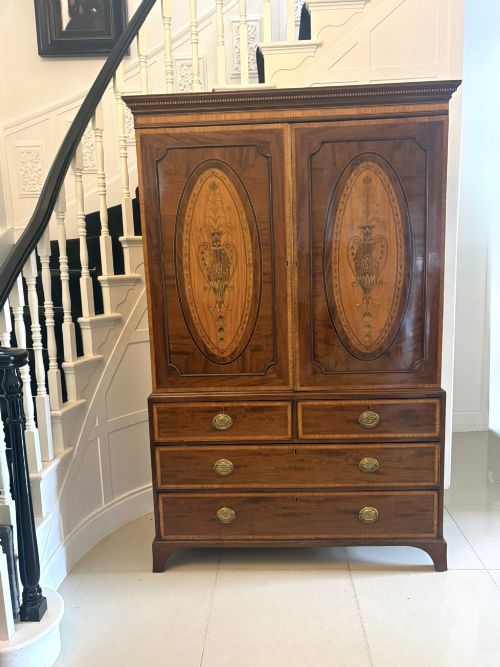
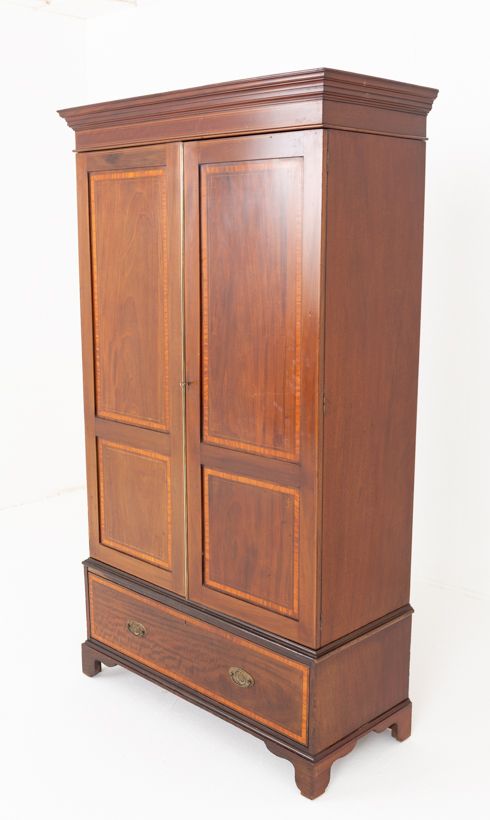
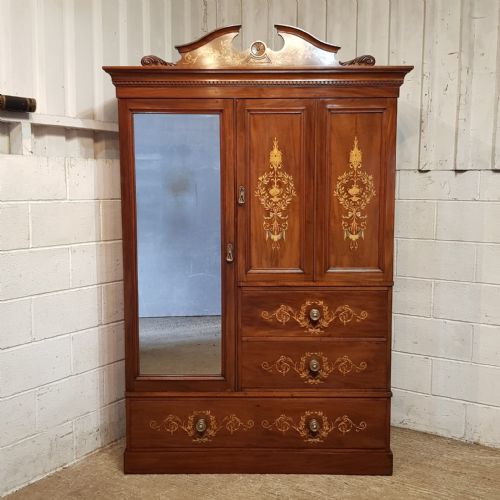
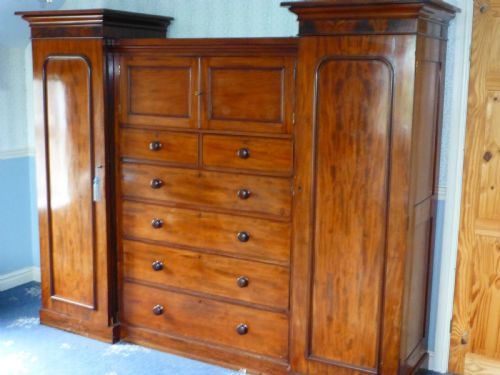
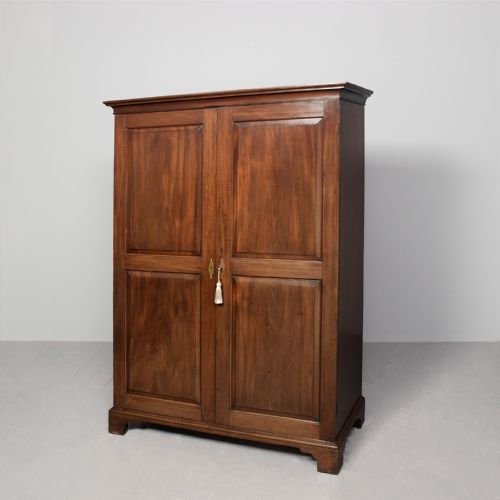
The versions most commonly met on this page include Georgian linen presses, Victorian double or triple wardrobes, and Edwardian inlaid pieces. Makers constructed these items using solid timbers and veneers to anchor traditional bedroom layouts with generous internal hanging space and linen slides.
Origins stretch from regional British workshops to London cabinet-makers and continental French centres, encompassing styles from strict George III designs to later revival and Edwardian interpretations.
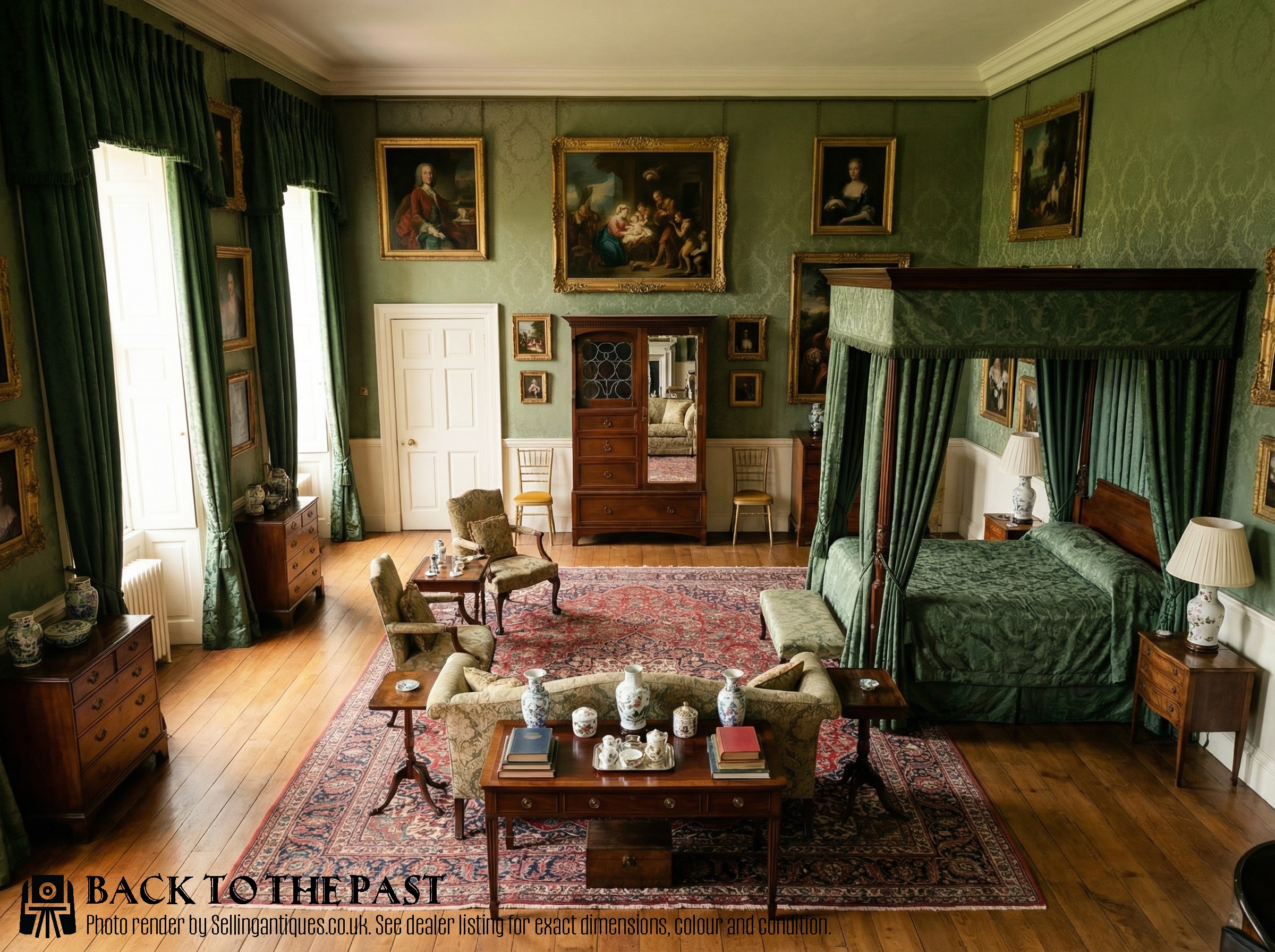
Materials and construction
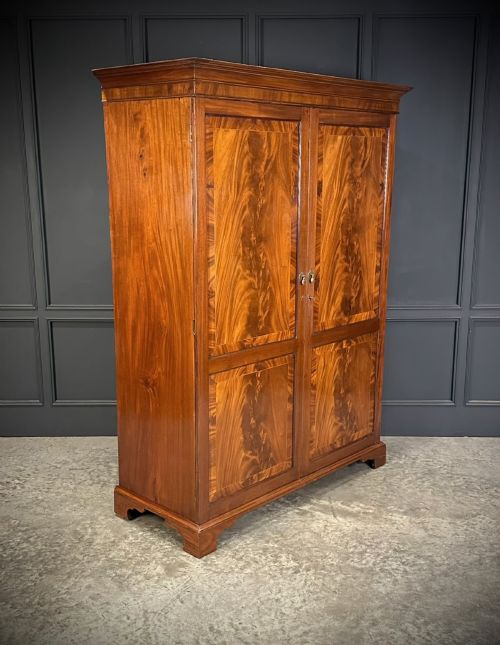
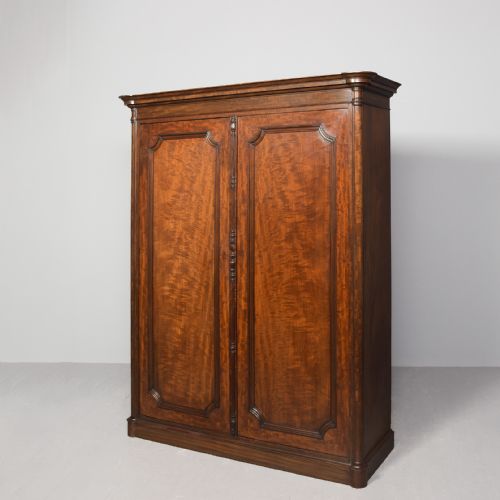
Cabinet-makers relied heavily on mahogany as the principal structural and facing timber, often selecting figured varieties and flame mahogany veneer to create rich, light-catching grain patterns on large panel doors. Workshops frequently enhanced these surfaces with contrasting satinwood inlay and marquetry detailing.
Secondary structural elements incorporated oak and other sturdy timbers for internal framing, linen slides, and drawer linings. Metal mounts in brass and gilt bronze ormolu added functional strength and decorative accent to key escutcheons and door closures.
Brown Mahogany Armoire Retail Price Guide 2026
Typical asking prices for brown mahogany armoire among the pieces listed under this phrase on Sellingantiques today, from the lower quarter to the upper quarter. They describe what is for sale here now, not the wider market.
Judging the range
Quality in these large pieces rests upon the selection of timber and the precision of the cabinet work. Superior examples display carefully matched flame mahogany veneers and crisp, uncompromised inlay work across expansive door panels.
Construction integrity distinguishes the finer pieces, particularly in the smooth operation of internal linen slides, well-fitted panel doors, and original brass hardware. The presence of documented workshop attribution or sophisticated architectural cornicing further separates standard utility pieces from exceptional commissions.
maples & co·Edwards and Roberts·Gillows·S & H Jewell·Druce & Co.·Heals
The Brown Mahogany Armoire Glossary
- Armoire
- A tall cupboard or wardrobe used for hanging clothes, evolving from earlier linen storage presses.
- Linen press
- A dual-purpose piece featuring sliding trays in the upper section and deep drawers in the base.
- Compactum
- A fitted wardrobe divided internally to provide specialised compartments for different garments alongside standard hanging space.
- Satinwood inlay
- A contrasting light wood decorative technique used to create geometric borders and floral motifs on darker mahogany surfaces.
- Breakfront
- A cabinet design where the central section projects forward from the flanking wings.
Brown Mahogany Armoire: Frequently Asked Questions
How do I fit a large armoire?
Many antique wardrobes and armoires were constructed to dismantle into modular sections consisting of a cornice, base, and flanking sides to ease transportation and installation in older properties.
Checking the internal depth and configuration of hanging rails or sliding trays ensures the piece accommodates modern clothing hangers and storage needs.
What is a linen press?
A linen press is a tall cabinet historically used to store freshly laundered textiles flat on internal wooden slides, preventing the creases that folding into chests caused.
Later adaptations frequently converted these internal sliding trays into hanging spaces while retaining the formal architectural proportions of the upper doors.
How do I date a mahogany wardrobe?
Dating relies on observing structural characteristics, timber selection, and decorative motifs such as satinwood inlay, cockbeaded drawer edges, and cornice styling.
Georgian pieces often display restrained classical proportions, whereas Victorian and Edwardian examples lean towards heavier breakfront layouts or lighter revival ornamentation.
Are these wardrobes practical for daily use?
These pieces provide substantial storage capacity through deep drawers and spacious hanging compartments that outlast modern flat-pack alternatives.
Ensuring doors swing clear and locks function properly allows you to integrate these historic storage items smoothly into contemporary bedrooms.