



Brown Leather Wing Armchair
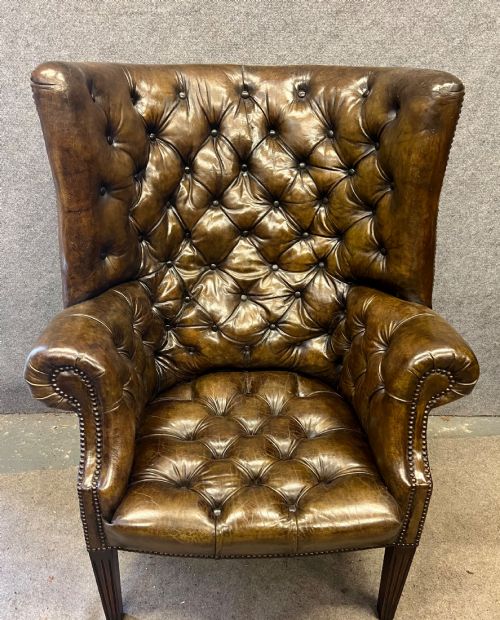
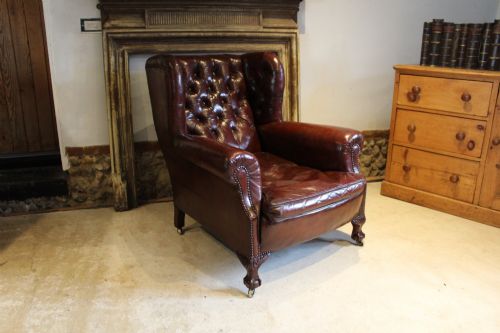
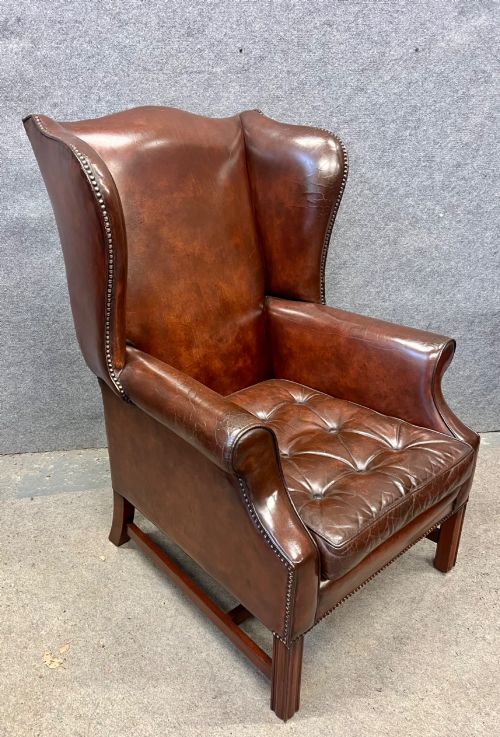
A brown leather wing armchair offers deep comfort and traditional presence, combining high-sided protection from drafts with durable hide upholstery.
Brown Leather Wing Armchair
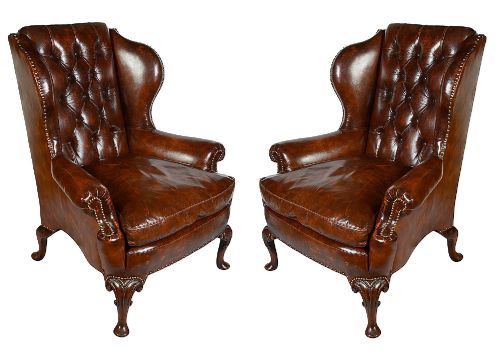
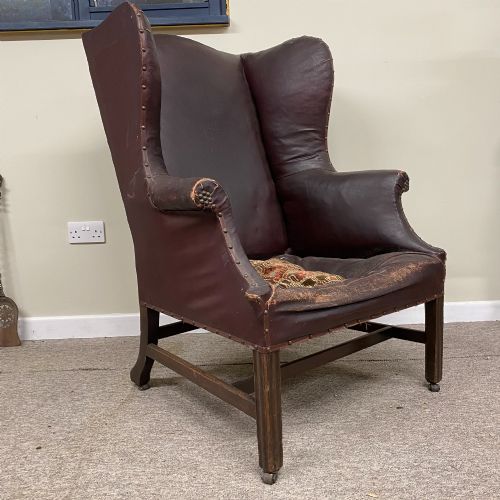
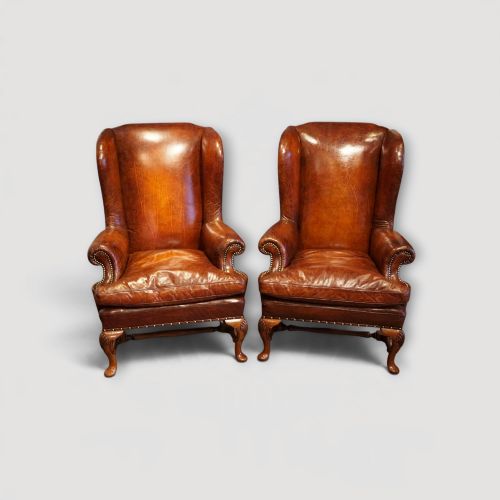
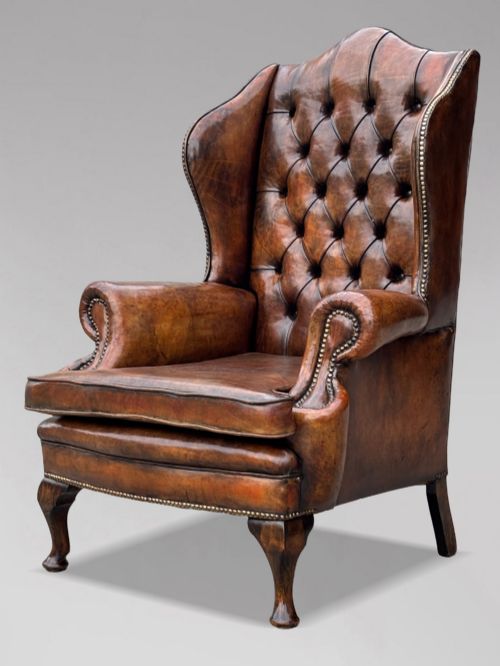
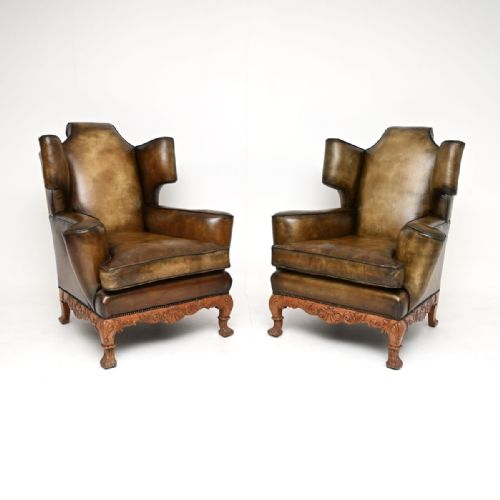
A brown leather wing armchair is a substantial seating form defined by protective side panels flanking the backrest, designed originally to shield the sitter from fireplace draughts. This page presents examples spanning from the eighteenth century through the Victorian era and into twentieth-century revival styles.
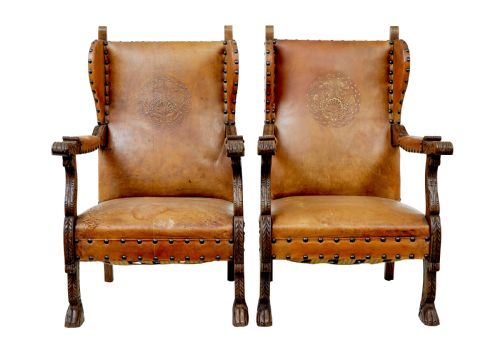
The materials span oak, mahogany, walnut, and hardwood frames beneath upholstery of hand-coloured, antiqued, or embossed leather, frequently accented with brass elements. Forms range from library armchairs and porters chairs to Howard style seats and reclining variants.
Buyers will encounter eighteenth-century period originals alongside nineteenth-century Victorian interpretations and later Georgian revival pieces. These chairs function successfully as primary seating in studies, libraries, and living rooms where traditional presence matters.
Materials and construction
Frames rely on sturdy timbers including oak, mahogany, and walnut, providing a rigid structural skeleton capable of supporting heavy use over centuries. Joinery techniques connect these hardwoods to withstand the outward pressure exerted by deep springing and padding.
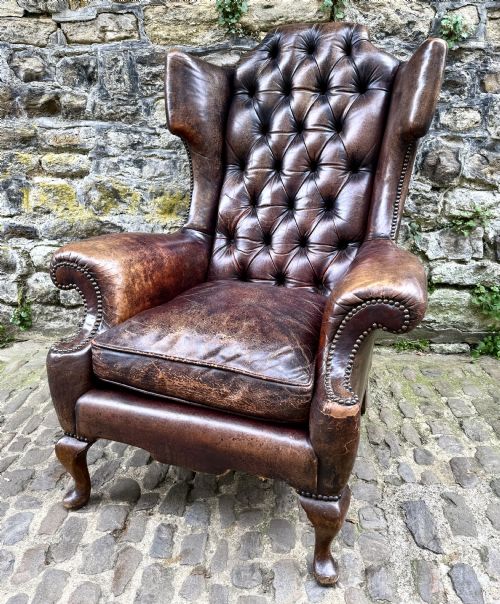
Upholstery employs durable leather hides fixed to the frame, often secured with individual brass tacks and finished with button tufting. Wood components receive polish or natural finishes that highlight the grain of the hardwood substructure.
Brown Leather Wing Armchair Retail Price Guide 2026
Typical asking prices for brown leather wing armchair among the pieces listed under this phrase on Sellingantiques today, from the lower quarter to the upper quarter. They describe what is for sale here now, not the wider market.
The selection includes specialised seating forms such as library chairs, porters chairs, and invalid wheel chairs alongside standard armchairs.
Distinguishing quality in construction and hide
Quality rests in the integrity of the timber frame and the depth of the joinery beneath the leather. Superior pieces maintain rigid structural stability without movement in the arms or wings, relying on period hardwoods rather than soft replacements.
The condition and treatment of the leather dictate visual distinction, where hand-dyed or antiqued surfaces show natural variation rather than uniform factory pigment. Buttoning security and the crispness of carved wooden details, such as cabriole legs or lion motifs, further separate standard examples from finer works.
Fritz Hansen·J Foot And Son·John Ward
The Brown Leather Wing Armchair Glossary
- Wingback
- A chair design featuring projecting side panels attached to the backrest intended to trap heat and block room draughts. These panels evolved from functional fireplace protection into a defining stylistic element.
- Cabriole leg
- A furniture leg that curves outward in a convex arc and tapers inward in a concave arc, terminating in a foot. This form draws inspiration from animal legs and appears frequently on eighteenth-century and revival seating.
- Button back
- An upholstery method where deep buttons are pulled through the padding and secured to the frame to create a diamond pattern. This technique holds internal stuffing firmly in place while adding tactile texture.
- Porters chair
- A high-backed enclosed armchair originally used by hall porters in large houses to block cold air currents in drafty entryways. They often feature hooded tops and fully upholstered sides.
Brown Leather Wing Armchair: Frequently Asked Questions
How do I spot a reproduction?
Examine the timber framing underneath for tool marks, wood shrinkage, and signs of genuine age rather than uniform machine cutting. Period pieces exhibit construction methods consistent with their stated era, such as hand-cut joints and older secondary woods.
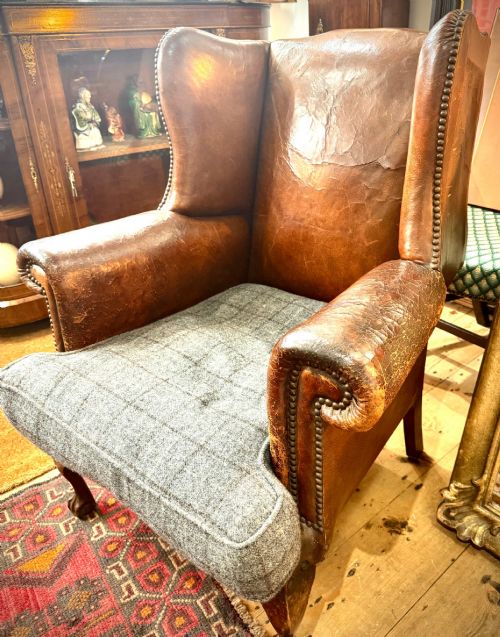
Check the leather for natural patination, wear patterns in expected touch points, and hand-finished details. Modern reproductions often use chemically distressed surfaces that lack the depth of genuine age.
Where should I place this chair?
Position these substantial armchairs in libraries, studies, or living spaces where their high backs and deep proportions can anchor the room. They pair effectively beside fireplaces or reading tables.
Allow sufficient clearance around the wings and arms so the scale of the furniture does not crowd smaller spaces. Ensure direct sunlight does not hit the leather continuously to prevent drying.
How do I care for antique leather?
Maintain the hide by applying appropriate leather balms or conditioners periodically to keep the material supple and prevent cracking. Avoid harsh chemical cleaners that strip the original dye and finish.
Keep the chairs away from direct heat sources like radiators and fireplaces, which cause the leather and underlying wood to dry out and split over time.
What defines Georgian style?
Georgian style encompasses design characteristics from the reigns of the first four Georges, marked by architectural proportion, classical ornamentation, and the use of fine mahogany and walnut. Pieces often feature structured silhouettes and refined leg forms.
Revival versions produced later replicate these classic proportions while utilising period-appropriate construction methods. Understanding the subtle shifts in carving and stretcher placement helps identify exact periods.