



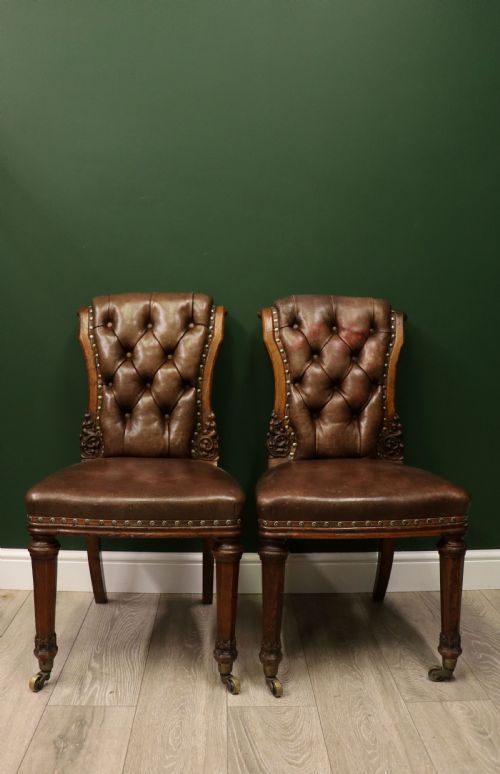


Oak Framed Leather Chair
An oak framed leather chair brings together solid timber and supple hide for lasting service in any room.
Oak Framed Leather Chair
An oak framed leather chair spans several centuries of domestic seating, from high-backed wing armchairs to sturdy desk chairs and dining sets. Buyers searching for an oak framed leather chair encounter various historical interpretations, including Victorian library armchairs, Georgian wingbacks, and 1930s Art Deco seating.
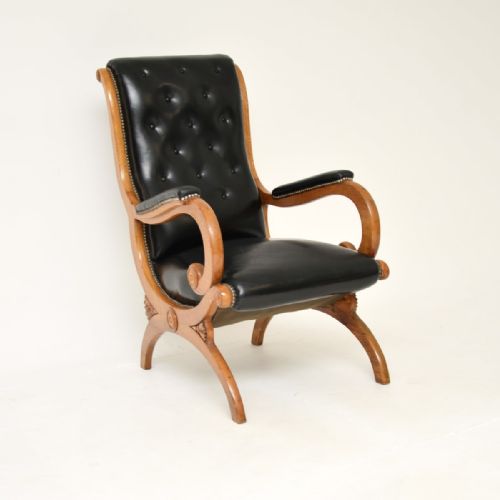
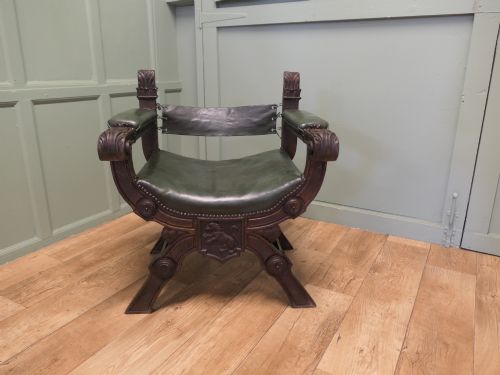
The forms range widely depending on their original function, covering low club elbows, X-framed desk chairs, and pairs of side chairs. Examples date from the eighteenth century through the Edwardian period and into the mid-twentieth century, showing distinct revival styles such as Gothic, Renaissance, and Jacobean.
Originating mostly from British workshops, these chairs combine sturdy wooden joinery with durable animal hide upholstery. Whether you seek a single reading chair or a set of dining seats, the combination of timber and leather remains remarkably adaptable.
Assessing quality and finish
Superior examples show careful selection of quartersawn oak grain and deep, rich patination on the timber surface. The quality of the leather upholstery dictates the tactile appeal, with finer hides developing a softer drape and an even surface texture over decades of use.
Construction rigidity separates exceptional seating from standard utilitarian pieces. Master joiners ensured joints remained tight without excessive modern intervention, while the framing maintains proper ergonomic angles for comfort.
Oak Framed Leather Chair Retail Price Guide 2026
Typical asking prices for oak framed leather chair among the pieces listed under this phrase on Sellingantiques today, from the lower quarter to the upper quarter. They describe what is for sale here now, not the wider market.
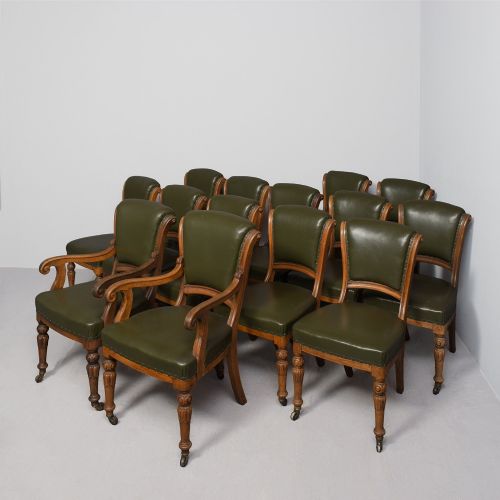
Object types vary from individual library armchairs and desk chairs to large matched sets of fourteen dining room seats.
A. W. N. Pugin·George Henry Walton·Howard & Son's
The Oak Framed Leather Chair Glossary
- Carver
- An armchair designed with elbow rests, traditionally used at the head of a dining table.
- Elbow chair
- A seating piece featuring low arm supports, offering comfortable posture for desk or occasional use.
- Wingback
- An armchair with high side panels designed to shield the sitter from drafts and retain fireplace warmth.
- X-framed
- A seating structure utilising intersecting diagonal stretchers beneath the seat for enhanced load distribution.
- Patina
- The surface sheen and colour depth developed by timber and leather through age and handling.
Oak Framed Leather Chair: Frequently Asked Questions
How do I date an oak framed leather chair?
Dating relies on observing the joinery methods, timber finishing, and stylistic cues present in the oak framework. Earlier pieces from the eighteenth century exhibit hand-cut joints and distinct period carvings, while later Victorian and Edwardian examples incorporate machine-sawn components and revival motifs.
Upholstery style and the method of attaching the leather, such as hand-hammered individual brass tacks, also help narrow down the period of production.
Where should I place a leather armchair?
These armchairs suit studies, libraries, and living rooms where sturdy construction and comfortable seating are priorities. Positioning them away from direct heat sources helps preserve the natural moisture in the leather and prevents the oak from drying out.
Allowing sufficient space around wingback or club variants highlights their proportions and makes them practical reading spots.
Are these chairs suitable for daily use?
Solid oak framing provides exceptional structural integrity, making most examples well-suited for everyday seating. Regular use actually enhances the appearance of the leather by developing a softer texture and a deeper surface character.
Owners should condition the hide periodically to maintain its flexibility and strength over time.
What is the difference between a carver and a side chair?
Carvers include integrated armrests for added support, whereas side chairs are built without arms to allow multiple seats to fit snugly around a dining table. In matching dining sets, carvers traditionally sat at the head positions.
Both types share matching oak frames and leather upholstery when manufactured as part of an original suite.