
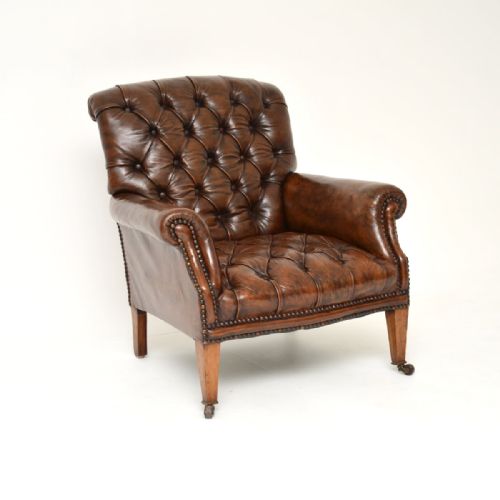


Brown Leather Chesterfield Chair
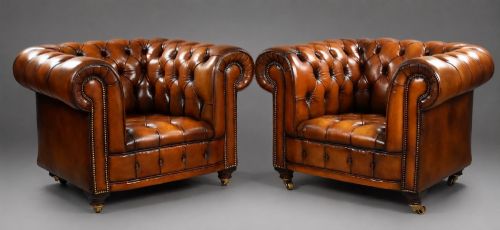
A brown leather chesterfield chair brings immediate presence to a room, offering deep buttoning and generous proportions built for a lifetime of sitting.
Brown Leather Chesterfield Chair
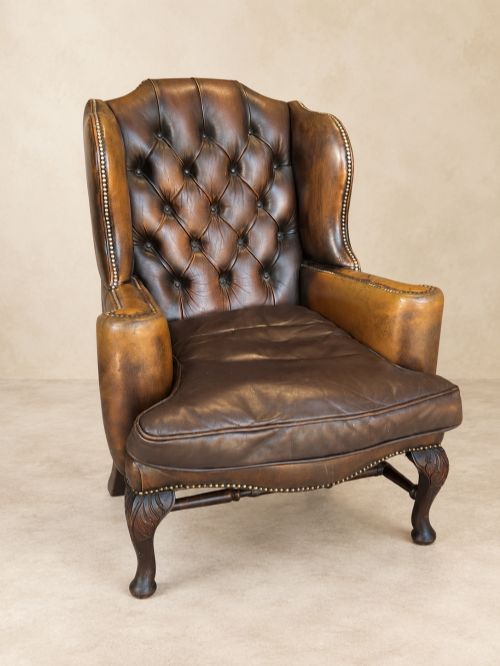
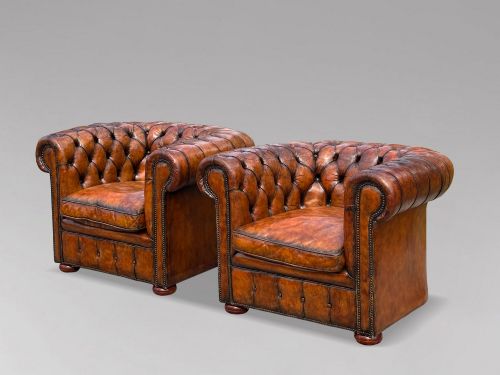
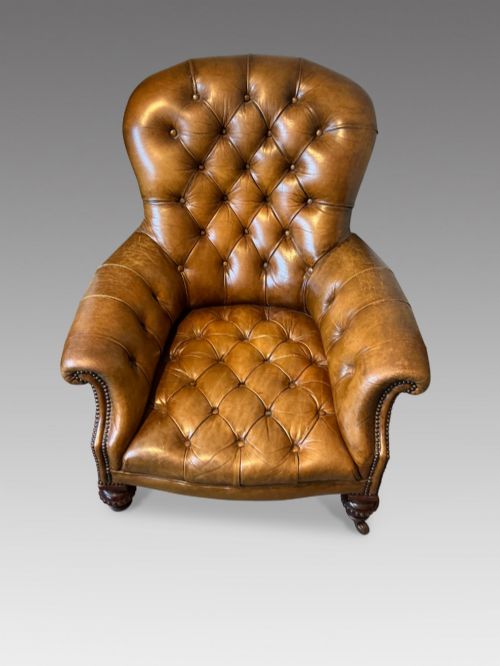
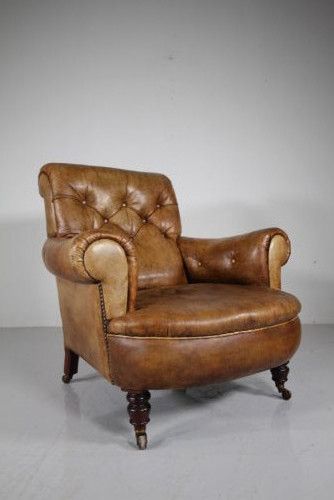
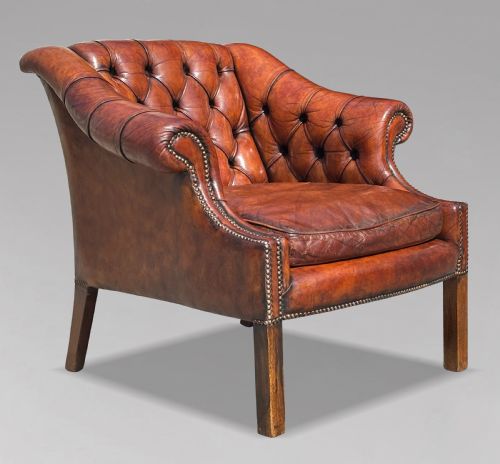
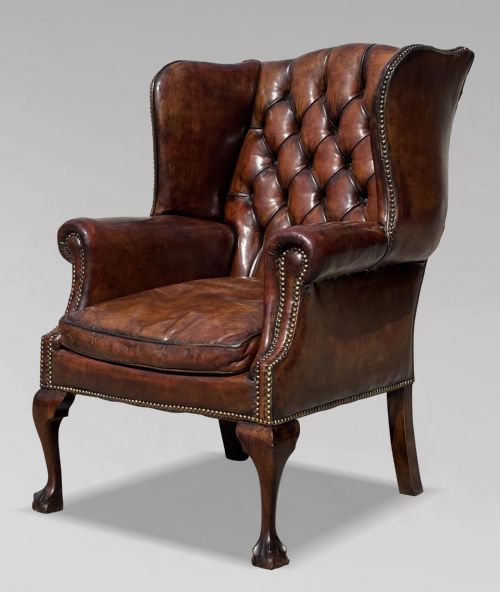
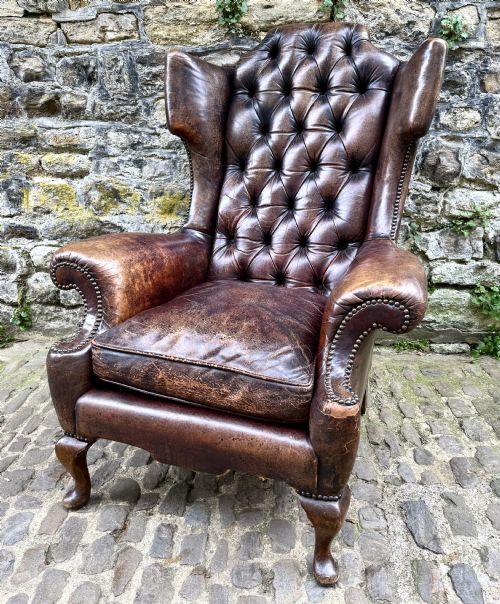
A brown leather chesterfield chair encompasses deep-buttoned wingbacks, club chairs, and low library armchairs spanning from the Georgian and Regency eras through the Victorian and Edwardian periods. You will most frequently meet 19th-century and early 20th-century club and wingback forms upholstered in rich, hand-dyed leather.
The silhouettes range from modest tub armchairs and Captain's desk chairs to large scale carved seating and full suites. Makers utilised traditional forms such as the porter's chair and the gentleman's wingback alongside dining chair variations.
Materials and Construction
These chairs are built on hardwood frames of oak, mahogany, or general timber, providing a rigid internal structure capable of supporting heavy upholstery and deep buttoning. Solid brass studs often secure the leather margins to the wooden frame.
The primary material is quality leather, frequently hand-dyed to achieve deep patination, stretched over traditional stuffing and secured with individual buttons to create the iconic tufted surface.
Several armchairs incorporate hand-carved lions on the wooden frames, standing guard beside the reading desk.
Character and Craft
Quality rests in the depth of the timber frame, the integrity of the hand-dyed leather, and the precision of the button tufting. Superior examples display substantial scale and careful carving on exposed wooden elements like lion paws or show frames.
Pieces showing mature patination, robust joinery, and well-preserved upholstery hold greater distinction than those with compromised frames or uniform, flat surfaces lacking historical depth.
Robert Mouseman Thompson·Howard And Sons·Thomas Chippendale·C Hindley And Sons·Gillows
The Brown Leather Chesterfield Chair Glossary
- Chesterfield
- A style of furniture distinguished by deep button tufting and upholstered arms of the same height as the back. It has remained a standard of British seating since the 18th century.
- Wingback
- An armchair with side panels or wings attached to the back, designed originally to shield the sitter from draughts. Georgian and Victorian examples frequently feature substantial padded wings.
- Porters Chair
- A high-backed enclosed armchair designed to keep out cold air in draughty hallways. Early versions often include a domed hood over the seat.
- Patina
- The surface sheen and softening of colour acquired by leather and wood through age and use. Collectors value natural patination for its historical depth.
- Tufting
- The technique of securing stuffing with a network of string or twine pulled tight and anchored with buttons. This creates the characteristic dimpled pattern on the upholstery.
Brown Leather Chesterfield Chair: Frequently Asked Questions
What defines a brown leather chesterfield chair?
A brown leather chesterfield chair is defined by its deep buttoned upholstery, rolled arms, and substantial leather covering. These elements combine to create a durable piece designed for studies and libraries.
Historically constructed across various British periods, these chairs utilise traditional joinery and sturdy hardwood frames to ensure longevity and comfort.
How do I date an older leather armchair?
Dating an armchair involves examining the framing timber, the style of the legs, and the method of upholstery. Regency and Georgian examples display specific stylistic cues like Pollard oak or carved details, whereas Victorian versions often feature heavier proportions and show frames.
Consulting the construction techniques beneath the leather helps confirm the period when exterior styles overlap across centuries.
Where should I place a wingback chair?
A wingback chair suits studies, libraries, and living spaces where its high back and enclosed sides can be fully appreciated. Its design anchors a corner or sits comfortably beside a fireplace.
Allowing sufficient space around the chair highlights its proportions and provides adequate room for everyday use.
How do I care for antique leather?
Caring for antique leather requires keeping the material away from direct heat sources and maintaining a stable indoor climate. Applying appropriate leather dressings helps preserve the suppleness of the hide.
Gentle dusting and minimal interference protect the natural patination built up over generations of use.