


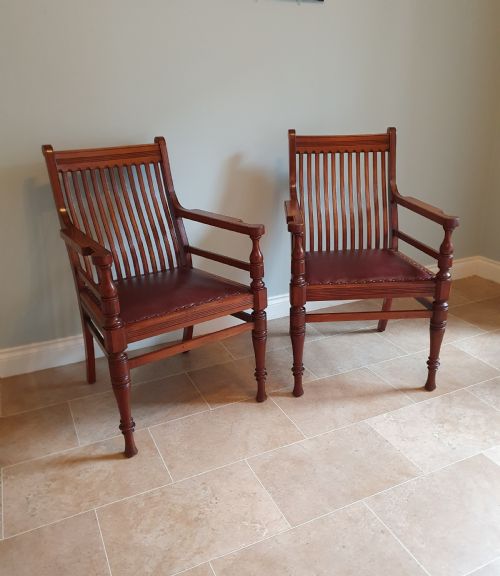


Brown Leather Carver
A brown leather carver brings solid timber framing and supple hide together for the head of a table or a study desk.
Brown Leather Carver
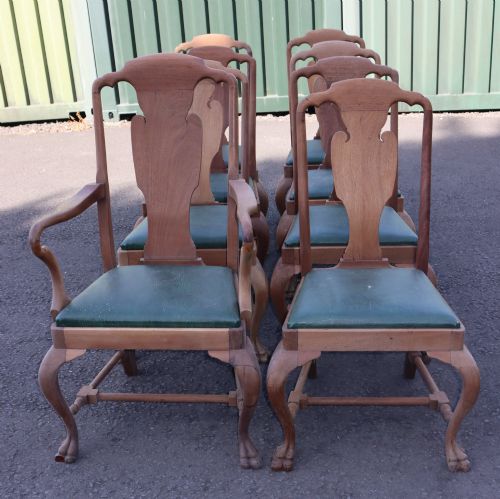
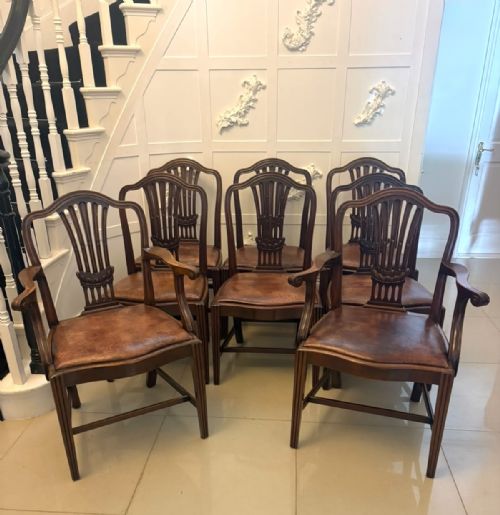
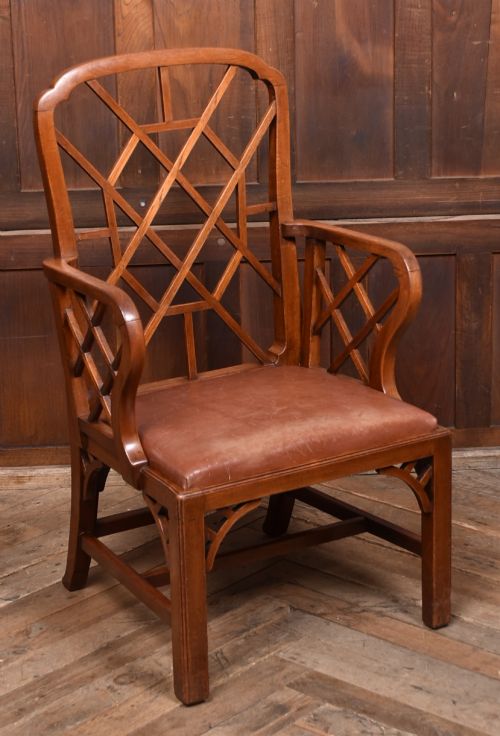
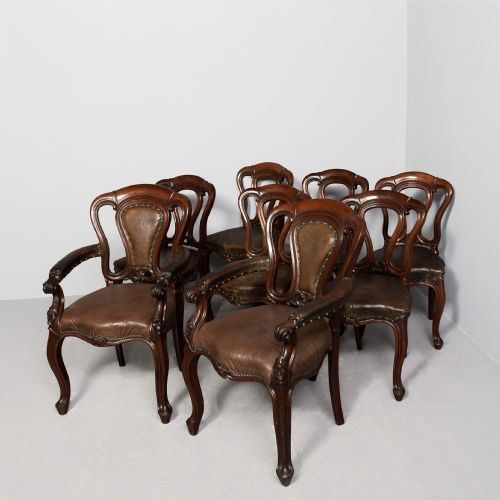
A brown leather carver is an armchair designed for dining rooms, libraries and studies, usually standing alongside matching sets of side chairs. The form appears most frequently in Victorian, Edwardian and early twentieth century manifestations, drawing on earlier Georgian, Regency and revival designs. You will encounter these armchairs built for specific social rituals, offering generous elbow room and upholstered seating.
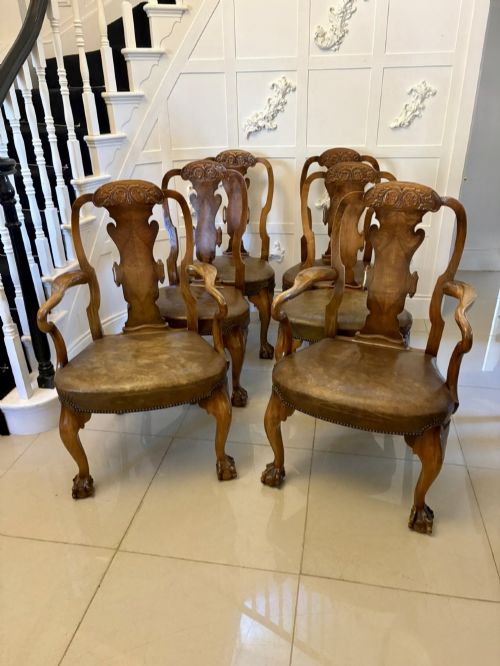
Makers and workshops constructed these seating forms in mahogany, oak, walnut and ash, often incorporating decorative details such as shield backs, scroll arms or carved splats. The timber frames support leather upholstery on the seat or backrest, secured by traditional methods. These pieces range from single elbow chairs to pairs and full dining sets.
How they were made
Cabinet makers utilised dense hardwoods like mahogany, oak and walnut for the structural frames, cutting timber to shape for legs, rails and backrests. Joinery relied on mortise and tenon joints to ensure stability under daily use. Secondary timbers often reinforced internal blocks and seat frames.
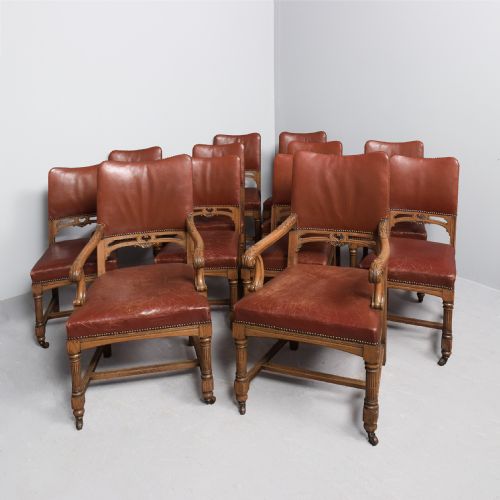
Leather hides were stretched across padded seats and backrests, then fastened with brass studs or tacks along the timber borders. Wood surfaces received hand-rubbed finishes such as wax or polish to protect the grain and bring out the natural tones of the wood.
Listings feature items spanning the nineteenth and early twentieth centuries, constructed in mahogany, oak, walnut and ash.
What varies in quality
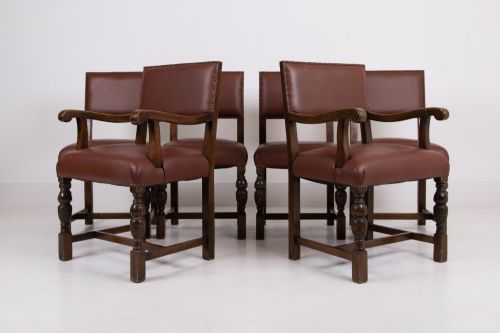
The sophistication of the timber carving and the selection of the wood set individual examples apart. Finer pieces display crisp hand-cut details along the splats and arms, whereas simpler versions rely on plain turned or square-section legs. The choice of timber grain also dictates the visual weight of the chair.
Upholstery execution and leather treatment create further distinctions between standard and superior pieces. Hand-dyed hides and traditional stuffing materials offer a tactile depth that machine-finished alternatives lack. Proportions and joinery integrity determine how well the structure survives centuries of use.
Lamb Of Manchester·William Walker And Sons·Shoolbred
The Brown Leather Carver Glossary
- Carver
- An armchair designed with open elbows, traditionally placed at the head of a dining table. These seating units match the surrounding side chairs.
- Elbow chair
- An alternative term for an armchair, describing a seat fitted with wooden supports for the arms. These appear frequently in nineteenth century inventories.
- Shield back
- A chair back shaped in the outline of a heraldic shield, popularised in the eighteenth century and revived later. This silhouette often incorporates carved splats.
- Scroll arm
- An armrest curved downward and inward in a tight scroll formation. Cabinet makers carved this shape directly from the timber uprights.
Brown Leather Carver: Frequently Asked Questions
What is a carver chair?
A carver chair is an armchair intended for the head of a dining table or use at a desk. It provides armrests while matching the style of the smaller side chairs in a set.
These chairs accommodate longer periods of sitting in dining rooms and libraries, combining timber frames with upholstered leather seats.
How do I identify Victorian carvers?
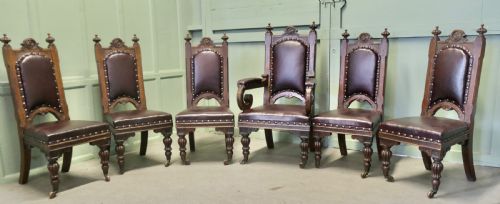
Victorian carvers typically display heavier timber construction in mahogany, oak or walnut. Revival styles such as Gothic or Chippendale influence the carved details on the back splats and legs.
Leather upholstery on these pieces is often secured with brass studding along the seat rails, reflecting the manufacturing methods of the nineteenth century.
Where should I place a leather armchair?
These armchairs suit studies, libraries and drawing rooms as standalone reading seats or desk chairs. They also function as host seating at either end of a dining table.
Keep leather furniture away from direct heat sources and strong sunlight to maintain the condition of the hide.
What woods were used for these chairs?
Cabinet makers built these chairs using dense hardwoods including mahogany, oak, walnut and ash. These timbers provided the structural strength required for supporting armrests and load-bearing joints.
Inlays in satinwood or other decorative woods sometimes appear on later revival pieces to add visual contrast to the timber frame.