



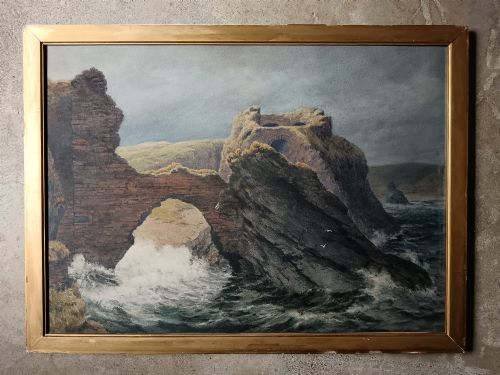


Brown Landscape Watercolour
A brown landscape watercolour brings the quiet topography of rural Britain into the room through muted earth tones and deft washes.
Identifying brown landscape watercolour
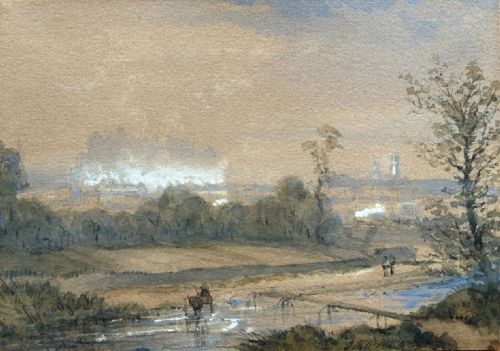
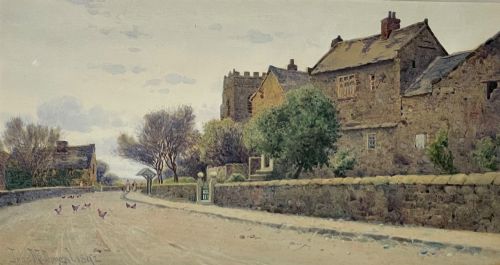
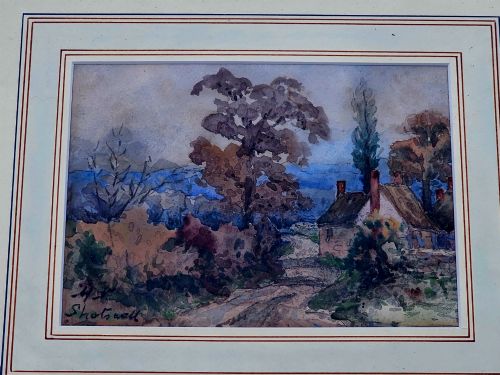
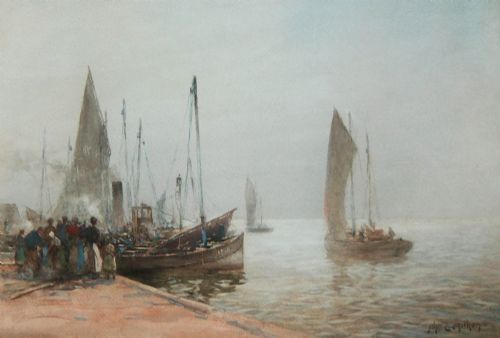
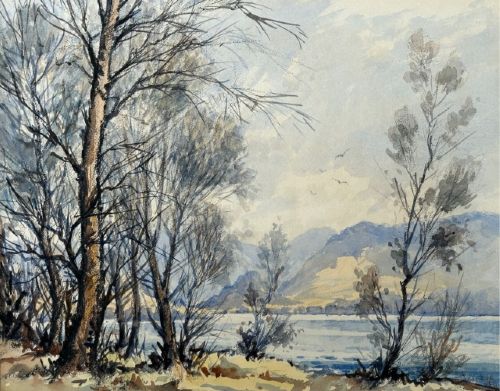
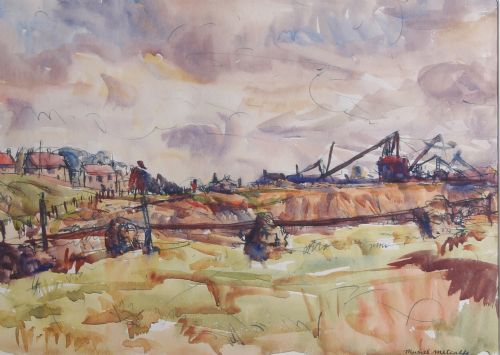
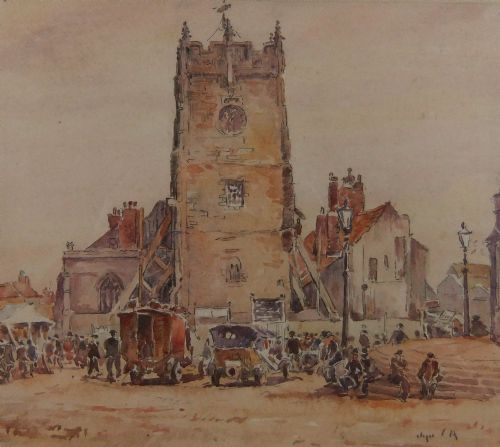
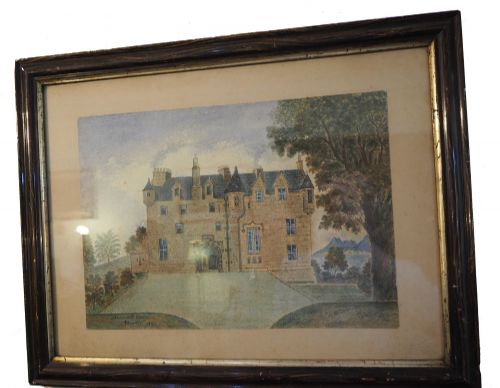
A brown landscape watercolour presents regional British scenes executed in restrained monochrome or sepia palettes on paper. These paintings span the nineteenth century, the Edwardian period, and early twentieth-century Modern British output, focusing on churches, cottages, agricultural tracks, and historic townscapes.
The most common examples encountered on this page depict pastoral or coastal settings ranging from Dorset and Yorkshire to Scotland and Holland. Makers capture driving sheep, farmers leading horses, and ruined castles through tonal washes rather than bright polychrome hues.
Framed examples usually combine wooden surrounds and protective glass to preserve the delicate pigment on paper. The subject matter leans heavily toward topographical accuracy combined with atmospheric weather effects, such as rainy days or wartime rural quiet.
Materials and technique
Artists deployed watercolour pigment suspended in water onto heavy paper sheets to build up translucent washes of brown, ochre, and sepia. This technique allowed painters to control light and shadow through layered dilution rather than heavy opaque additions.
Works are preserved beneath glass within timber wooden frames to protect the soluble pigment and paper substrate from moisture and light damage. Mounts and backing boards provide structural rigidity to these fragile works on paper.
Retail Price Guide 2026
Typical UK retail prices for brown landscape watercolour, calculated from the Sellingantiques database of over a million retail prices indexed since 2003. This retail price guide relies exclusively on Sellingantiques data; no external sources or auction records are used, so the figures do not describe the wider market.
Several horses faithfully lead farmers home across these brown landscapes without ever reaching the edge of the paper.
Judging quality
Quality rests upon the artist's command of tone and perspective within a restricted monochrome palette. Superior sheets demonstrate confident brushwork that defines architectural detail or livestock without relying on heavy outlining.
Condition remains paramount, distinguishing works with crisp paper and stable pigment from those suffering from foxing, fading, or water damage. The integration of original period framing also enhances the integrity of the piece.
Ferdinand E Gröne RBA·Henry Charles Fox·John D Walker·William James Boddy·William Manners·Frederick Tucker·Fred Lawson·Thomas Austen Brown
The Brown Landscape Watercolour Glossary
- Watercolour pigment
- Finely ground colour particles mixed with a water-soluble binder, applied in translucent washes to paper. This medium allows for subtle tonal gradations characteristic of nineteenth-century landscapes.
- Paper
- The organic cellulose substrate used as the foundation for watercolour paintings. High-grade rag paper provides durability and absorbency for pigment layers.
- Glass
- The transparent sheet fitted into the frame to protect the delicate paper surface from dust and atmospheric pollutants. It prevents physical contact with the pigment layer.
- Wood
- The material utilised for constructing the protective frames surrounding these works. Timber mouldings often feature gilt liners or simple stained finishes appropriate to their period.
- Topographical
- Pertaining to the accurate representation of specific places, buildings, and rural landmarks. These watercolours frequently record named towns, lanes, and castles across Britain and Europe.
Frequently Asked Questions
What subjects appear in these watercolours?
Paintings show British and European country scenes, including rural lanes, farm animals, churches, and historic town architecture. Common motifs involve agricultural workers, sheep, and ruined castles.
Views extend from Yorkshire and Dorset to Scotland and Holland, capturing specific geographic locations through tonal monochrome washes.
How should I frame and display them?
Works on paper require conservation mounting under glass to prevent airborne dust and humidity from degrading the pigment. Frames should utilise wooden mouldings that complement the age of the painting.
Keep pieces away from direct sunlight to prevent the watercolour pigments and paper support from fading over time.
How do I date a brown landscape watercolour?
Dating relies on stylistic markers, framing materials, artist signatures, and inscriptions noting specific years or historic events. Nineteenth-century examples often feature detailed topographical recording.
Later Edwardian and twentieth-century pieces show shifts toward looser brushwork and modified pastoral compositions.
What defines the nineteenth-century style?
Nineteenth-century works emphasise careful draughtsmanship and atmospheric tonal control, particularly in sepia and brown palettes. They record precise architectural and rural details.
Artists during this era focused heavily on named local landmarks, rural occupations, and specific weather conditions.