
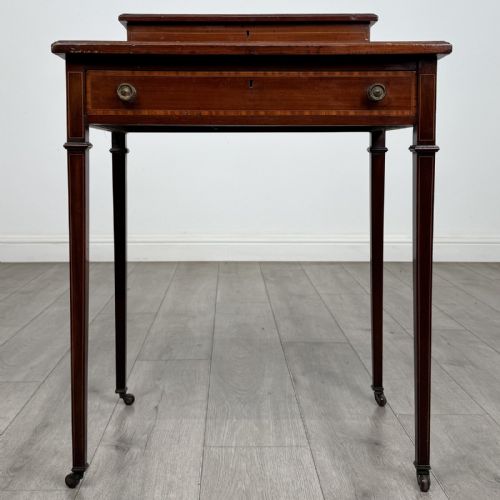
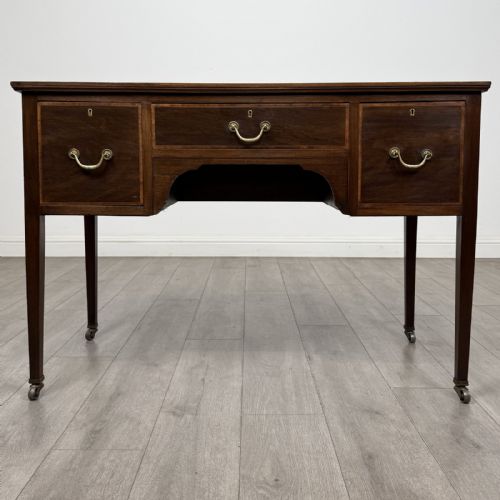
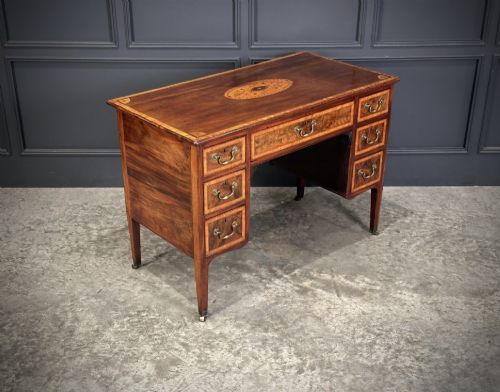
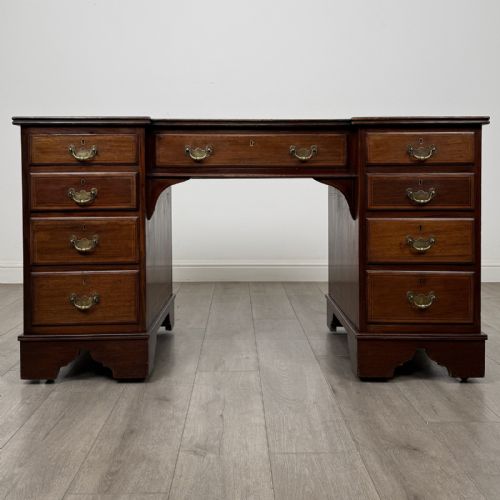
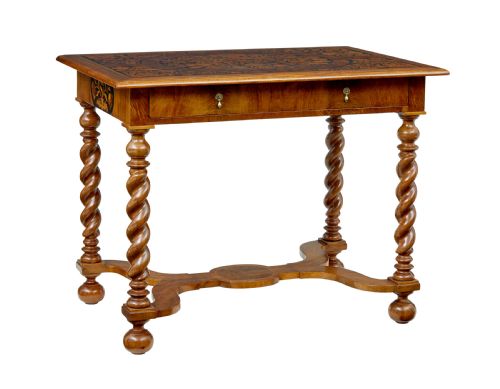
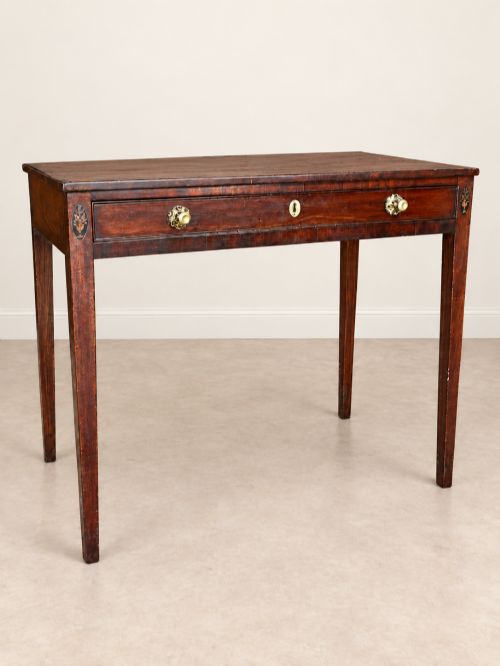
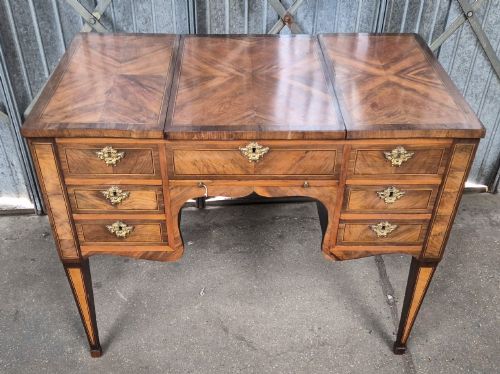
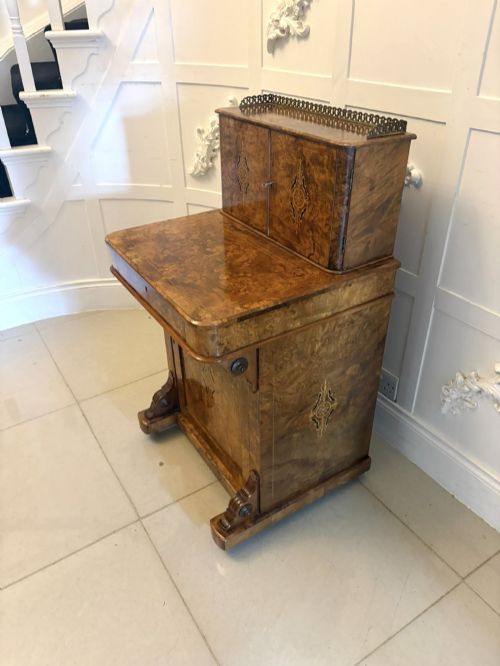
Brown Inlaid Writing Table
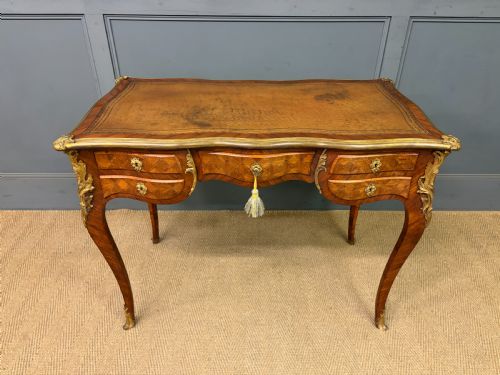
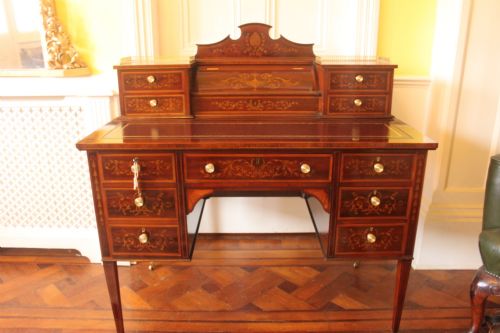
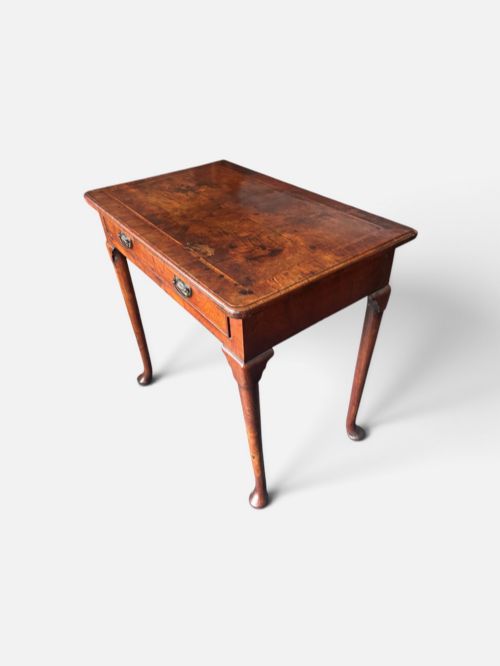
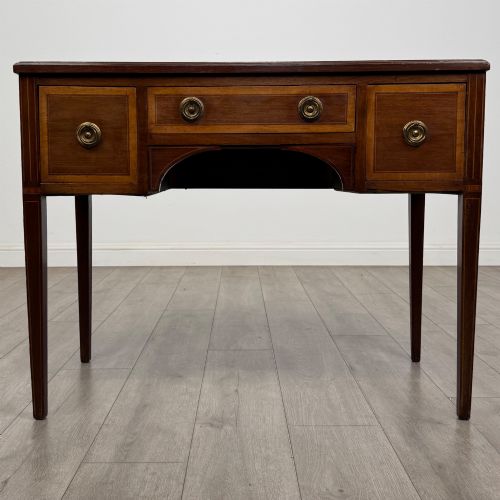
When you choose a brown inlaid writing table, you select a practical piece of antique furniture built from rich timbers and detailed with fine decorative banding.
Brown Inlaid Writing Table
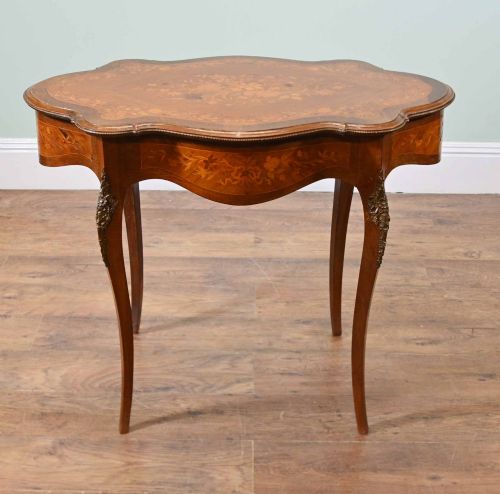
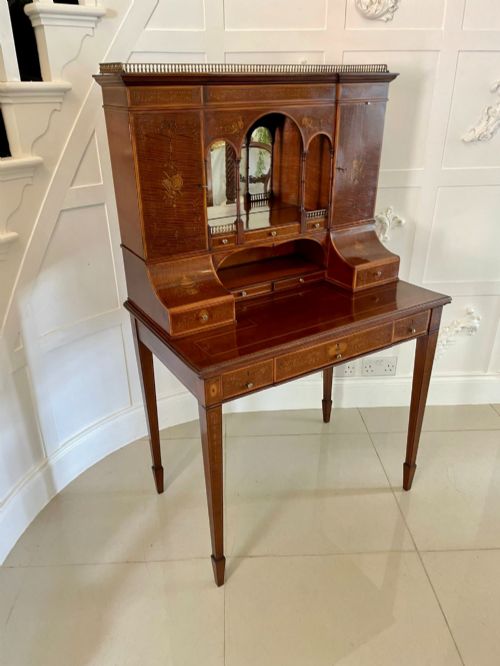
A brown inlaid writing table serves as a dedicated workspace or decorative surface, appearing in forms such as compact davenports, kidney-shaped desks, and rectangular side pieces. Buyers encounter these items across several distinct eras, spanning from the Georgian period through the Victorian age and into the Edwardian years.
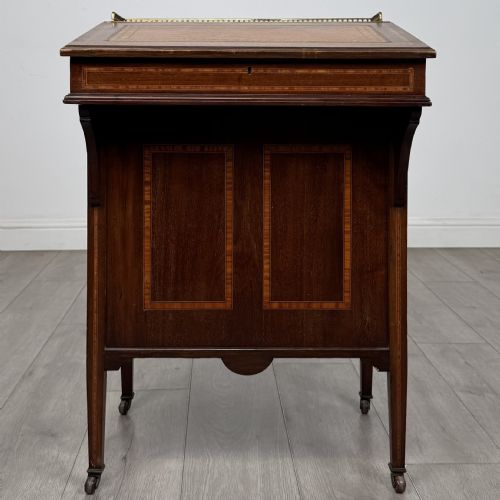
The Edwardian mahogany writing table represents the most common iteration on this page, often featuring satinwood banding and fitted drawers. Alongside these, examples in walnut, rosewood, and kingwood demonstrate the broad range of domestic and continental cabinet-making traditions available to collectors.
Materials and construction
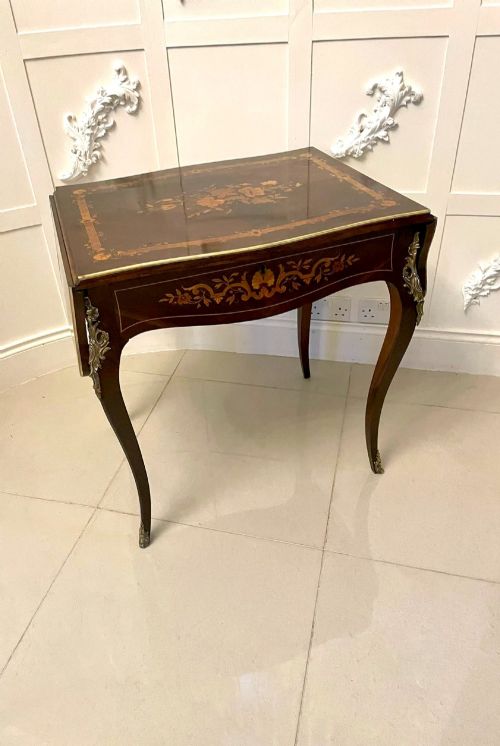
Cabinet-makers constructed these writing surfaces primarily using solid and veneered timbers such as mahogany, walnut, satinwood, and rosewood, chosen for their grain patterns and warm tones. Artisans then applied contrasting stringing and marquetry inlay in geometric or floral motifs across the top surfaces and drawer fronts.
Many items incorporate secondary materials like brass mounts, leather writing inserts, and occasional ormolu accents to frame the primary wood. Structural joinery relies on traditional techniques suited to pedestal desks, sofa tables, and freestanding centre tables.
Some Edwardian desks hide clever metamorphic mechanisms that raise writing surfaces or reveal secret stationery compartments with a single gentle pull.
Assessing craftsmanship
The distinction between standard and superior pieces rests on the precision of the marquetry and the choice of timber figurations, such as burr walnut or figured mahogany. Finer items exhibit crisp, deliberate inlay work that integrates cleanly into the surrounding wood without excessive filler.
Construction standards also set examples apart, with top-tier pieces utilising original hardware, well-fitted internal drawers, and stable freestanding frames. Maker attribution, visible in select signed drawer locks or stamps, further elevates the standing of specific desks.
Edwards & Roberts·Jackson & Graham
The Brown Inlaid Writing Table Glossary
- Marquetry
- Decorative patterns formed by fitting together thin slices of veneer onto a wood structure. It often depicts floral arrangements or complex geometric scenes across tabletops.
- Satinwood
- A pale, hard timber native to India and Ceylon, used extensively for contrasting inlay work and borders on dark mahogany furniture.
- Davenport desk
- A compact box desk featuring a sloping leather-lined writing surface above a bank of side drawers. It gained popularity during the nineteenth century.
- Ormolu
- Gilded bronze cast into decorative mounts, handles, and feet. It frequently appears on French revival writing tables from the nineteenth century.
- Tambour
- A sliding door or shutter constructed from narrow vertical strips of wood glued to a canvas backing. It conceals pigeonholes and small compartments on specialised writing desks.
Brown Inlaid Writing Table: Frequently Asked Questions
What is a brown inlaid writing table?
A brown inlaid writing table is a wooden desk or surface decorated with contrasting wood veneers. These pieces combine utility with decorative borders and marquetry panels.
Craftsmen built them in various forms, from simple side tables to elaborate pedestal desks, utilising rich timbers like mahogany and walnut.
How do I date an antique writing table?
Dating relies on observing the timber species, construction methods, and prevailing decorative styles. Georgian pieces often display restrained lines, while Victorian and Edwardian examples incorporate heavier marquetry or satinwood banding.
Hardware styles and secondary woods inside the drawers also help pinpoint the period of manufacture.
Were these desks used for daily writing?
These tables served as the primary stations for correspondence, record-keeping, and home administration before the digital age. Many include specialised compartments for stationery, inkwells, and envelopes.
Freestanding versions allowed writers to position the desk away from walls within a library or drawing room.
How do I care for a wood writing surface?
Maintaining the finish involves keeping the timber away from direct sunlight and sources of heat that can dry out the veneer. Gentle dusting and occasional application of appropriate furniture wax preserve the polish.
Leather inserts benefit from minimal moisture and specialised leather dressings to prevent cracking.