
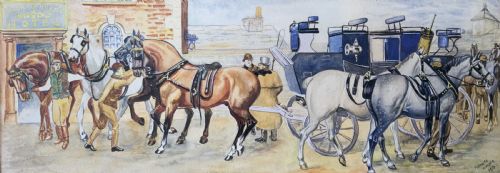


Brown Horse Watercolour
A brown horse watercolour captures the strength and character of equines through delicate washes on paper.
Brown Horse Watercolour
When a buyer searches for a brown horse watercolour, they are examining original paintings executed on paper using pigment suspended in water. These works span from the Georgian period through the nineteenth and twentieth centuries up to mid-century modern examples.
The pieces on this page concentrate on realistic and impressionistic portrayals of working animals, racing scenes, and rural life. Common subjects include plough teams, logging carts, hunting scenes, and stable portraits created by named British and French artists.
Most examples appear mounted behind glass within traditional wooden frames such as oak. The paper supports often show the natural ageing of centuries past while retaining the vibrancy of the original watercolour pigment and gouache.
Materials and technique
Artists painted these works on paper using finely ground watercolour pigment mixed with water to create translucent washes. Many pieces incorporate gouache, an opaque medium that adds highlights and dense areas of colour to the horses and equipment.
Ink is frequently used alongside watercolour to define the outlines of the animals and harness details before the washes are applied. The finished paintings are typically protected beneath glass and housed within wooden frames, often constructed from oak.
Brown Horse Watercolour Retail Price Guide 2026
Typical asking prices for brown horse watercolour among the pieces listed under this phrase on Sellingantiques today, from the lower quarter to the upper quarter. They describe what is for sale here now, not the wider market.
The listings span from the early nineteenth century through the Victorian and Edwardian eras into the mid-twentieth century.
Assessing quality
Quality rests upon the artist's ability to render equine anatomy accurately and convey movement within the medium. Skilled painters capture the tension in a plough team or the speed of a race with confident brushwork and precise draughtsmanship.
The condition of the paper and the preservation of the pigment under glass determine the visual impact of the work. Superior pieces retain their original colour depth without excessive fading or damp staining from age.
Herman S Melville·John Rattenbury Skeaping·James William Booth·John Augustus Atkinson·Helena Maguire·Adrian Jones·Robert Hollands Walker·Charles Clifford Turner·George Hamilton Constantine·William Manners·Charles James Adams
The Brown Horse Watercolour Glossary
- Watercolour
- A painting method where fine pigment is mixed with water-soluble binders and applied to paper. This technique relies on the white of the paper shining through translucent layers.
- Gouache
- An opaque water-based paint that includes a white pigment to create solid, light-reflecting areas. Artists use it to add dense highlights to watercolours.
- Equestrian
- Pertaining to horses and horseback riding. This term describes artwork where horses are the primary subject.
- Genre art
- Paintings depicting scenes from everyday life. These works often show farm labourers, market carts, and rural transport.
- Oak frame
- A heavy wooden housing made from oak timber. These frames protect the paper and complement the period aesthetic of the painting.
Brown Horse Watercolour: Frequently Asked Questions
How should I hang a watercolour painting?
Keep watercolours away from direct sunlight to prevent the pigments from fading over time. Direct heat sources can also dry out the paper and damage the fragile fibres.
Ensure the room maintains a stable humidity level to protect both the paper support and the wooden frame. Professional framing with acid-free mounts helps preserve the artwork for decades.
What is the difference between watercolour and gouache?
Watercolour relies on translucent washes that allow the light from the paper to pass back through the pigment. This creates a luminous quality characteristic of traditional landscape and animal painting.
Gouache contains added chalk or white pigment making it opaque. Artists use it alongside watercolour to build solid areas of colour and sharp highlights on coats and harness leather.
How do I date an antique horse painting?
Examine the style of clothing worn by any figures, the design of the horse-drawn carts, and the framing materials. Victorian and Edwardian works often feature specific harness styles and rural dress.
Signatures, artist dates, and inscriptions on the reverse of the paper or frame provide direct historical evidence. Stylistic shifts between nineteenth-century realism and mid-century modern approaches also indicate the era.
Why are horses a common subject in antique art?
Horses formed the backbone of transport, agriculture, and industry before the widespread adoption of mechanised power. Artists documented these working animals because they were central to daily rural and urban life.
Equestrian subjects also demonstrated a painter's skill in rendering complex anatomy and movement. Wealthy patrons frequently commissioned portraits of their favourite hunters, racehorses, and stable teams.