



Brown Green Landscape Art
Brown green landscape art gathers oil paintings, watercolours and pottery plaques spanning the nineteenth and twentieth centuries.
Brown Green Landscape Art
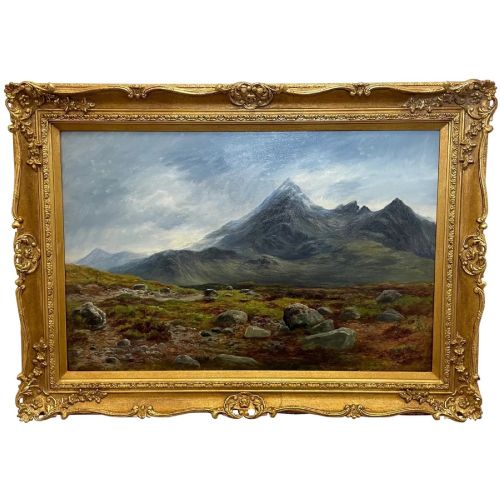
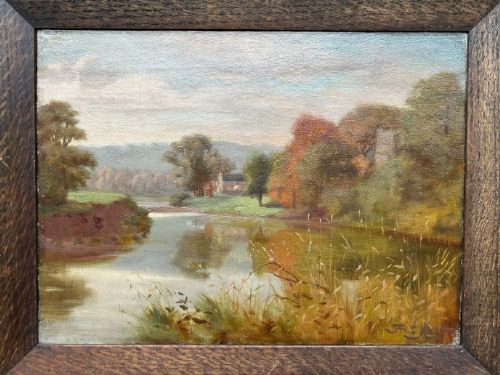
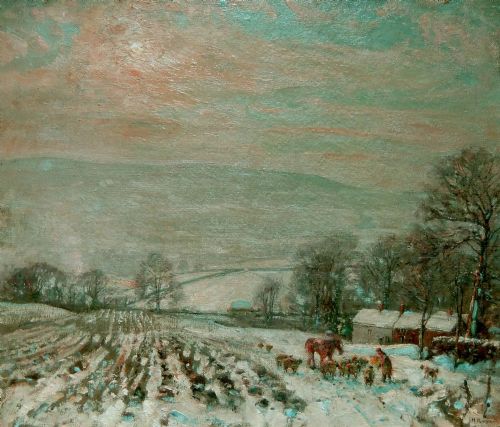
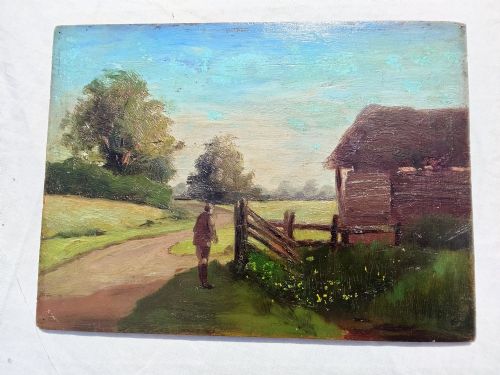
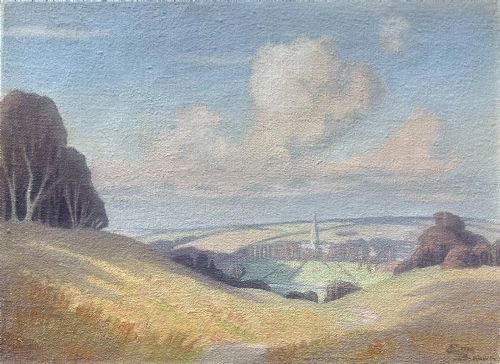
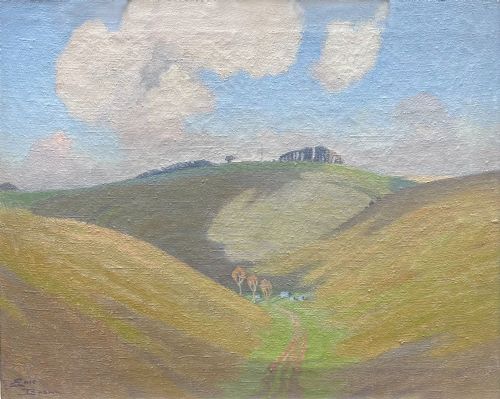
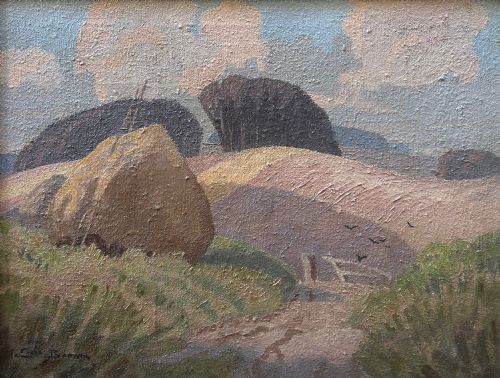
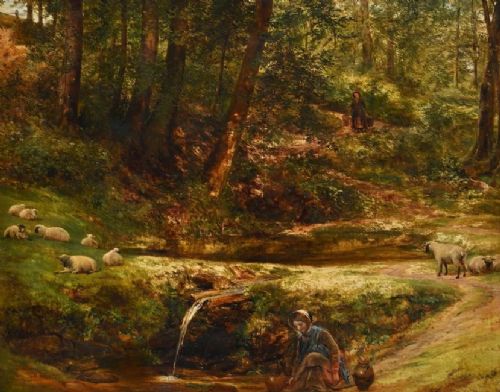
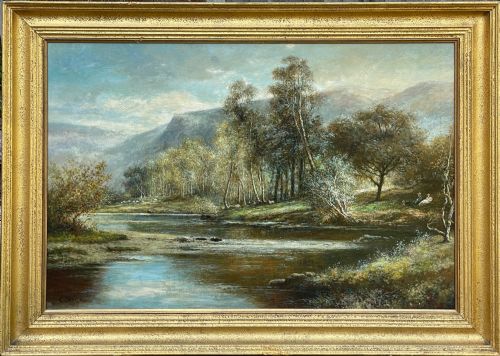
Brown green landscape art encompasses works created across the nineteenth and twentieth centuries, capturing rural scenes, river views and agricultural valleys. Buyers searching this phrase meet framed canvases, wooden panels and ceramic plaques depicting cattle, sheep and woodland settings.
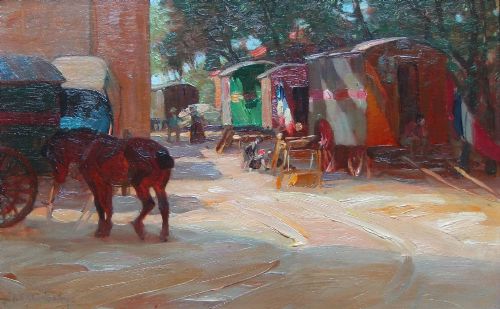
The selection ranges from Victorian pastoral studies and Edwardian watercolours to British Impressionist and Scottish School compositions. Many examples feature named rivers, country cottages and seasonal farming activities rendered in muted earth tones.
How they were made
Painters utilised oil paint or watercolour applied to woven canvas, absorbent paper or prepared wooden boards. Some nineteenth-century compositions involve canvas later laid onto board for structural support.
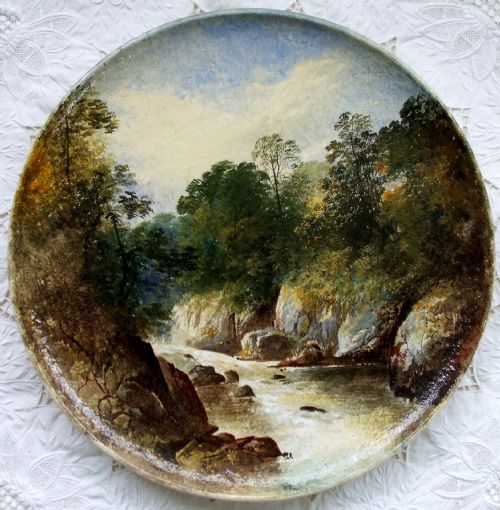
Ceramic works from the period take the form of pottery plaques painted directly onto the glazed surface. These pieces rely on natural pigments that capture the characteristic foliage and waterways of British and European scenery.
Represented periods range from nineteenth-century realism through to mid-century post-impressionist board paintings.
What varies in quality
Quality rests upon the handling of light and atmosphere within the naturalistic setting. Stronger works display confident brushwork and precise atmospheric perspective that define the depth of woodland or pasture.
The registration of fine detail in animal figures, architectural elements and foliage distinguishes accomplished compositions from standard topographical output. Preservation of the original paint layer and panel integrity also influences the standing of an individual piece.
William Beattie Brown·William H Myers·Tom Campbell·Frederick Marriott·Herbert Royle·Richard Redgrave·Paul Ehrenberg·William Yale·Alexander Wellwood Rattray·Sydney Yates Johnson·John Horace Hooper·Harry Freckleton·John Sanderson Wells·Owen Bowen·Samuel Joseph Clark·William Sydney Cooper·George Armfield·James Orrock·William Greaves·John Linnell·Robert Finley McIntyre·Alfred Grey
The Brown Green Landscape Art Glossary
- Canvas
- A heavy woven fabric stretched across a wooden frame to serve as a support for oil paint. It provides a textured surface that catches light through thin paint layers.
- Wood Panel
- A rigid wooden support used instead of canvas for painting. These boards offer a stable surface that prevents the flexing associated with fabric supports.
- Watercolour
- A paint method utilising water-soluble pigments applied to paper. This technique produces transparent washes well suited to atmospheric landscape sketches.
- Pottery Plaque
- A decorative ceramic tile fired with a painted scene. These items function as wall art and often feature hand-painted topographical titles on the reverse.
- Impressionism
- An art style focused on accurate depiction of light and its shifting qualities. Practitioners record everyday scenes using visible brush strokes and unblended colour.
Brown Green Landscape Art: Frequently Asked Questions
What periods do these landscapes cover?
The available artworks span from the nineteenth century through the Edwardian era and into the mid-twentieth century. Most examples date from the Victorian period up to the interwar years.
Creators working across these decades employed traditional techniques rooted in realism and early impressionist movements.
What subjects appear in these paintings?
Common subjects include pastoral scenes with cattle, sheep resting in valleys, river views, and agricultural harvesting. Woodland paths and rural cottages also recur frequently across the works.
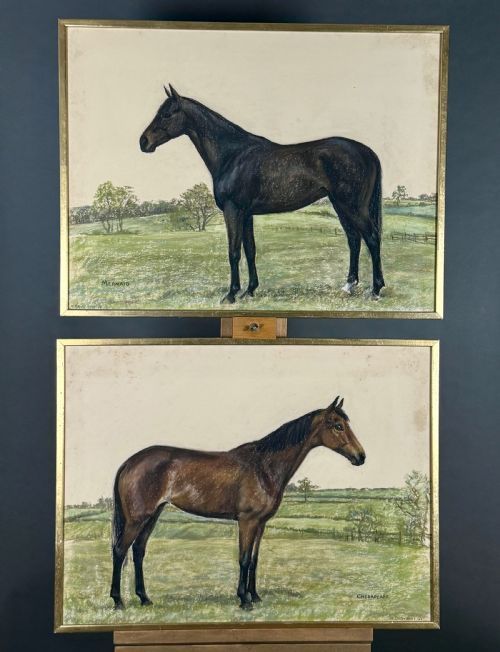
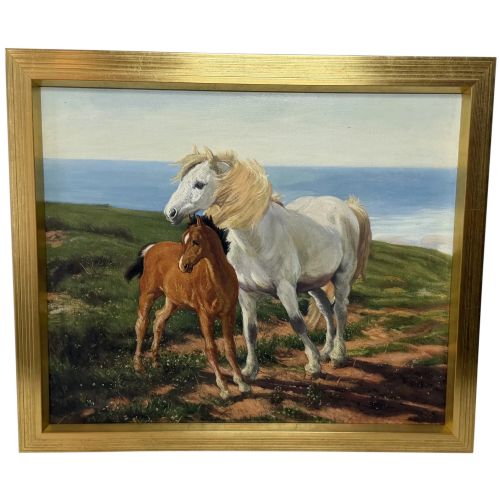
Equestrian studies and pastoral scenes form a significant portion of the rural compositions.
How should I care for an oil painting on wood panel?
Keep wooden panel paintings away from direct heat sources and sudden humidity fluctuations to prevent the wood from warping. Display them in stable indoor environments away from strong sunlight.
Dust the surface gently with a dry, soft brush without applying liquid cleaners to the paint layer.
Are these works signed by the artists?
Many of the pieces feature visible artist signatures, dates or inscriptions identifying specific locations in Britain and Europe. Some examples remain indistinctly signed or represent the output of recognised regional schools.
Inscribed titles on the reverse or frame often record the exact geographic setting of the scene.