





Earthy Landscape Canvas Art
These earthy landscape canvas art pieces capture fields, rivers, and farmyards through oil paint on woven supports, bringing the quiet textures of the countryside directly to your wall.
Earthy Landscape Canvas Art
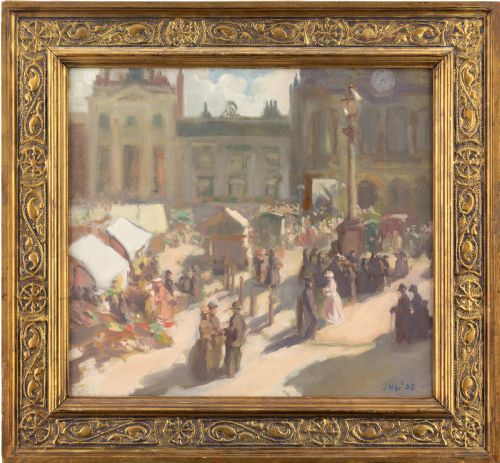
When you search for earthy landscape canvas art, you find works depicting rural scenes, rivers, moorlands, and agricultural views rendered in oil paint. These paintings document pastoral life, farm animals, and natural vistas across various eras.
The pieces on this page span from the nineteenth century through the mid-twentieth century, including works from Victorian, Edwardian, and later modernist periods. You encounter British regional views alongside French provincial and European scenes.
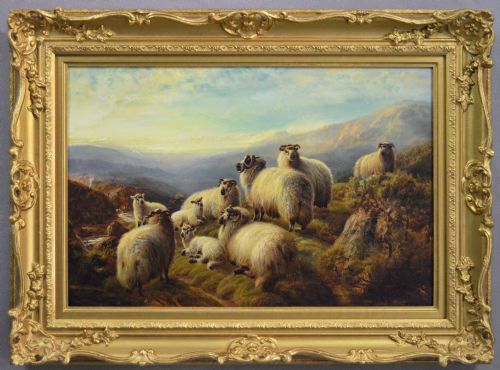
Common subjects include working horses, highland sheep, cattle in woodland, and village farmyards set against rolling fields and riverbanks. These artworks reflect the artistic traditions of plein-air painting and regional realism.
Materials and technique
Artists painted these works primarily using oil paint applied to stretched canvas, occasionally utilising wood boards as a firm support. The medium allows for rich layering, visible brushwork, and deep naturalistic tones.
Canvases are often secured to wooden stretchers and sometimes housed within period gilt frames. The combination of oil pigments and woven fabric provides longevity and a textured surface that captures natural light.
Several canvases faithfully record the stubborn expressions of working farm horses pausing for a drink by the village trough.
Evaluating quality and handling
Quality in these pastoral works rests upon the artist's command of light, brushwork, and atmospheric depth within the natural setting. Masterful handling of paint creates convincing textures in foliage, water, and animal forms.
Provenance and clear attribution to documented painters elevate individual pieces. The structural integrity of the canvas and the preservation of the original paint layer determine the physical standing of the artwork.
John Hodgson Lobley RBA·Robert Watson·Raimond Louis Lecourt·Herbert Royle·Reginald Grange Brundrit RA·Majorie Hoare·John Frederick Herring·Robert Finley McIntyre·Thomas Creswick RA·Owen Bowen·William Traies·Ernest Higgins Rigg·Alfred Banner·J L Van Leemputten·Frederick William Jackson·Kershaw Schofield·Alois Arnegger·George F Wetherbee·William Greaves·Maurice Wagermans·Benjamin Williams Leader·Edward J Cobbett·Edward John Niemann
The Earthy Landscape Canvas Art Glossary
- Canvas
- A heavy woven fabric, usually linen or cotton, stretched tightly across a wooden frame to serve as a support for oil painting.
- Oil Paint
- A slow-drying paint made by combining pigments with drying oils such as linseed, allowing for smooth blending and thick impasto textures.
- Stretcher
- The wooden framework upon which an artist's canvas is secured and tensioned before and after painting.
- Gilt
- A thin layer of gold leaf or gold-coloured pigment applied to the surface of picture frames for decoration.
- Barbizon School
- A mid-nineteenth-century French art movement focusing on realistic landscape painting, characterised by tonal subtlety and earthy palettes.
Earthy Landscape Canvas Art: Frequently Asked Questions
What periods do these paintings come from?
The works originate primarily from the nineteenth and early twentieth centuries, spanning Victorian, Edwardian, and mid-century modern periods. Artists of these eras focused heavily on pastoral views and rural realism.
Dates are often established through artist signatures, stretcher inscriptions, or stylistic conventions characteristic of specific decades like the 1900s and 1920s.
How should I display an oil painting on canvas?
Display your canvas on an interior wall away from direct sunlight, dampness, and extreme temperature fluctuations. Proper placement protects the oil pigments and the wooden stretcher from warping or fading.
Many of these works are housed in their original gilt frames, which complement the earthy tones and weight of the canvas composition.
What subjects are most common in these landscapes?
Common subjects include agricultural farmyards, rivers, moorland streams, and working animals such as horses, cattle, and sheep. Artists captured the daily rhythm of rural life and natural British and European scenery.
Scenes range from quiet pastoral meadows to coastal harbours and village streets, painted directly from the surrounding countryside.
How do I identify the artist of an antique painting?
Look for signatures, monograms, or inscriptions located near the corners of the canvas or written on the wooden stretcher behind the frame. Researching exhibition records and historical artist directories helps confirm attribution.
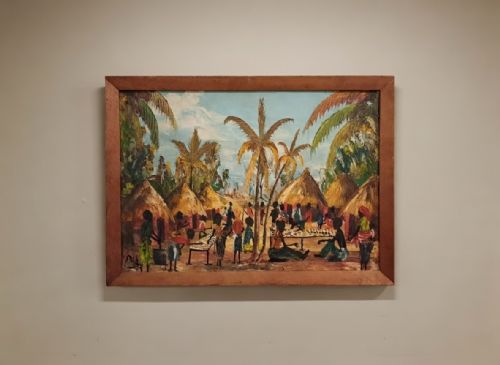
Indistinctly signed works or naive school pieces often rely on stylistic traits and regional subject matter to indicate their origin.