


Original Pastoral Livestock Art
Original pastoral livestock art captures rural life through oil on canvas and watercolour, offering a direct connection to nineteenth-century and early twentieth-century agricultural scenes.
Original Pastoral Livestock Art
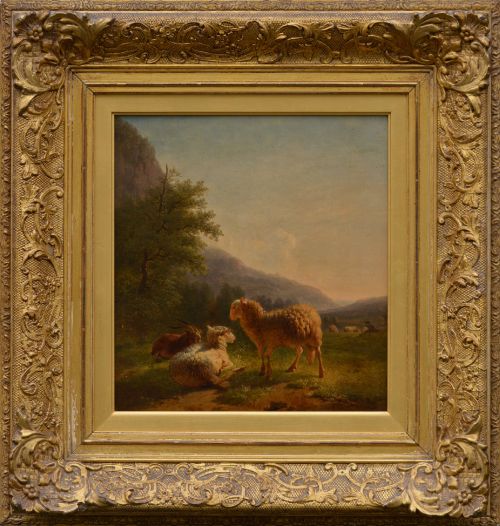
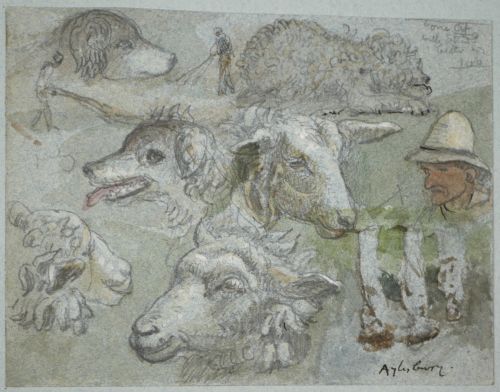
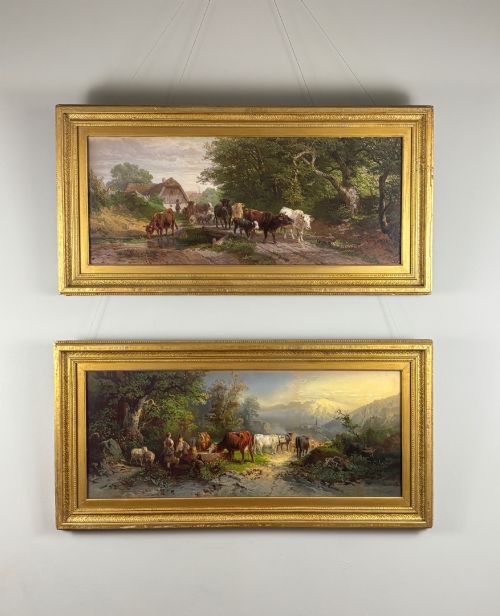
Original pastoral livestock art depicts scenes of rural agriculture, featuring cattle, sheep, horses, and shepherds within British and European landscapes. These works primarily take the form of oil paintings on canvas and watercolours on paper, framed in wood or giltwood.
The pieces span the nineteenth century through the mid-twentieth century, encompassing Victorian pastoralism, British Impressionism, and nineteenth-century realism. Buyers encounter named artists alongside works from the broader nineteenth-century and Edwardian periods.
Materials and Methods
Artists painted these subjects using oil on canvas or applied watercolour to paper, occasionally employing mixed-media techniques to build texture and tone. The use of pigment layers achieved the soft light characteristic of rural evening landscapes and river scenes.
Finished works were housed in frames of wood, burr wood, and giltwood, frequently retaining their original glass and framing structures from the nineteenth and early twentieth centuries.
Listings feature works spanning from 1800 through the 1960s, executed in oil on canvas, watercolour, and mixed-media.
Assessing Quality and Execution
Quality rests in the handling of light and anatomy, where accomplished artists render livestock and human figures with precise observation rather than generic repetition. The depth of the landscape and the integration of animals into their rural setting separate routine decorative works from accomplished fine art.
The preservation of the original medium and frame contributes to a piece's integrity. Intact surfaces on canvas and well-preserved watercolour paper without excessive fading retain the artist's intended palette.
Eugène Verboeckhoven·James Smetham·Johann Friedrich Voltz·Frederick Septimus Lewis·Ernest Pile Bucknall·Andre de Moller·C. Lainé·Basil Bradley·Claude Cardon·Henry Cheadle·Ernest Higgins Rigg·Owen Bowen·A Davis·Thomas Baker of Leamington·T. Sidney Cooper
The Original Pastoral Livestock Art Glossary
- Oil on Canvas
- Pigment mixed with drying oil applied to a stretched canvas support. This technique allowed artists to work with rich colours and visible brushwork.
- Watercolour Painting
- Pigments suspended in a water-soluble vehicle applied to paper. It yields translucent washes of colour well suited to atmospheric landscape effects.
- Giltwood
- Wood carved and coated with a thin layer of gold leaf. Frames finished in this manner were standard for framing fine art in the nineteenth century.
- Pastoral Realism
- An artistic style focusing on the realistic portrayal of rural life and agricultural workers. It avoided excessive romanticism in favour of observed daily labour.
- Mixed-Media Painting
- An artwork utilising more than one medium on the support. Artists combined watercolour with bodycolour or ink to add detail.
Original Pastoral Livestock Art: Frequently Asked Questions
What subjects appear in these paintings?
The works focus on rural agricultural scenes, predominantly featuring cattle, sheep, horses, and calves alongside farmers and shepherds.
Settings include riverbanks, pastures, and evening landscapes that reflect nineteenth-century farming life.
How do I care for watercolour art?
Watercolour paintings require protection from direct sunlight to prevent the pigments from fading over time.
Displaying them away from high humidity and maintaining stable indoor temperatures preserves both the paper and the original frame.
Are these works dated?
Many pieces carry specific dates or fall within identifiable periods such as the Edwardian era or the nineteenth century.
Stylistic markers and framing materials further assist in placing the artwork within its historical decade.
What is the difference between oil and watercolour?
Oil paintings utilise pigment bound in oil on canvas, offering textured brushwork and deep layers of colour.
Watercolours use water-soluble pigments on paper, creating lighter, translucent compositions usually displayed under glass.