


Brown Geometric Wool Carpet
When choosing a brown geometric wool carpet, you select a tribal weaving shaped by nomadic traditions from Central Asia, Persia, and the Caucasus.
Brown Geometric Wool Carpet
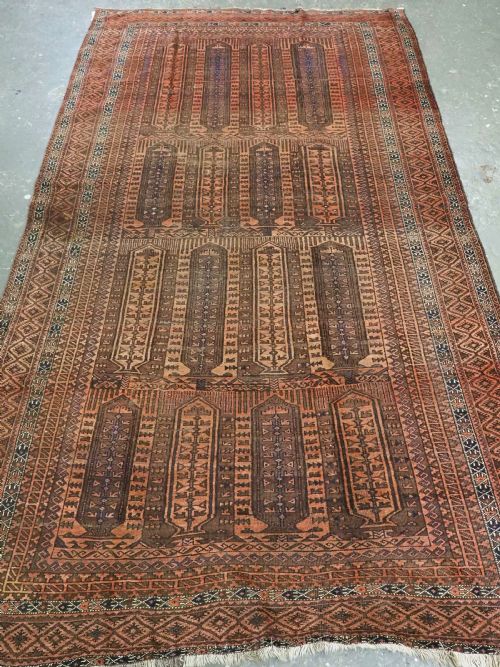
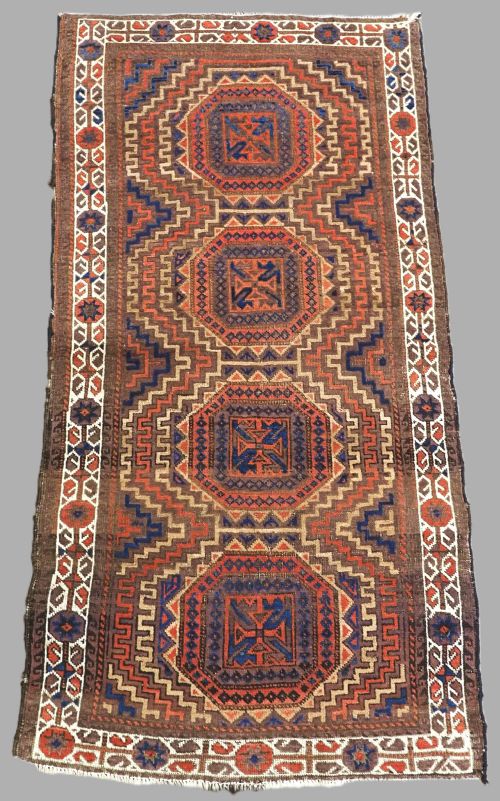
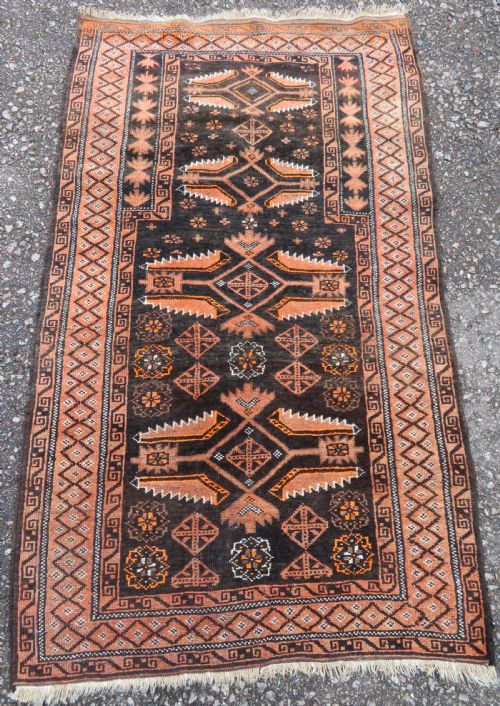
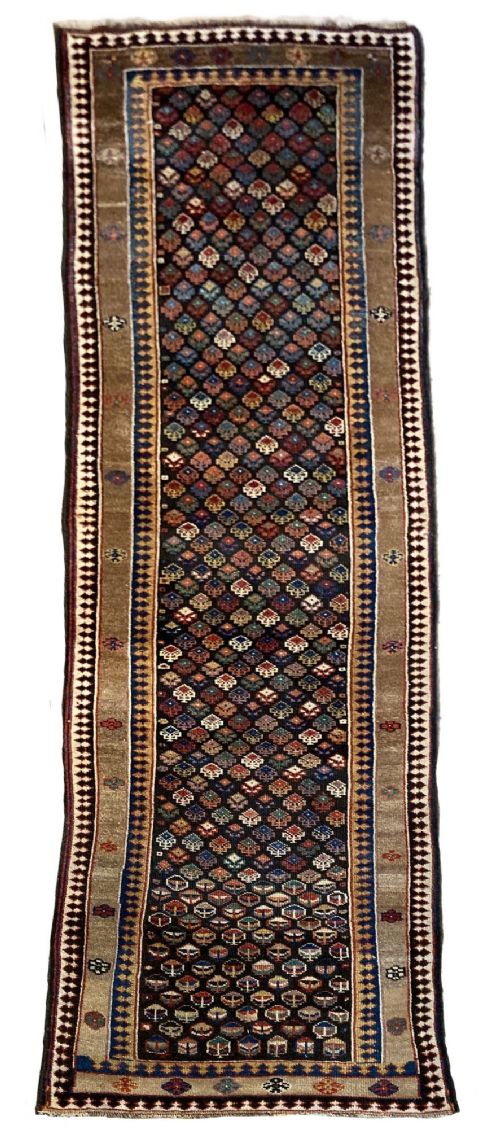
A brown geometric wool carpet encompasses tribal and nomadic floor coverings originating from nineteenth and early twentieth-century weaving traditions. Buyers searching for this style encounter regional tribal rugs, runners, and flatwoven kilims characterised by angular motifs and deep earthy palettes.
The selections on this page draw predominantly from Afghan, Baluch, Turkmen, Kurdish, and Caucasian workshops. These pieces range from compact prayer rugs with mihrab designs to room-sized village carpets bearing repeating guls and geometric lattices.
What varies in quality
Quality in these carpets rests on the fineness of the weave and the integrity of the materials. Denser knotting and tight packing of the foundation threads produce a durable textile that maintains structural stability over decades of use.
The complexity of the geometric drawing and the subtlety of the natural dye variations distinguish finer examples from standard village work. Superior pieces display crisp alignment of tribal motifs and rich secondary colours within the wool ground.
Certain nomad weavers built heavy yurt rugs in separate strips, joining them later because one loom could not span the entire floor.
The Brown Geometric Wool Carpet Glossary
- Gul
- A primary octagonal or gabled medallion motif used repeatedly across Turkmen and Central Asian carpets. These tribal emblems often indicate the specific clan or nomadic group responsible for the weaving.
- Kilim
- A flatwoven textile produced without a pile by tightly interweaving warp and weft threads. These pieces are lighter than knotted carpets and feature sharp geometric patterns.
- Mihrab
- An arched niche design found primarily on prayer rugs, symbolising the direction of prayer. Weavers often position this architectural motif at one end of the rug field.
- Warp
- The vertical foundation threads stretched tightly on the loom before weaving begins. The visible ends of these threads frequently form the fringe or kilim ends of the carpet.
Brown Geometric Wool Carpet: Frequently Asked Questions
How do I identify a Baluch rug?
Baluch rugs originate from the borderlands of Persia, Afghanistan, and Balochistan, typically featuring dark brown or indigo grounds with geometric shrub and tree motifs.
They frequently incorporate goat hair or camel wool in the dark outer borders and compact formats suited for portable nomad use.
What is a Turkmen main carpet?
Turkmen main carpets are large floor coverings woven by Yomut, Ersari, and other tribes, distinguished by repeating gul designs across a dark field.
These pieces served central roles within tribal dwellings, showcasing precise geometric symmetry and deep natural dye coloration.
How should I care for a wool carpet?
Wool carpets benefit from regular gentle vacuuming without a rotating brush roll to prevent fibre damage. Professional cleaning by specialists in antique textiles preserves the natural lanolin and dye stability.
Keeping the carpet out of direct sunlight prevents fading of the natural brown wool and darker ground tones.