



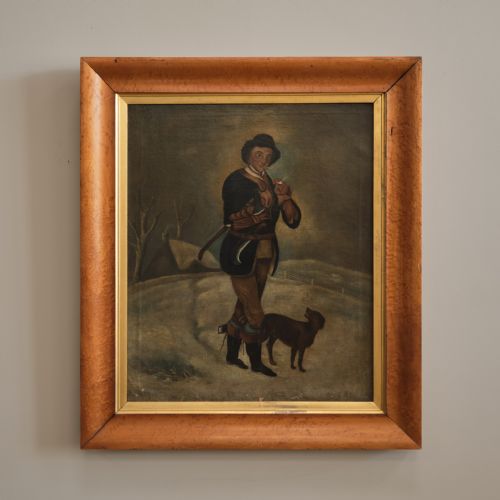


Brown Framed Folk Art
Brown framed folk art brings together vernacular paintings, samplers, and dioramas housed in simple timber enclosures.
Brown Framed Folk Art
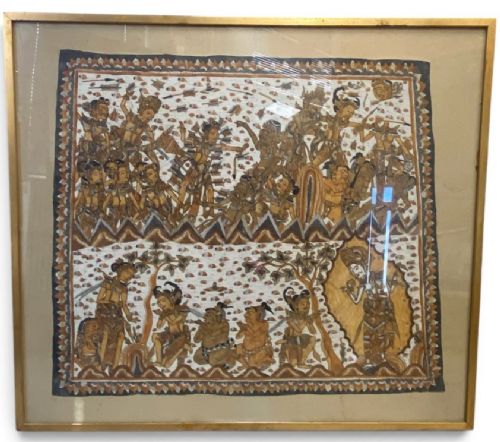
When you search for brown framed folk art, you encounter vernacular paintings, wool work samplers, and dioramas enclosed in timber. These pieces span the eighteenth, nineteenth, and twentieth centuries, originating from British, Continental, and Balinese makers.
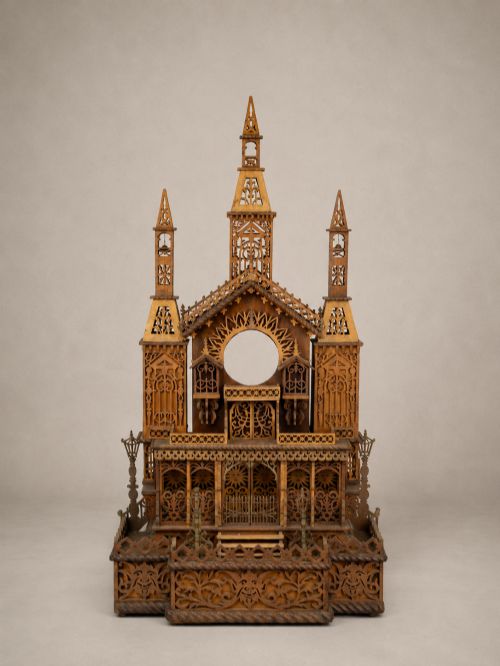
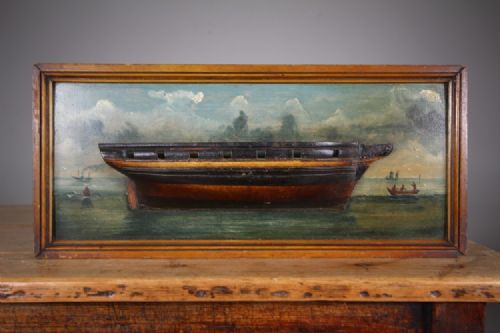
The objects most frequently met on this page include nineteenth-century oil paintings on canvas and board, needlework samplers, and architectural cork or twig frames. They capture domestic scenes, animal portraits, and local landscapes rendered with unpretentious technique.
How they were made
Makers utilised available materials such as oil paint on canvas or panel, wood for frames and clock cases, and glass to protect delicate textiles and paper herbs. Natural pigments, wool threads, and cork were shaped by hand without commercial standardisation.
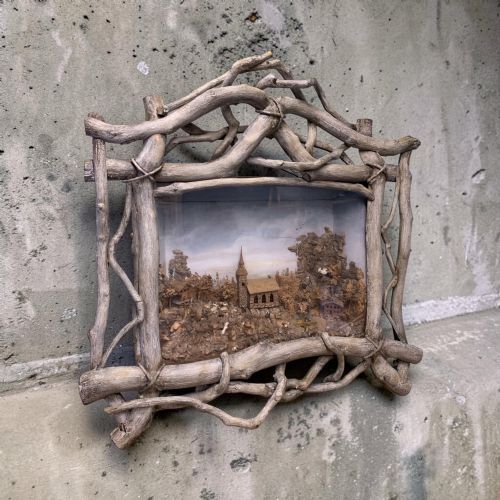
Framing often involved stained beech, fretwork, or rustic twigs built to complement the artwork inside. These constructions rely on straightforward carpentry techniques typical of regional workshops and domestic production.
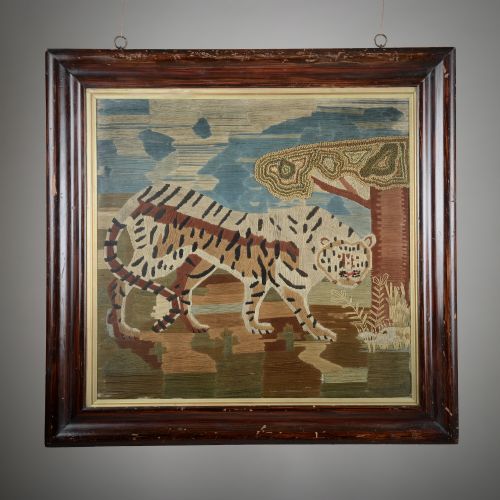
A nineteenth-century wool work tiger shares space with racing pigeons and a wooden-legged gentleman.
What varies in quality
Quality rests upon the strength of the composition and the integrity of the materials, separating bold naive expressions from weaker execution. A confident hand in portraiture or landscape holds visual interest regardless of formal academic training.
The connection between the artwork and its specific timber frame dictates the piece's overall coherence. Original housings built from cork, stained beech, or carved wood that suit the period elevate the object.
Holley Bros·E H Windred·Louis Marie Dominique Robbe
The Brown Framed Folk Art Glossary
- Naive art
- Artwork produced by self-taught individuals working outside academic traditions, often characterised by a flat perspective and direct representation. It values expressive honesty over strict adherence to proportion.
- Sampler
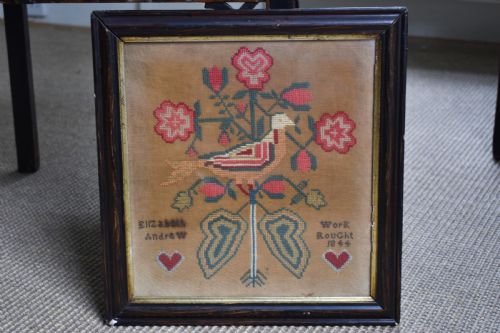
- A piece of needlework demonstrating various stitches, frequently incorporating alphabets, verses, or motifs such as animals and houses. Historic examples often record the maker's name and date.
- Diorama
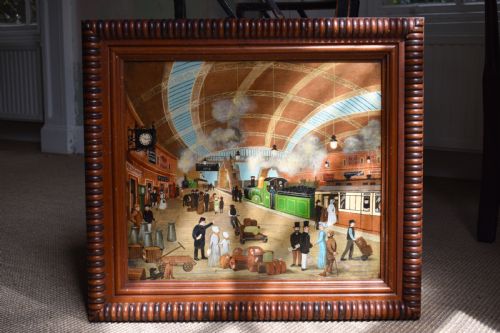
- A three-dimensional scene constructed within a box or frame, combining painted backgrounds with miniature objects, figures, or natural materials like twigs and cork.
- Tramp art
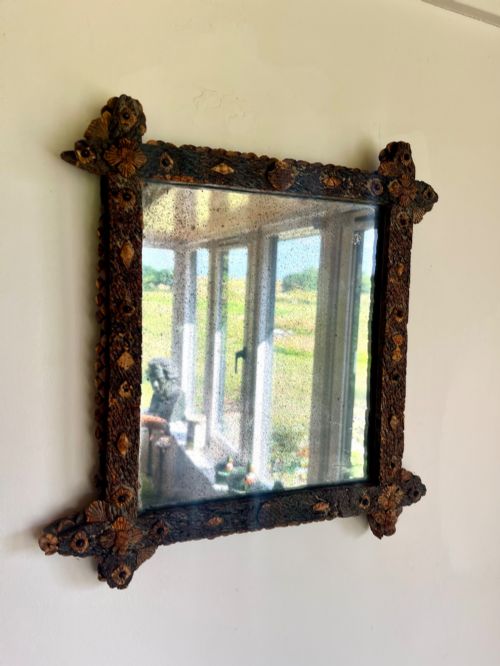
- A form of woodwork popular in the nineteenth and early twentieth centuries where small pieces of salvaged timber, cigar boxes, or cork are notched and layered into frames and objects.
Brown Framed Folk Art: Frequently Asked Questions
What periods do these pieces come from?
The selection spans from the mid-eighteenth century through the Victorian era and into the mid-twentieth century.
Most examples date from the nineteenth century, reflecting regional British and Continental traditions.
How were needlework samplers used?
Samplers served as practical exercises for young makers to demonstrate proficiency in various stitches and lettering.
Completed pieces were typically framed and hung in domestic interiors as displays of household skill.
What is tramp art framing?
Tramp art involves layering and notch-carving small pieces of scrap wood or cork to build textured decorative objects.
Makers utilised simple pocket knives to chip away at the material before gluing the pieces together into geometric patterns.
How do I care for framed textiles?
Textiles and wool work require protection from direct sunlight to prevent the fading of natural threads and painted surfaces.
Keeping them behind glass shields the fabric from atmospheric dust and moisture.