



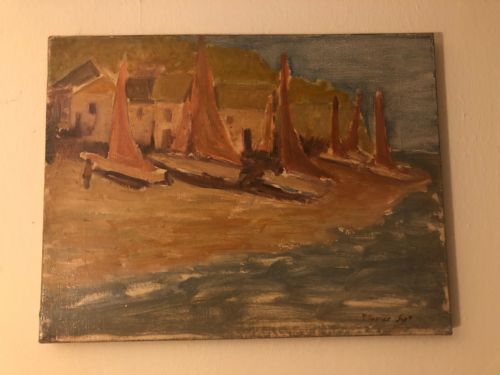
Brown Fishing Boat Painting
These brown fishing boat painting works capture maritime labour along coastal waters, offering buyers a glimpse into 19th and 20th-century harbour life through oil and watercolour.
Brown Fishing Boat Painting
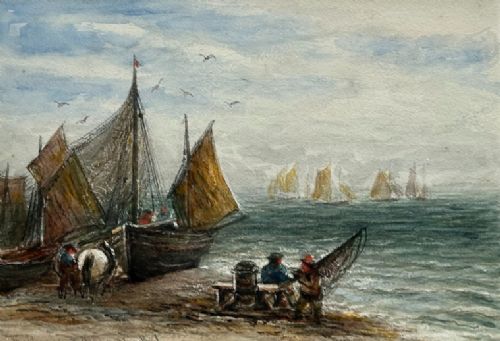
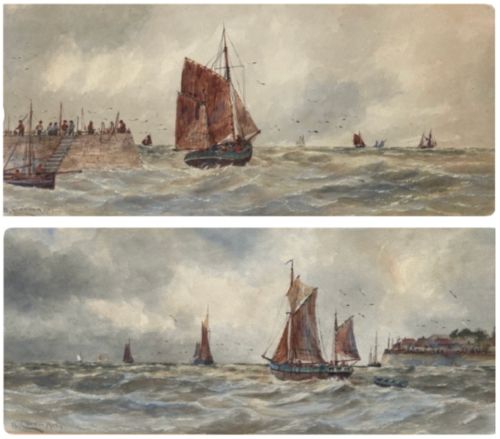
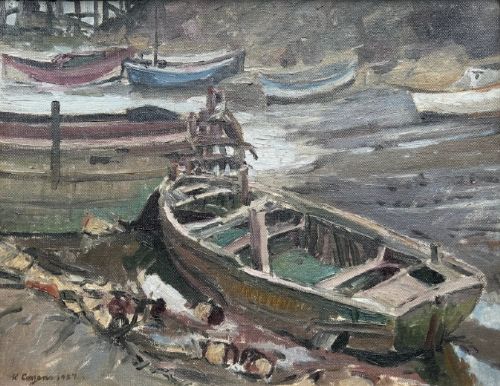
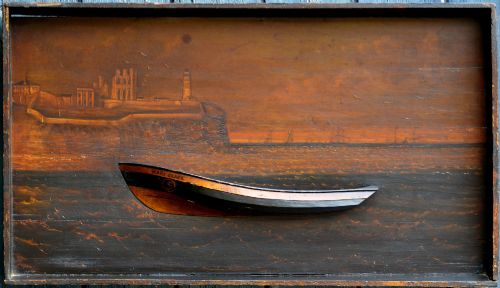
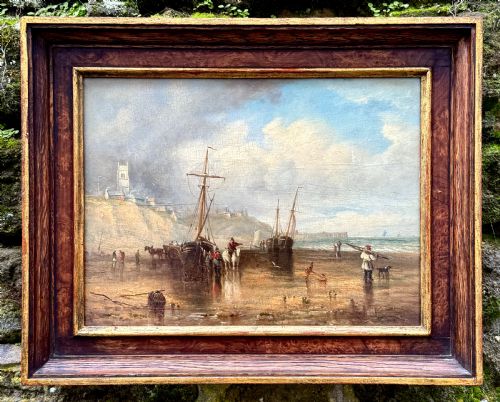
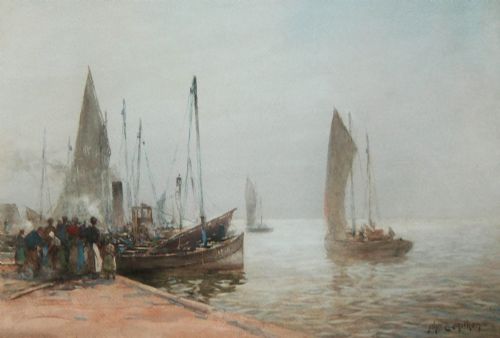
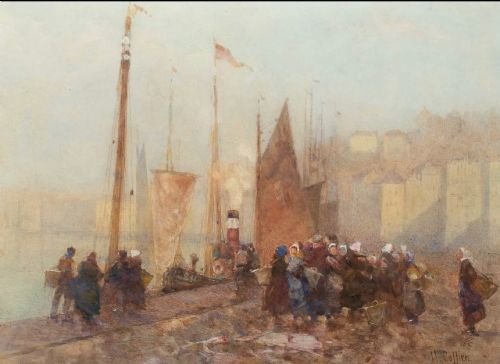
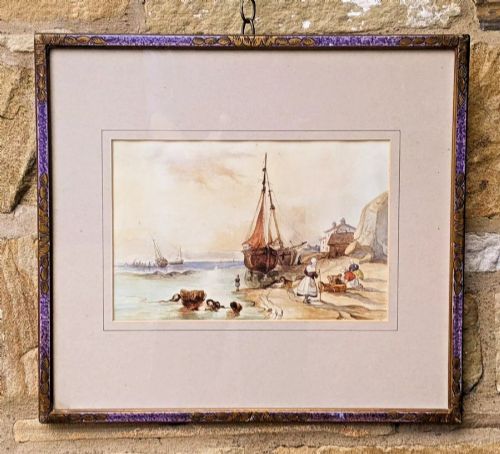
When you search for a brown fishing boat painting, you encounter maritime artworks depicting coastal scenes, harbours, and estuarine waters from the nineteenth and twentieth centuries. These pieces record working vessels and maritime landscapes created during the Victorian, Edwardian, and post-war periods.
The versions most frequently met on this page include watercolours on paper and oil paintings executed on canvas, board, or wood panel. Subjects span British coastal locations such as Whitby, Brighton, and Mousehole, alongside continental European ports.
Makers represented range from regional artists to recognised names associated with British Impressionism, Post-Impressionism, and Victorian marine art. Works appear individually or in matched pairs, capturing both beached vessels and boats navigating choppy seas.
Materials and Techniques in Marine Art
Artists utilised oil paint applied to canvas, wood panels, or boards, building substantial texture and depth to describe hulls, water, and moody skies. Alternatively, watercolour pigment on paper allowed for swift, transparent washes suited to capturing shifting coastal light and sea spray.
Supports varied according to the period and scale of the work, with heavy canvas preferred for large compositions and portable paper sheets utilised for en plein air watercolours. Framing often involved moulded wood to protect the delicate paint layers and paper edges.
Brown Fishing Boat Painting Retail Price Guide 2026
Typical asking prices for brown fishing boat painting among the pieces listed under this phrase on Sellingantiques today, from the lower quarter to the upper quarter. They describe what is for sale here now, not the wider market.
Artists frequently braved gale-force winds on muddy slipways just to capture the exact slouch of a damp fishing net.
Distinguishing Quality in Maritime Art
The upper tier of works displays confident handling of atmospheric perspective, where brushwork in oil or washes in watercolour convey the weight of water and the intricate rigging of vessels with precision. Lesser examples rely on rigid repetition and flat application that obscure the motion of the sea.
Compositional strength separates masterworks from standard topographical records, evident in how the placement of hulls and harbours draws the viewer into the scene. The preservation of the original pigment vibrancy, particularly in watercolours susceptible to fading, dictates the enduring visual impact.
James Orrock·Gustave De Bréanski·Thomas Bush Hardy·Sam Bough·Fred Mayor
The Brown Fishing Boat Painting Glossary
- Seascape
- A painting depicting the sea, coastal views, or maritime activities. These works focus predominantly on marine environments rather than land-based subjects.
- Watercolour
- A paint consisting of colour pigments suspended in a water-soluble vehicle. It is typically applied to paper supports to create luminous, translucent effects.
- Impressionism
- An art movement characterised by relatively small, thin, yet visible brush strokes and an emphasis on accurate depiction of light. Artists working in this manner prioritized natural illumination over rigid academic detail.
- Panel
- A flat piece of wood used as a support for oil painting. Panels provide a rigid surface that predates the widespread adoption of stretched canvas.
Brown Fishing Boat Painting: Frequently Asked Questions
What periods do these paintings date from?
The works span from the nineteenth century through the mid-twentieth century, encompassing Victorian, Edwardian, and post-war eras.
Dates are established through stylistic analysis, artist signatures, and framing materials characteristic of specific decades.
How were these maritime watercolours created?
Painters applied watercolour pigments onto paper supports, often capturing coastal scenes directly outdoors before finishing details in the studio.
This medium allowed artists to record the transient effects of light and weather along busy harbours with speed.
Where do the depicted harbours originate?
Locations include British fishing ports such as Whitby, Mousehole, and Brighton, alongside European destinations in France, the Netherlands, and the French Riviera.
Artists travelled extensively along these trade and fishing routes to document working vessels.
How should I display a vintage oil painting?
Hang oil paintings away from direct sunlight and dramatic fluctuations in room temperature to protect the canvas and wooden support from warping.
Ensure the piece rests securely on appropriate wall fixings suited to the weight of the frame.